
Sullivan & Herdman of Zanesville and Menke’s 1863 Patent
A No. 8 cast-iron tea kettle marked Sullivan & Herdman, Zanesville, Ohio, carries the June 23, 1863 patent date for Barney H. Menke’s swinging-lid design. Its markings and local foundry histories tell part of its story; the exact year this kettle was cast remains unknown.

Mrs. Shaeffer's Cake Griddle
Patented in 1889, Mrs. Shaeffer’s Cake Griddle is a scarce three-cake hinged griddle made by the Shaeffer Griddle Co. of Canton, Ohio. Patent records identify Milton Shaeffer as inventor and Barbara Shaeffer as assignee, while the company’s full history remains largely undocumented
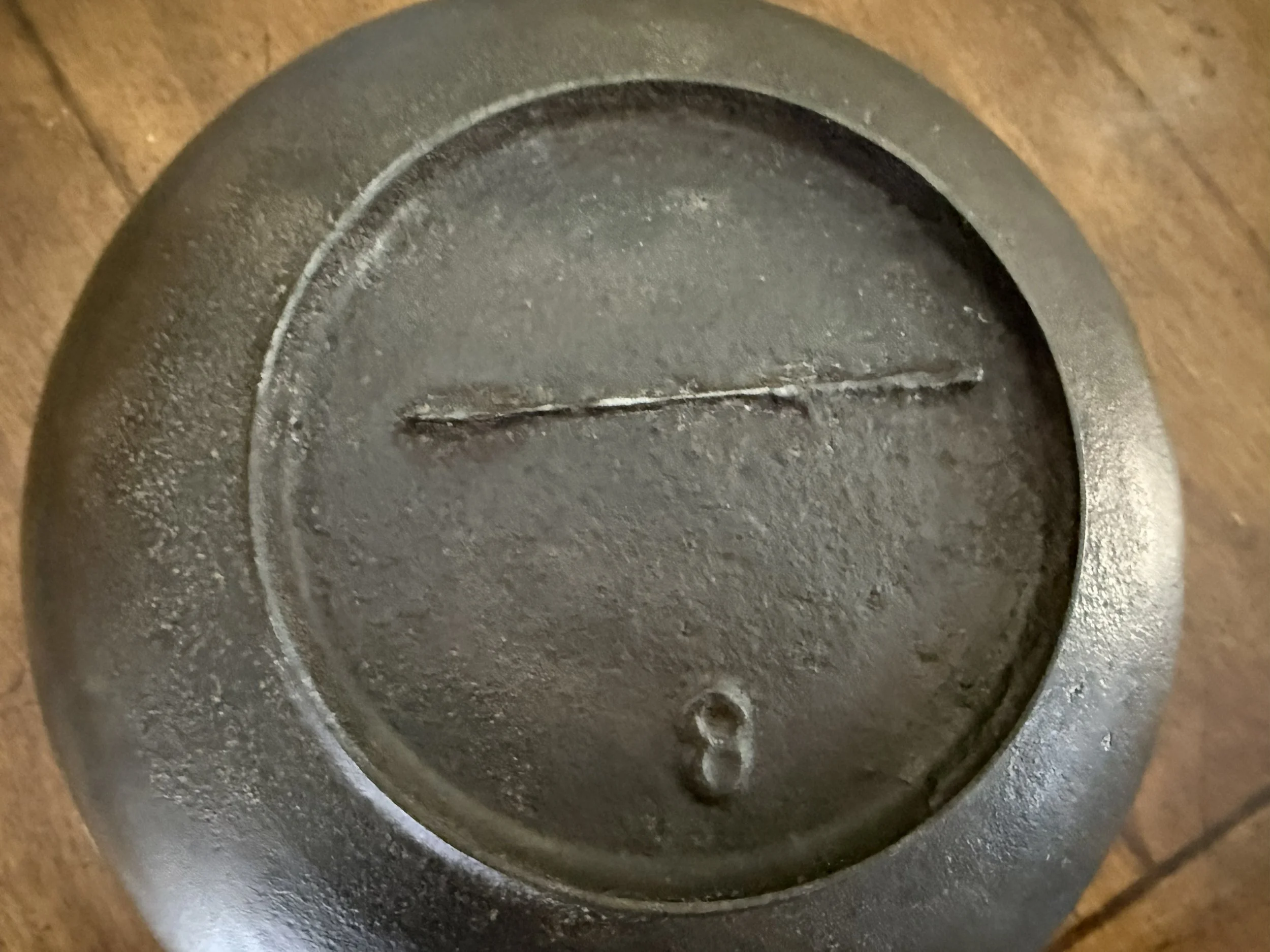
No. 8 Gate-Marked Bean Pot
This piece carries no foundry name, no city, and no patent date — and in early American cast iron, that absence is its own kind of story. SSC-UNK-KTL-8-001 is an unmarked No. 8 cast iron bean pot / kettle with a wire bail handle, a recessed base, and a clear bottom gate mark. Rather than invent an attribution, this deep-dive reads the iron itself: what the gate mark reveals about early sand-mold casting, what the cast size “8” meant on a period stove, and why bottom-gated hollow ware generally points to a 19th to early 20th century date. It also explains why unmarked kettles like this are so difficult to assign to a specific foundry and keeps the maker honestly unconfirmed pending primary-source verification — preserving a sourced record ready to meet a marked twin or catalog match if one ever surfaces.
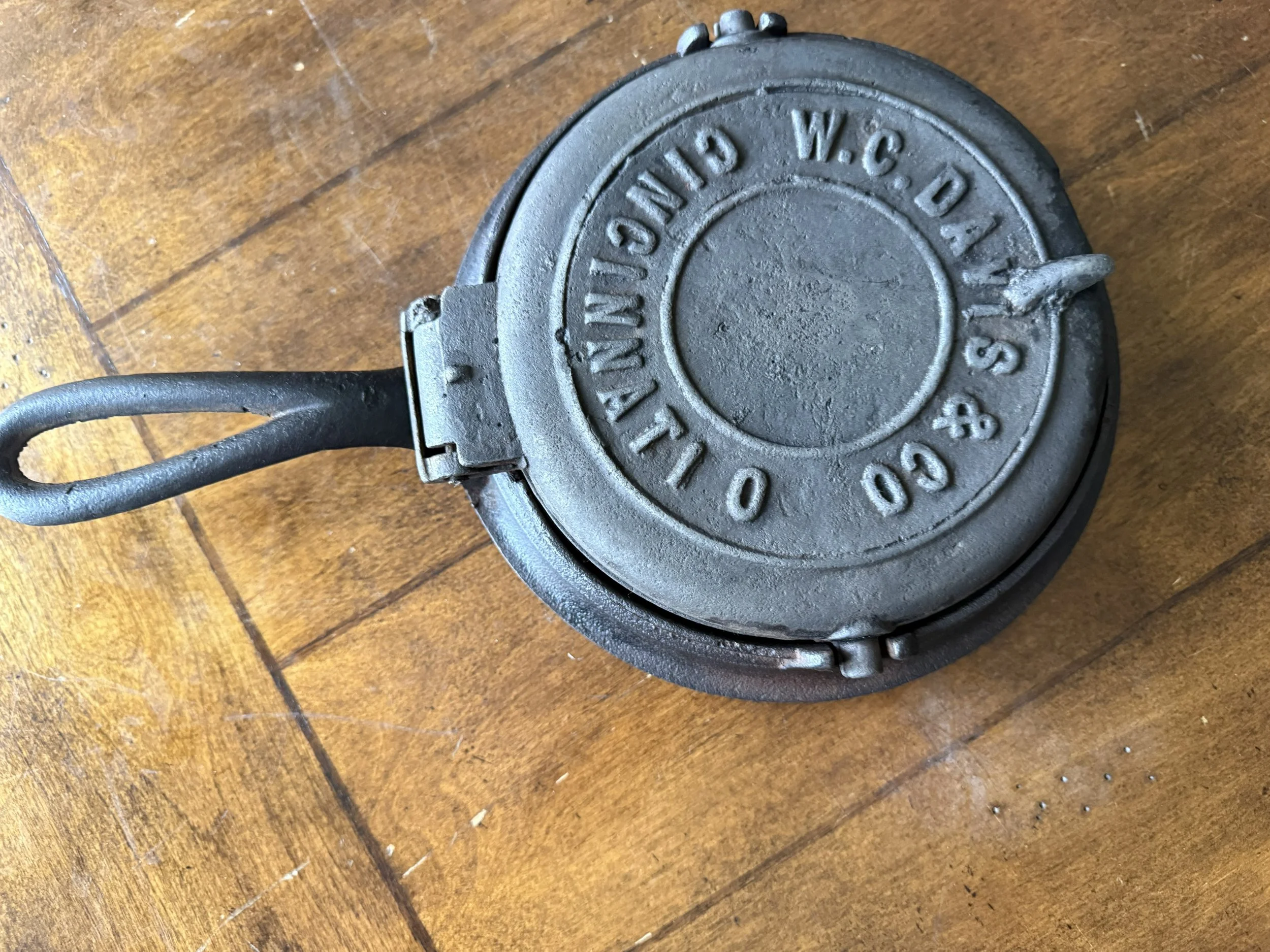
W.C. Davis & Co. Cast Iron Waffle Iron with Low Base
A complete W.C. Davis & Co. cast iron waffle iron with original low base — both paddles, both handles, functioning hinge, original base — marked W.C. DAVIS & CO / CINCINNATI O and dating to the firm's active name period, c. 1842–1880. W.C. Davis & Co. is the Cincinnati foundry from which the Favorite stove and hollow-ware line descended. This iron predates the Favorite era

American Wooden Ware Mfg. Co. — Toledo, Ohio
A six-and-a-quarter-inch cast iron disc carrying the mark of a Toledo manufactory that no major cast iron collector database has documented. The American Wooden Ware Mfg. Co. enters the SSC archive and the Ohio Foundry Directory for the first time.
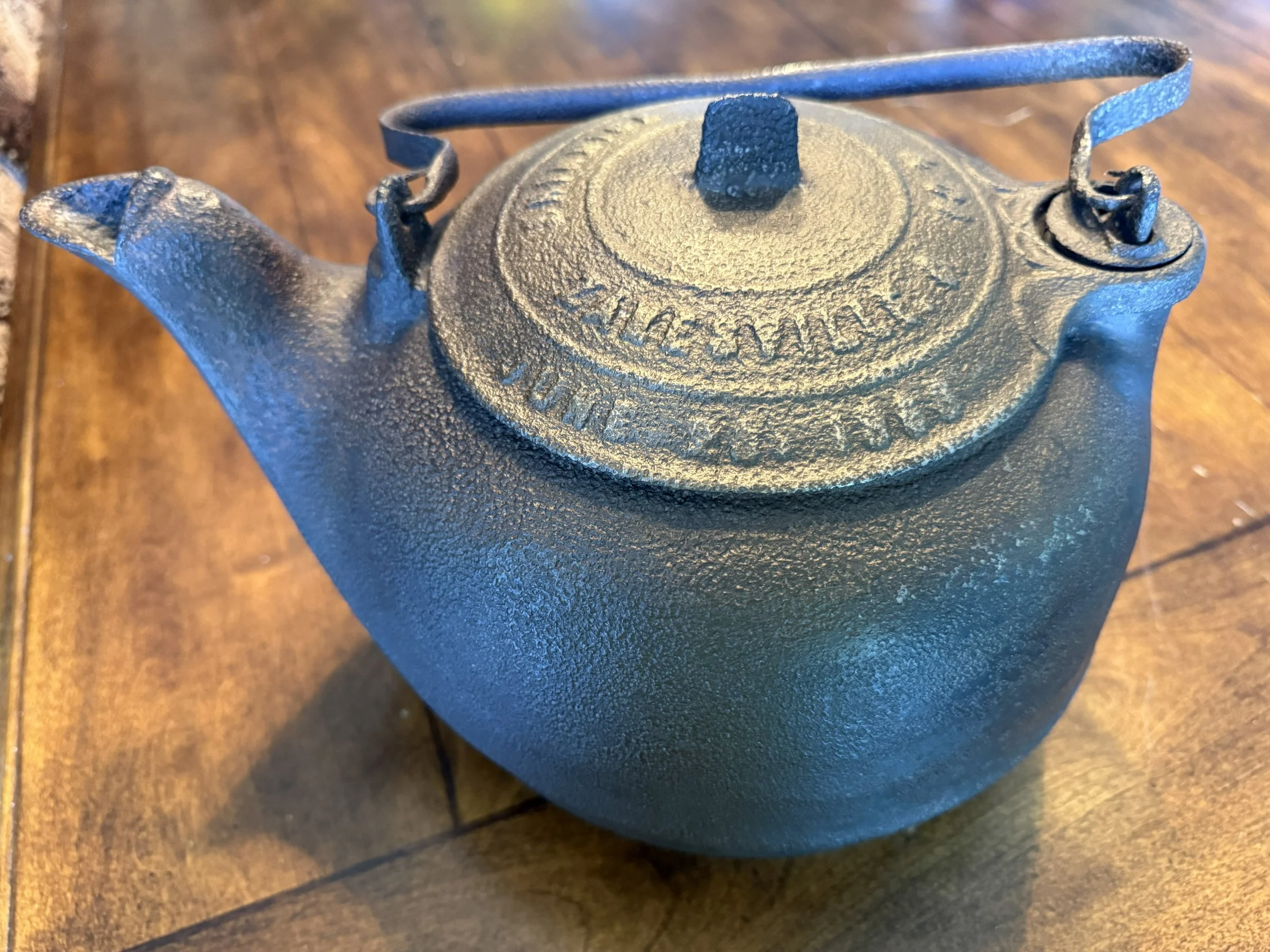
Shinnick & Co. — Zanesville, Ohio
A second Shinnick-marked Civil War tea kettle enters the SSC archive — the same June 23, 1863 Menke patent as The Crown Jewel, but a different Zanesville foundry partnership and one size smaller. The Menke Patent Network's third confirmed Zanesville link.

The Bedrock: Arcole Iron Works Gypsy Pot
In 1834, the Arcole Iron Works in Madison Township, Ohio was the largest industry in the state — producing 1,500 tons of iron annually, sustaining a port community larger than Cleveland. This gypsy pot carries the W.S. & Co. mark of the Wilkeson and Seeley partnership that ran the foundry during those peak years. The mark has worn with 190 years of honest existence. It is still there. Most people who collect cast iron will never hold one of these in their lifetime.

J.H. Day & Co. Patented Safety Kettle with Fire Shield
MADE ONLY BY. Four words cast into a hinged iron door mounted on the front of a Cincinnati hearth kettle, backed by two patents filed three years apart — 1874 and 1877. J.H. Day & Co. was not a stove works. They were an industrial machinery manufacturer who also invented a new way to manage fire around a kettle, protected it twice, and put their exclusivity claim in iron on every piece. This is the most complete example known: fire shield intact, hinged, latched, and operational after 150 years.

Dayton Malleable Iron Co. Patented Smelting Ladle
A brass brush brought it back: DAYTON MALLEABLE IRON CO. / PAT AUG 15 / 1871. Not just the year — the month and the day. August 15, 1871. The same day M. Hose & Lyon, across town in Dayton, patented their own competing ladle design. The dried slag in the diamond-form cup is still there. The thermal patina is still there. SSC will not remove either one. This is what a working foundry tool looks like after 155 years when you choose preservation over restoration.

Yourtee, Hollister & Co. Cast-Iron Stove-Top Kettle | Dated 1871 | Cincinnati, Ohio
Cast-iron stove-top tea kettle bearing the raised markings YOURTEE HOLLISTER & CO. / CINCINNATI O. / 1871, with a No. 6 marking at the spout. Contemporary Cincinnati directories identify Yourtee, Hollister & Co. as manufacturers of stoves, hollow ware, and castings and as proprietors of Miami Stove Works, with their foundry at California, Hamilton County, Ohio and their Cincinnati office and warerooms at 94 West Second Street.
The firm's connection to the California foundry can be traced to Nicholas Patterson & Co., whose earlier Miami Foundry manufactured stoves, hollow ware, and castings at California. Yourtee, Hollister & Co. advertised itself in 1871 as successor to N. Patterson & Co.
The partnership was dissolved effective January 1, 1874, by limitation and mutual consent. Samuel L. Yourtee, N. H. Sinclair, and T. G. Randall Jr. immediately formed Yourtee, Sinclair & Randall to continue the stove-foundry business; Hudson Hollister did not join the successor partnership.
The 1871 marking is original physical evidence on the kettle and is consistent with the documented operation of Yourtee, Hollister & Co. that year. However, no surviving catalog or production record has yet been located proving precisely what the date signified or identifying the exact production history of this particular No. 6 kettle. The evidence strongly supports manufacture within Yourtee, Hollister & Co.'s documented California, Ohio foundry operation; it does not support the former attribution to Lawrenceburg, Indiana

Greer & King Mfg. Co. No. 8 Three-Legged Bail Bean Pot Kettle
The Greer & King Mfg. Co. of Dayton, Ohio received their patent on November 3, 1868 — three years after the Civil War ended, when Reconstruction was still unfinished and the western frontier had not yet closed. The bean pot sitting on these three iron legs predates Wagner by two decades and Griswold Erie by more than twenty years. This is the oldest patent-dated piece in the SSC Museum Collection, and one of the primary surviving physical records of a Dayton foundry that the standard reference databases have never documented.
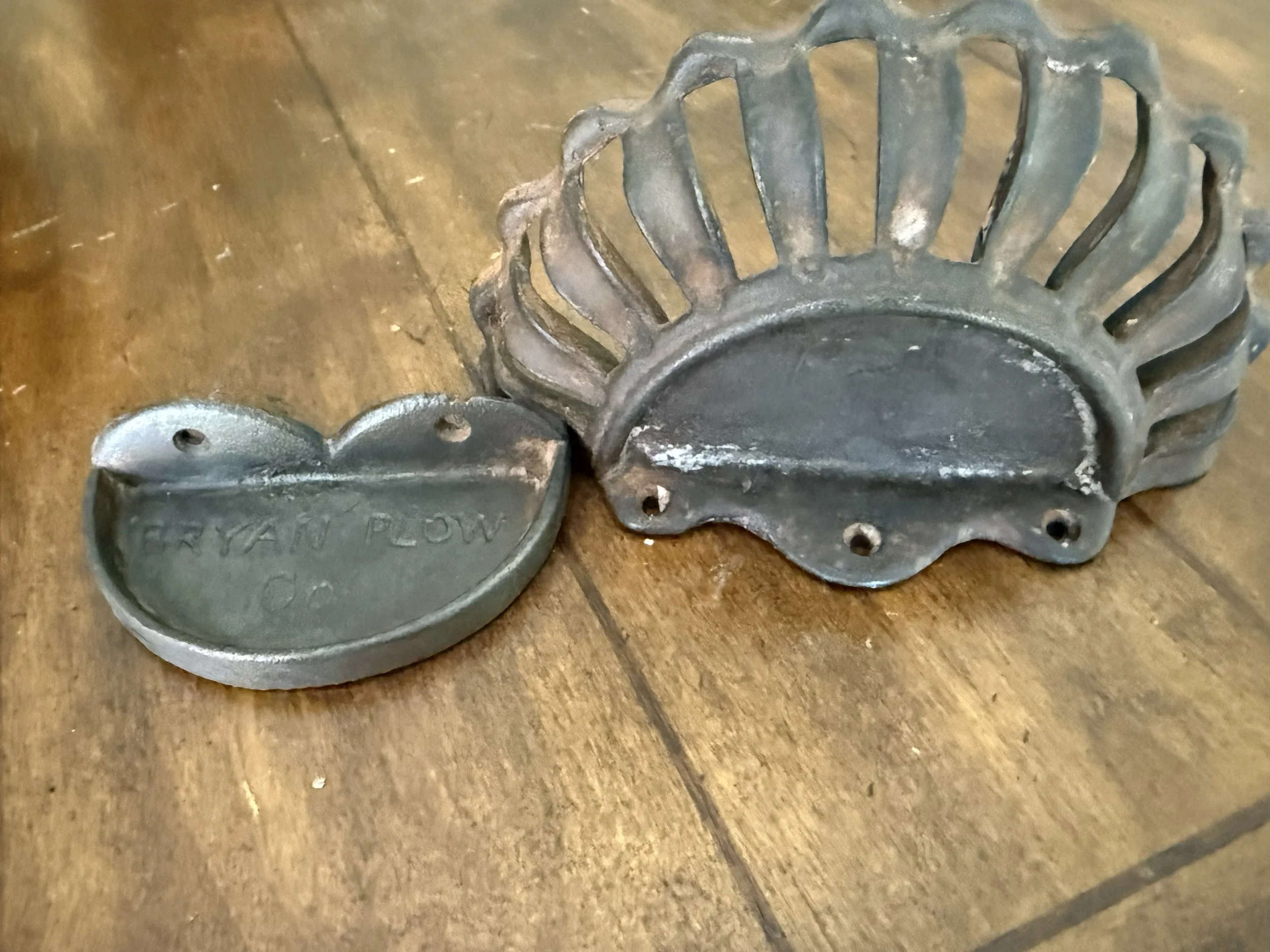
Two Small Castings, One Word I Recognized: Bryan Plow Co. and an Unsolved Piece of Home
Two small cast iron pieces marked BRYAN PLOW Co. of Bryan, Ohio, once wrongly called a plow seat and footrest. Their true identity is still unknown; the maker's history is documented.

The Shinnick, Woodside & Gibbons No. 3 Cast Iron Kettle
The SSC Crown Jewel is a Shinnick, Hattan & Co. No. 9 kettle dated June 23, 1863 — a Civil War-era piece from Zanesville, Ohio. This No. 3 kettle, marked "SHINNICK, WOODSIDE & GIBBONS" and "ZANESVILLE, O." on the lid, documents a later partnership at the same foundry. Same city. Same family name. Different partners. Different decade. Two kettles that together span the arc of a Zanesville foundry dynasty whose family also founded the Mosaic Tile Company and established the largest benefaction in Muskingum County history. Acquired from eBay seller buyandselltechworld, March 2026.

The Kingery Mfg. Co. No. 20 Conical Ice Cream Scoop
Before the modern spring-loaded scoop, there was the Kingery. This No. 20 conical ice cream disher was manufactured by the Kingery Manufacturing Company of Cincinnati, Ohio — the firm that started as hokey-pokey ice cream vendors in 1879 and grew into a manufacturer of peanut roasters, popcorn machines, and steam-powered vending wagons sold across the country. Their conical scoop, patented September 4, 1894, was the first ice cream disher designed for one-handed use — a revolution in soda fountain speed. Three Kingery machines are on display at the Wyandot Popcorn Museum in Marion, Ohio. Acquired from eBay seller mod50s, March 2026.
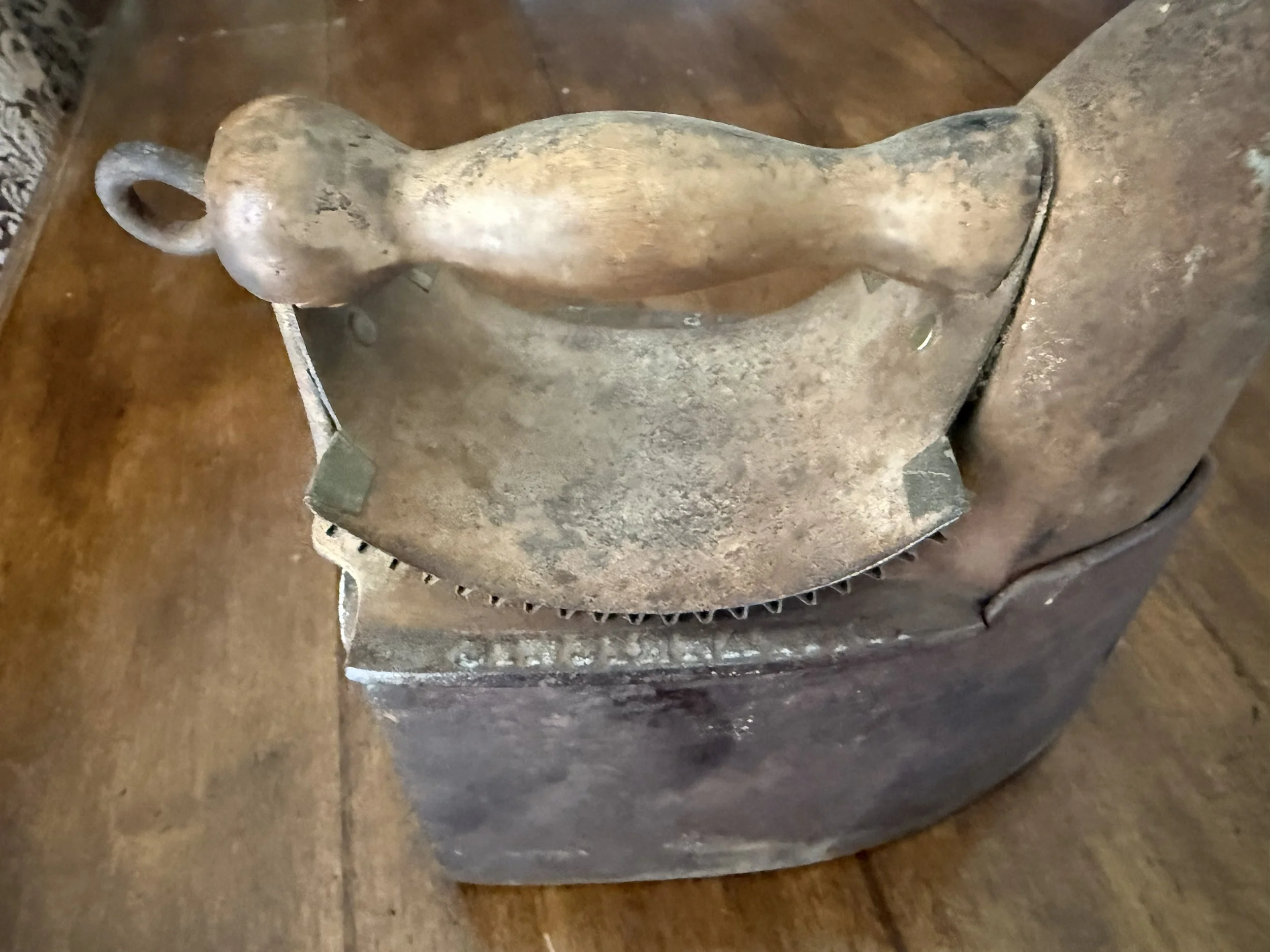
The H.S. Pease Coal-Heated Charcoal Sad Iron
Before the electric iron, pressing clothes required fire. This charcoal box iron bears the mark "H.S. PEASE" and "CINC'TI, O." cast in raised letters on the lid rim — the product of Horace S. Pease, a Cincinnati inventor who held multiple U.S. patents for charcoal iron improvements between the 1880s and 1907. His signature innovation was the combination charcoal iron and fluter — a single tool for both pressing and pleating. Acquired from eBay seller tsp8ntball5hnf, March 2026.

Wagner Manufacturing Company — Square Cast Iron Waffle Iron (Tall Enclosed Base)
This square Wagner waffle iron with its tall enclosed box base is the flagship of three founding-era Wagner waffle irons in the SSC collection — all carrying the same July 26, 1892 patent date, all made in Sidney, Ohio. Where the round low-base was the entry model and the round high-base with wood handles was the premium, this square tall-base was the top of the line: the most iron, the most engineering, and the most thermally sophisticated design Wagner off

Wagner Manufacturing Company — No. 8 Cast Iron Waffle Iron (High Base, Wood Handles)
This is the premium variant of Wagner's founding-era waffle iron — a No. 8 with a high pedestal base, original turned wood handles on both paddles, and a wire bail on the base frame. The full patent date — July 26, 1892 — places this piece less than a year after the Wagner Manufacturing Company's founding in Sidney, Ohio. Together with the SSC's low-base variant, this high-base model documents Wagner's product-line strategy from the company's very first year. Acquired from eBay seller heatherirene001, October 2025.

Wagner Manufacturing Company — No. 8 Cast Iron Waffle Iron (Low Base)
The Wagner Manufacturing Company was barely a year old when it received the patent stamped into this waffle iron. Founded in 1891 in Sidney, Ohio, Wagner secured its July 1892 waffle iron patent within the company's first full year of operations — making this No. 8 low-base waffle iron with original wood handle a founding-era artifact from one of America's most important cast iron manufacturers. Marked "WAGNER MFG. CO. SIDNEY. O." with "PAT. JULY 1892." Acquired from eBay seller lori132, October 2025.
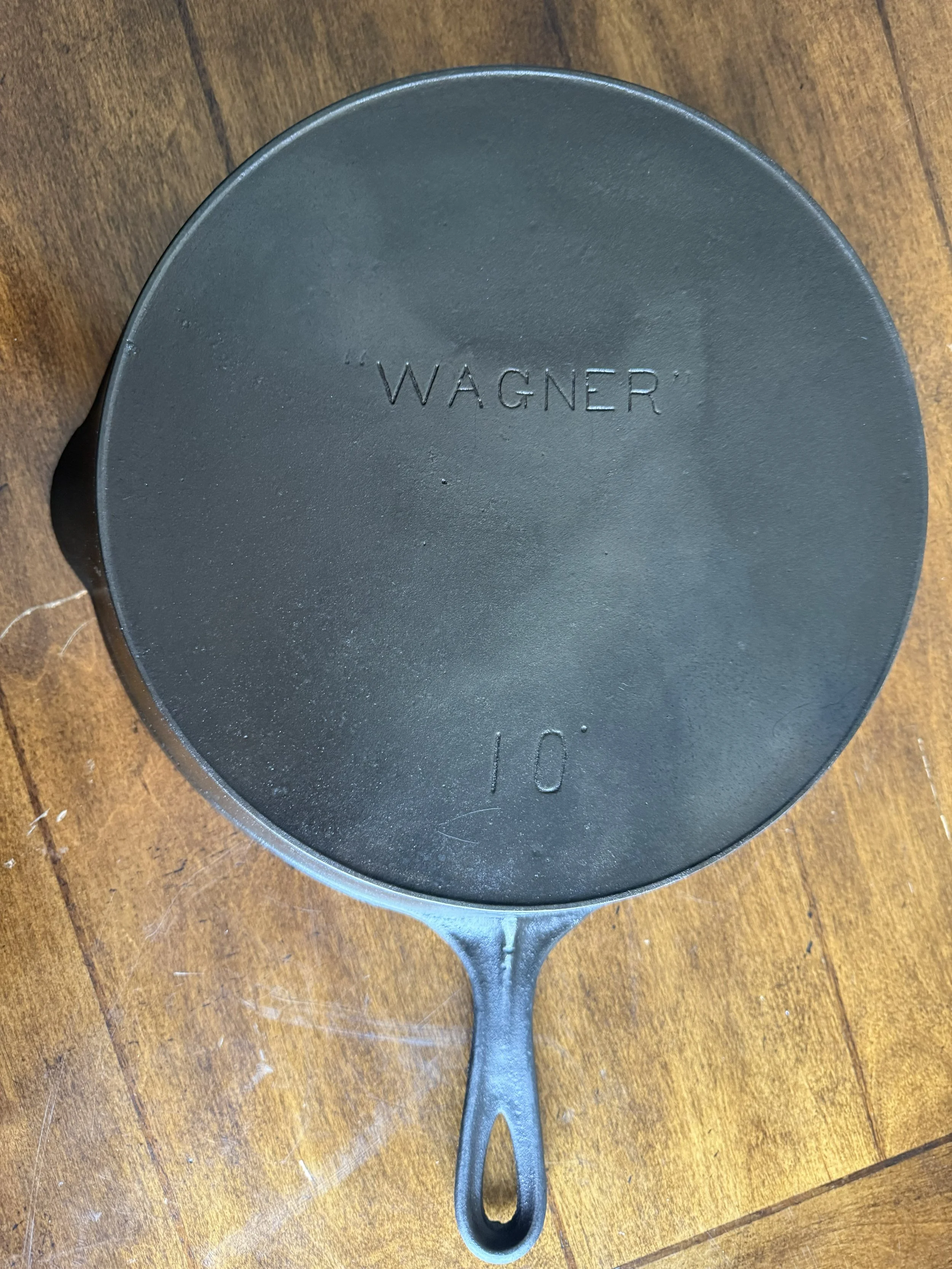
Wagner Block Logo No. 10 Cast Iron Skillet
The earliest known Wagner trademark in the SSC collection. This No. 10 skillet carries the block "WAGNER" in quotation marks with no Sidney marking and no catalog number — dating to the 1890s when the foundry was still introducing itself to the American market.

Wagner Arc Logo No. 8 Cast Iron Skillet
A first-series Wagner skillet from the foundry's earliest production era. This No. 8 carries the arc "WAGNER" trademark with no Sidney marking and no catalog number — one of the oldest identifiable patterns Wagner Manufacturing Company ever produced.