
Sullivan & Herdman of Zanesville and Menke’s 1863 Patent
A No. 8 cast-iron tea kettle marked Sullivan & Herdman, Zanesville, Ohio, carries the June 23, 1863 patent date for Barney H. Menke’s swinging-lid design. Its markings and local foundry histories tell part of its story; the exact year this kettle was cast remains unknown.

American Wooden Ware Mfg. Co. — Toledo, Ohio
A six-and-a-quarter-inch cast iron disc carrying the mark of a Toledo manufactory that no major cast iron collector database has documented. The American Wooden Ware Mfg. Co. enters the SSC archive and the Ohio Foundry Directory for the first time.
Shinnick & Co. — Zanesville, Ohio
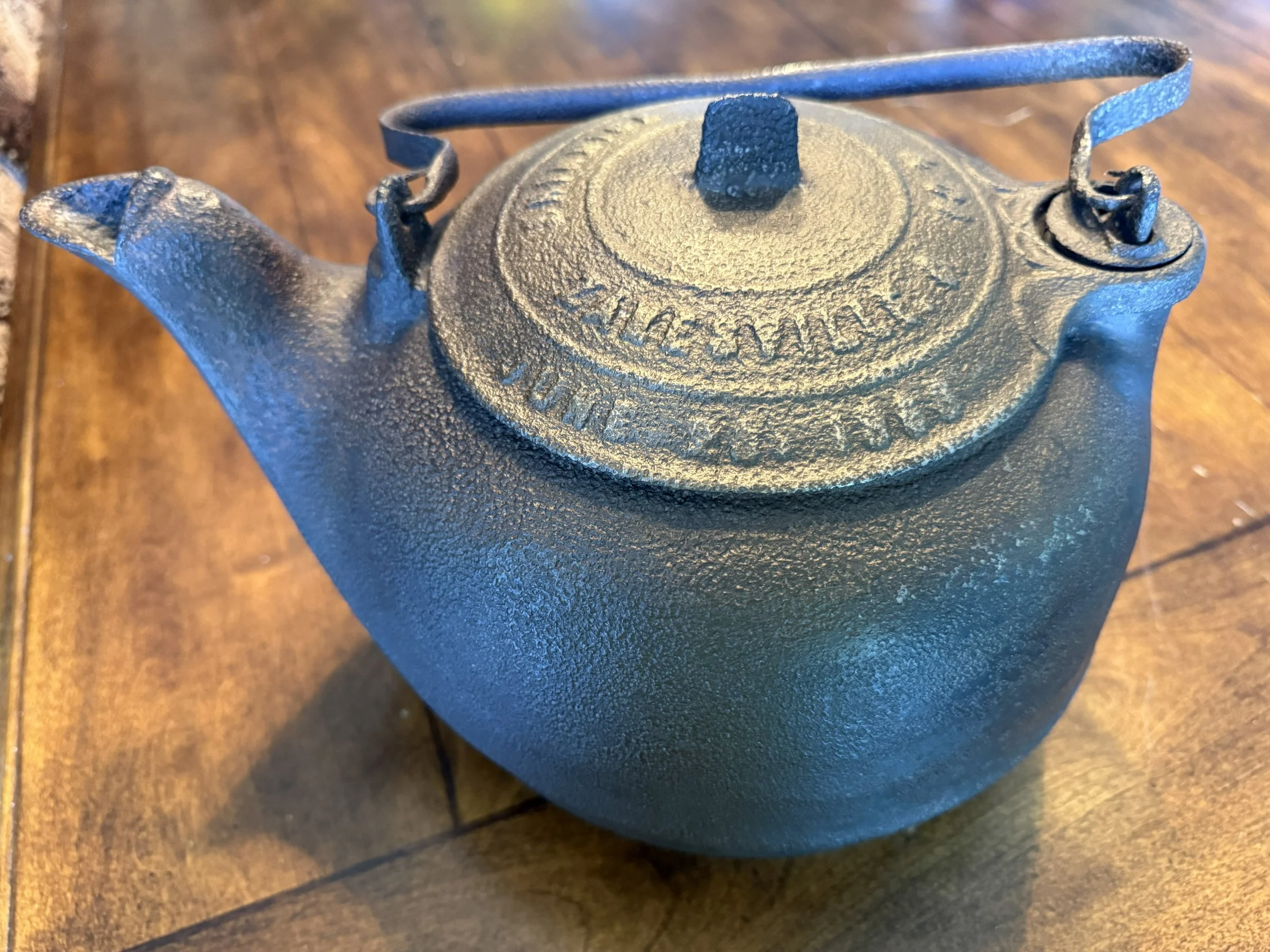
A second Shinnick-marked Civil War tea kettle enters the SSC archive — the same June 23, 1863 Menke patent as The Crown Jewel, but a different Zanesville foundry partnership and one size smaller. The Menke Patent Network's third confirmed Zanesville link.

The Shinnick, Woodside & Gibbons No. 3 Cast Iron Kettle
The SSC Crown Jewel is a Shinnick, Hattan & Co. No. 9 kettle dated June 23, 1863 — a Civil War-era piece from Zanesville, Ohio. This No. 3 kettle, marked "SHINNICK, WOODSIDE & GIBBONS" and "ZANESVILLE, O." on the lid, documents a later partnership at the same foundry. Same city. Same family name. Different partners. Different decade. Two kettles that together span the arc of a Zanesville foundry dynasty whose family also founded the Mosaic Tile Company and established the largest benefaction in Muskingum County history. Acquired from eBay seller buyandselltechworld, March 2026.
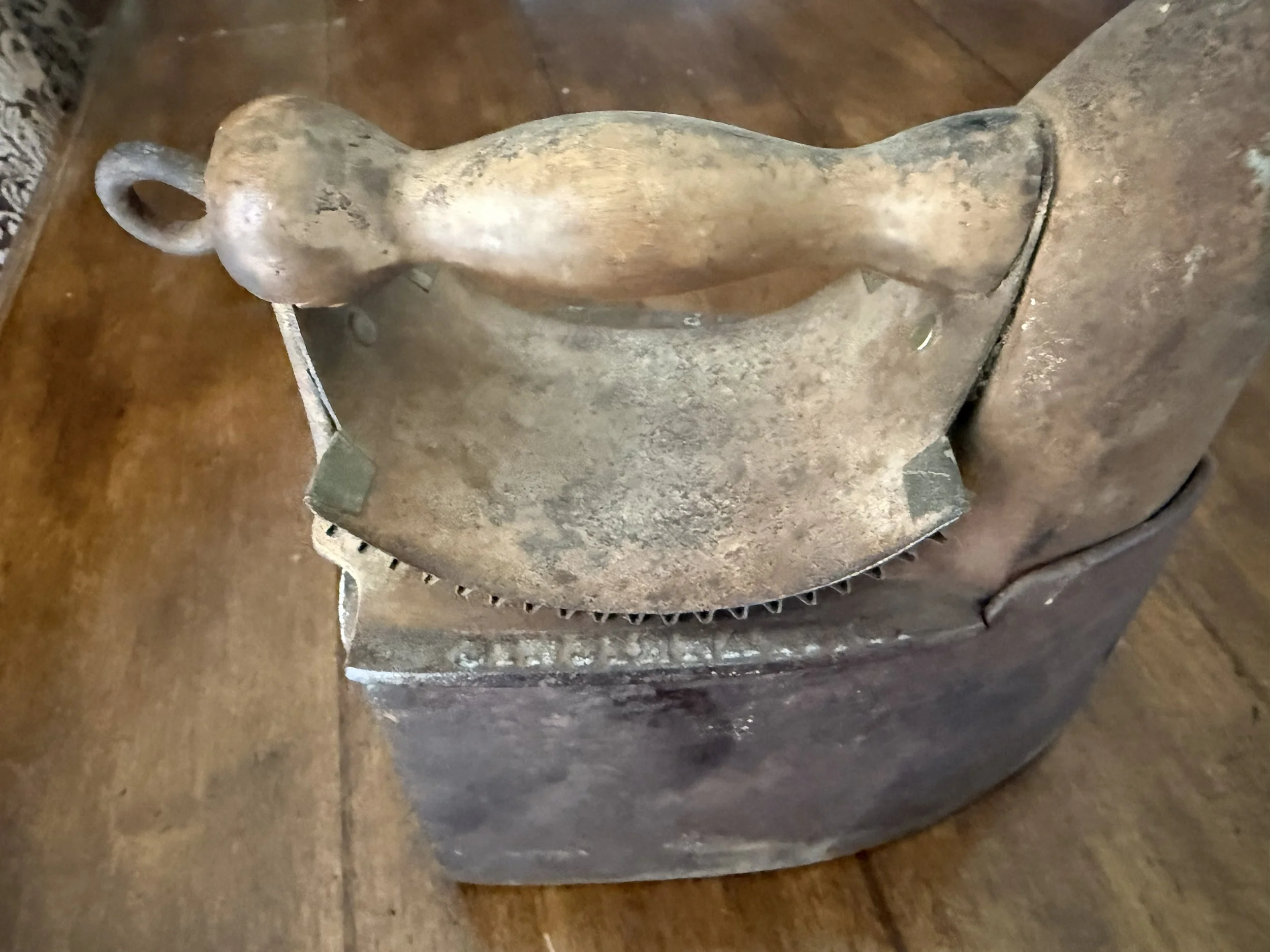
The H.S. Pease Coal-Heated Charcoal Sad Iron
Before the electric iron, pressing clothes required fire. This charcoal box iron bears the mark "H.S. PEASE" and "CINC'TI, O." cast in raised letters on the lid rim — the product of Horace S. Pease, a Cincinnati inventor who held multiple U.S. patents for charcoal iron improvements between the 1880s and 1907. His signature innovation was the combination charcoal iron and fluter — a single tool for both pressing and pleating. Acquired from eBay seller tsp8ntball5hnf, March 2026.

Wagner Manufacturing Company — Square Cast Iron Waffle Iron (Tall Enclosed Base)
This square Wagner waffle iron with its tall enclosed box base is the flagship of three founding-era Wagner waffle irons in the SSC collection — all carrying the same July 26, 1892 patent date, all made in Sidney, Ohio. Where the round low-base was the entry model and the round high-base with wood handles was the premium, this square tall-base was the top of the line: the most iron, the most engineering, and the most thermally sophisticated design Wagner off

Wagner Manufacturing Company — No. 8 Cast Iron Waffle Iron (High Base, Wood Handles)
This is the premium variant of Wagner's founding-era waffle iron — a No. 8 with a high pedestal base, original turned wood handles on both paddles, and a wire bail on the base frame. The full patent date — July 26, 1892 — places this piece less than a year after the Wagner Manufacturing Company's founding in Sidney, Ohio. Together with the SSC's low-base variant, this high-base model documents Wagner's product-line strategy from the company's very first year. Acquired from eBay seller heatherirene001, October 2025.

Wagner Manufacturing Company — No. 8 Cast Iron Waffle Iron (Low Base)
The Wagner Manufacturing Company was barely a year old when it received the patent stamped into this waffle iron. Founded in 1891 in Sidney, Ohio, Wagner secured its July 1892 waffle iron patent within the company's first full year of operations — making this No. 8 low-base waffle iron with original wood handle a founding-era artifact from one of America's most important cast iron manufacturers. Marked "WAGNER MFG. CO. SIDNEY. O." with "PAT. JULY 1892." Acquired from eBay seller lori132, October 2025.
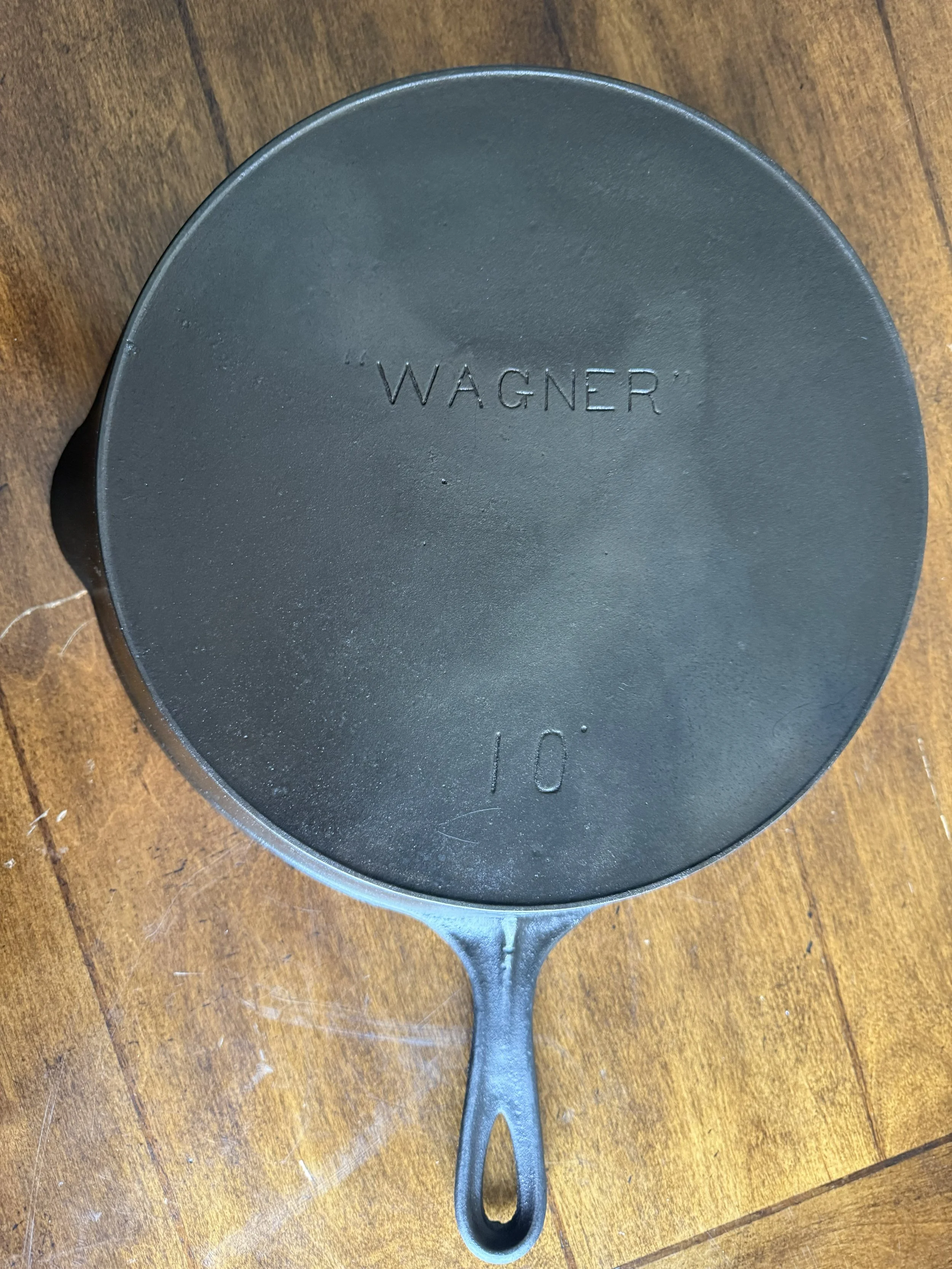
Wagner Block Logo No. 10 Cast Iron Skillet
The earliest known Wagner trademark in the SSC collection. This No. 10 skillet carries the block "WAGNER" in quotation marks with no Sidney marking and no catalog number — dating to the 1890s when the foundry was still introducing itself to the American market.

Wagner Arc Logo No. 8 Cast Iron Skillet
A first-series Wagner skillet from the foundry's earliest production era. This No. 8 carries the arc "WAGNER" trademark with no Sidney marking and no catalog number — one of the oldest identifiable patterns Wagner Manufacturing Company ever produced.

Ohio Stove Co. “Pearl” No. 7 Sad Iron Long Pan
Before the electric iron, there was the sad iron — and this Pearl No. 7 long pan from Ohio Stove Co. of Portsmouth was where you heated them. Gate marked, dating to the company's founding years around 1872, from a foundry still pouring iron 150 years later.

H. Wells & Bro. Extra Large Cast Iron Tea Kettle
1867. Two years after the Civil War. In Ohio's oldest settlement — a town that sheltered freedom seekers on the Underground Railroad — the Wells brothers cast this tea kettle and stamped it with the date. No other record of their foundry survives. The iron is the testimony.

Shinnick Hattan & Co. No. 9 Cast Iron Kettle
June 23, 1863. Ten days before Gettysburg. Confederate cavalry threatening eastern Ohio. And in a Zanesville foundry, Shinnick Hattan & Co. cast this kettle and stamped it with the date. The oldest piece in the SSC collection — and its crown jewel.
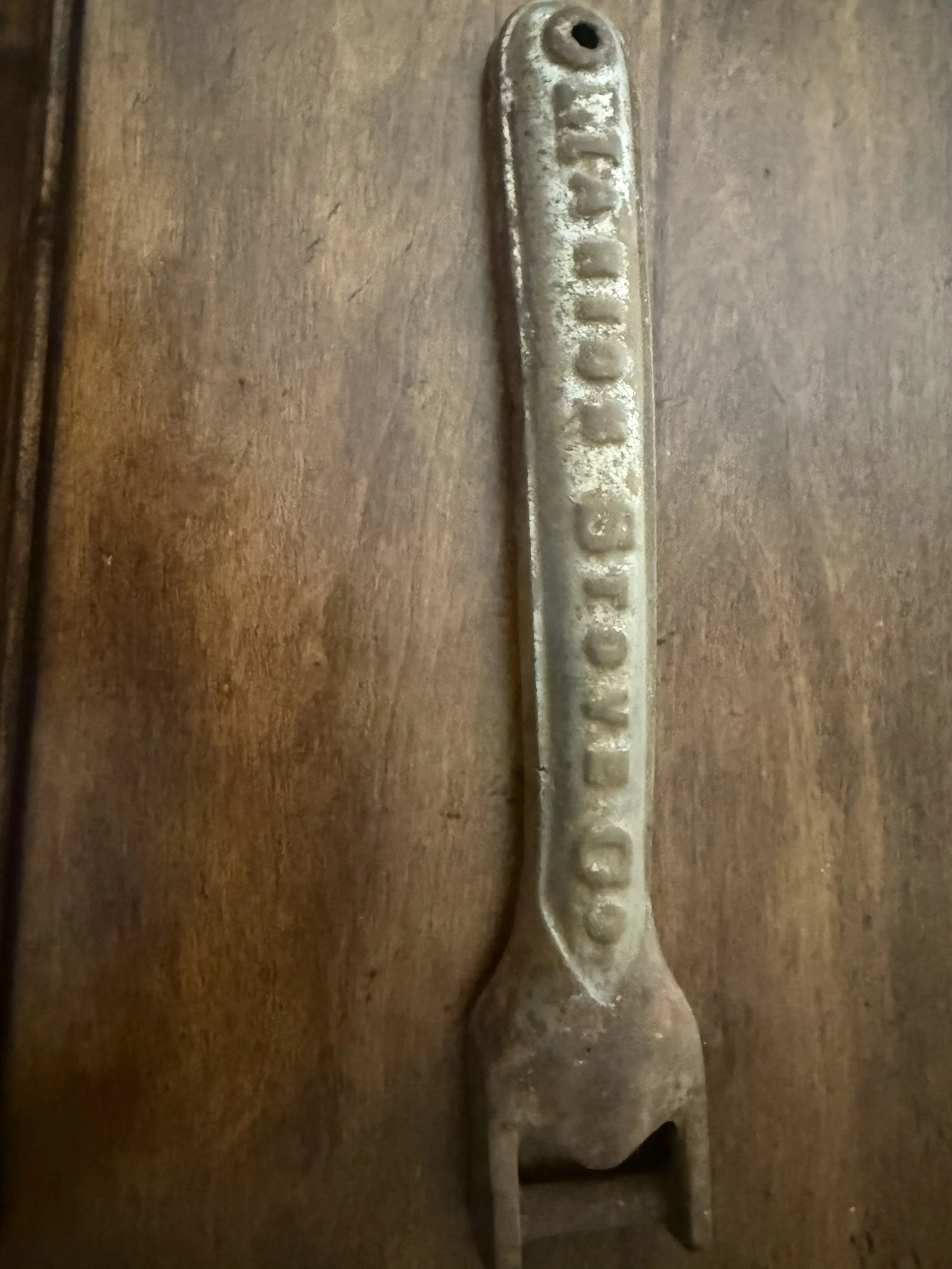
Marion Stove Co. Cast Iron Stove Lid Lifter
Marion Stove Co. was born in Sidney, Ohio in 1855 — and when it left for Indiana, a Marion man stayed behind to help build Wagner Ware. This lid lifter retains its original nickel plating, a surface that must never be disturbed.

The Colonial Iron Works Co. Trade Mark Plaque
A cast iron trade mark plaque from The Colonial Iron Works Co. of Cleveland, Ohio — a conveyor systems manufacturer so thoroughly erased from the historical record that this plaque may be among the only surviving evidence the company existed. The inaugural piece in SSC's "Cleveland's Forgotten Foundries" collection.

Brooks & Patton No. 9 Tea Kettle
A rare No. 9 tea kettle from Brooks & Patton of Columbus, Ohio — the foundry whose principal, Alexander G. Patton, later acquired the Columbus Hollow Ware Company. SSC documents the piece that bridges two chapters of Columbus cast iron history.

Cast Iron Posnet — “D.O.-52” Marking
A small cast iron posnet marked "D.O.-52" — three legs, a hanging loop, and a marking nobody can identify. SSC documents this hearth-era mystery piece in full detail and invites the collector community to help solve it.

Pre-Logo Era No. 8 Flat Skillet — Gate Scar, Unattributed
The gate scar is the oldest mark in the SSC collection. Not a logo, not a brand — the physical remnant of the casting process itself: the raised diagonal ridge left when the iron that filled the gate was broken away after the pour. American foundries of the mid-to-late 19th century tolerated visible gate scars in a way the branded era did not. By the time Favorite Piqua Ware was stamping Smiley cartouches into its bases, the gate scar was already a relic. This No. 8 flat skillet, with its fancy twist handle and figure-8 loop, predates every other piece in the SSC collection — and it belongs here.