
The Ainge Tool & Engineering Company of Springfield, Ohio
A 1917 Springfield, Ohio tool stamp leads to George H. Ainge Tool, Die & Machine Works and an open research trail.

A.T. Nye & Son Lid Lifter
A worn A.T. Nye & Son cast iron stove lid lifter (SSC-NYE-TOOL-001) from Marietta, Ohio, traced to an 1828-1830 foundry founding.

Economy Stove Company of Cleveland Stove Tool
A cast iron combination stove wrench marked with two Economy Stove Co. Cleveland, Ohio brand names, traced to a documented 1906-1918 gas-range manufacturer.
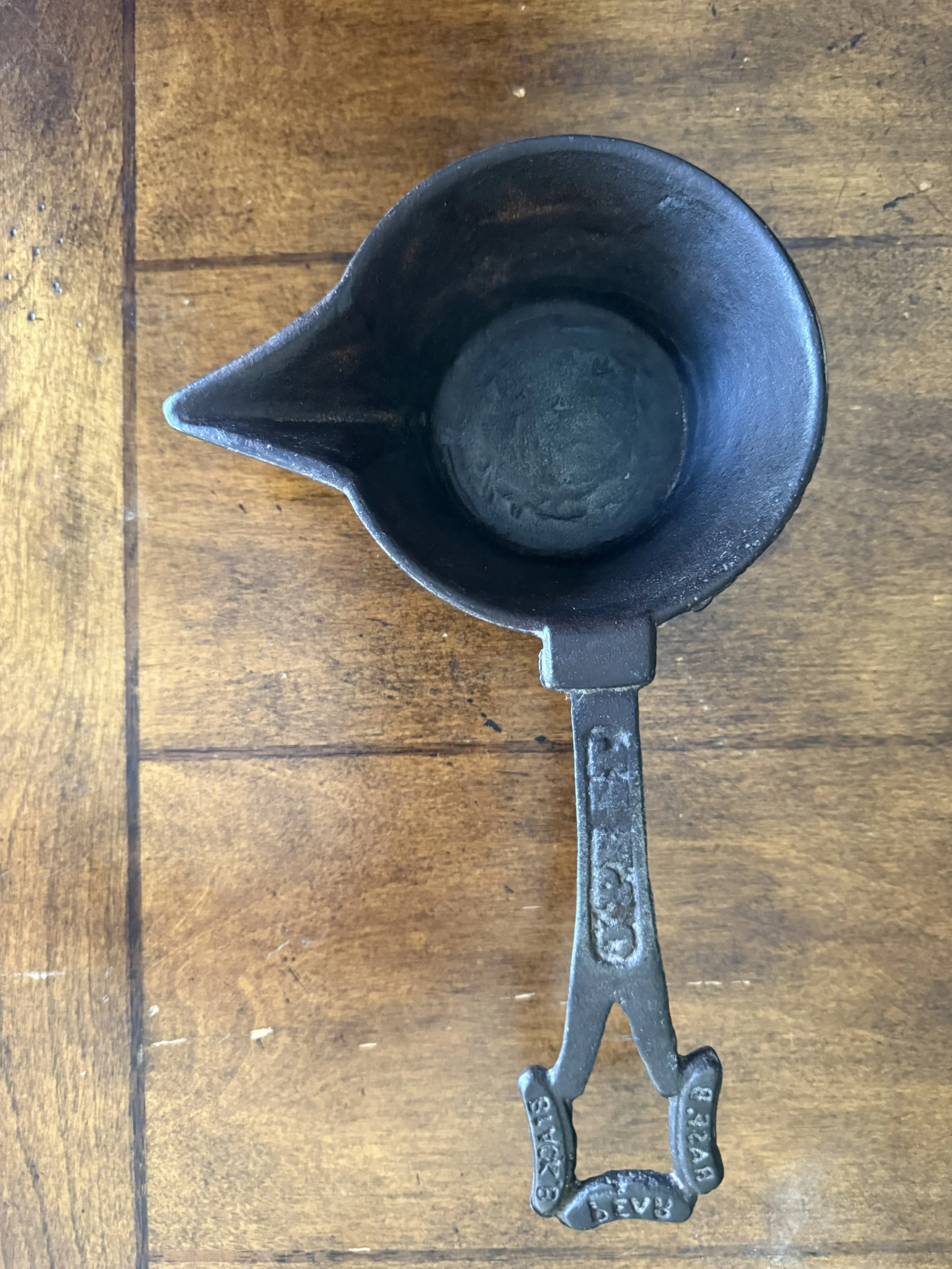
The J. Peet Wax-Sealing Ladle: A Cincinnati Mark
A J PEET cast-iron wax-sealing ladle from Cincinnati, with a promising but unconfirmed lead tying the name to an 1886 stove-works superintendent.

Standard Churn Company of Wapakoneta, Ohio
A cast iron honey extractor drive unit from the Standard Churn Company of Wapakoneta, Ohio — a firm whose business records are held in the Smithsonian's Warshaw Collection — carries a rack-and-pinion gear mechanism, two iron frame-holder arms, and the marks THE STANDARD CHURN CO. / WAPAKONETA, OHIO. / PATENTED, plus the numbers 12 and 14 above the patent mark. This post explains what the piece actually is (most people won't recognize it on sight), documents what can be confirmed about the company, and lays out the open questions — including a still-unlocated patent number — for further research.

Cincinnati Galvanizing Co. King Seamless-Cup Press
A King Seamless-Cup Press marked CIN'TI GALV CO. — cast iron handle, seamless galvanized steel cup, and a Cincinnati firm with a sixty-five year documented history behind it. The Schott Brothers founded Cincinnati Galvanizing in 1905 out of their family cooperage, built a major Spring Grove Avenue plant in 1920, and produced the King Seamless potato ricer as one of their documented specialty products. The seamless cup wasn't a brand claim — it was an engineering solution. First Cincinnati Galvanizing piece in the SSC collection.

May & Fiebeger Heater Furnace Damper Dial Gauge
A cast iron furnace damper dial gauge marked MAY & FIEBEGER — CHECK — AKRON OHIO, still fully functional after more than a century. Turn the dial and the ports open and close exactly as Frank Fiebeger designed them. Behind this single piece of Akron iron: a family that crossed the Atlantic in 1850, forty years of hardware and foundry work, seven U.S. patents, and a product line certified by federal commercial standards into the 1944s. First documented May & Fiebeger piece in the SSC collection

Kilgore Cast Iron Dollhouse Dining Side Chairs
Two small green chairs from a Kilgore Mfg. Co. dollhouse furniture production run in Westerville, Ohio — cast iron, original paint, mold positions 15 and 26. What makes them extraordinary is where they spent the last seventy-plus years: in the childhood dollhouse of Leslie Rule, daughter of true crime author Ann Rule, and in storage with her mother's estate until 2026. Fully documented Ohio cast iron with a provenance no one else is telling.

Champion Hardware Gothic Cathedral Cast Iron Bookends
Most cast iron cathedral bookends carry no maker's mark at all. This matched pair turns over to a name, a date, and a model number — Copyright 1931, Champion Hardware Co., No. 326 — cast in Geneva, Ohio. A documented Ohio foundry, a Gothic cathedral in bronzed iron, and its original finish preserved intact.

The Peck-Williamson Co. Furnace Damper Control Plate
In the basement of every well-heated American home between 1890 and 1920, there was a coal furnace. Managing it meant managing the damper. The Peck-Williamson Co. of Cincinnati put their name, their city, and their product on a cast iron plate mounted on the face of the damper assembly — and the homeowner saw it every time they went down to tend the fire. This plate still has its original chain.

Hercules Anchor Co. Patented Sad Iron
The Hercules Anchor Co. of Toledo, Ohio manufactured pressing irons in the early twentieth century. This size 2 patented sad iron — bearing the patent date August 4, 1903 and the full maker cartouche "Hercules Anchor Co. / Toledo / Ohio" — is a product of the same Ohio manufacturing tradition that produced the hollow ware in the SSC collection, expressed in a different form: not a skillet, but a tool for domestic labor, cast from the same gray iron, by an Ohio foundry whose history has not yet been fully written. The Hercules Anchor Co. does not appear in standard cast iron references. This piece is one of the primary physical records of its existence.

Forest City Foundries Co. — Niagara Furnaces Mini Spider Skillet
A Cleveland foundry's miniature spider skillet — cast iron advertising in its most literal form. The Forest City Foundries Co. sent these three-legged miniatures out with their salesmen to sell Niagara Furnaces, and cast their city's own nickname into every one. The second piece in SSC's Cleveland's Forgotten Foundries grouping, documented as found with original patina intact.
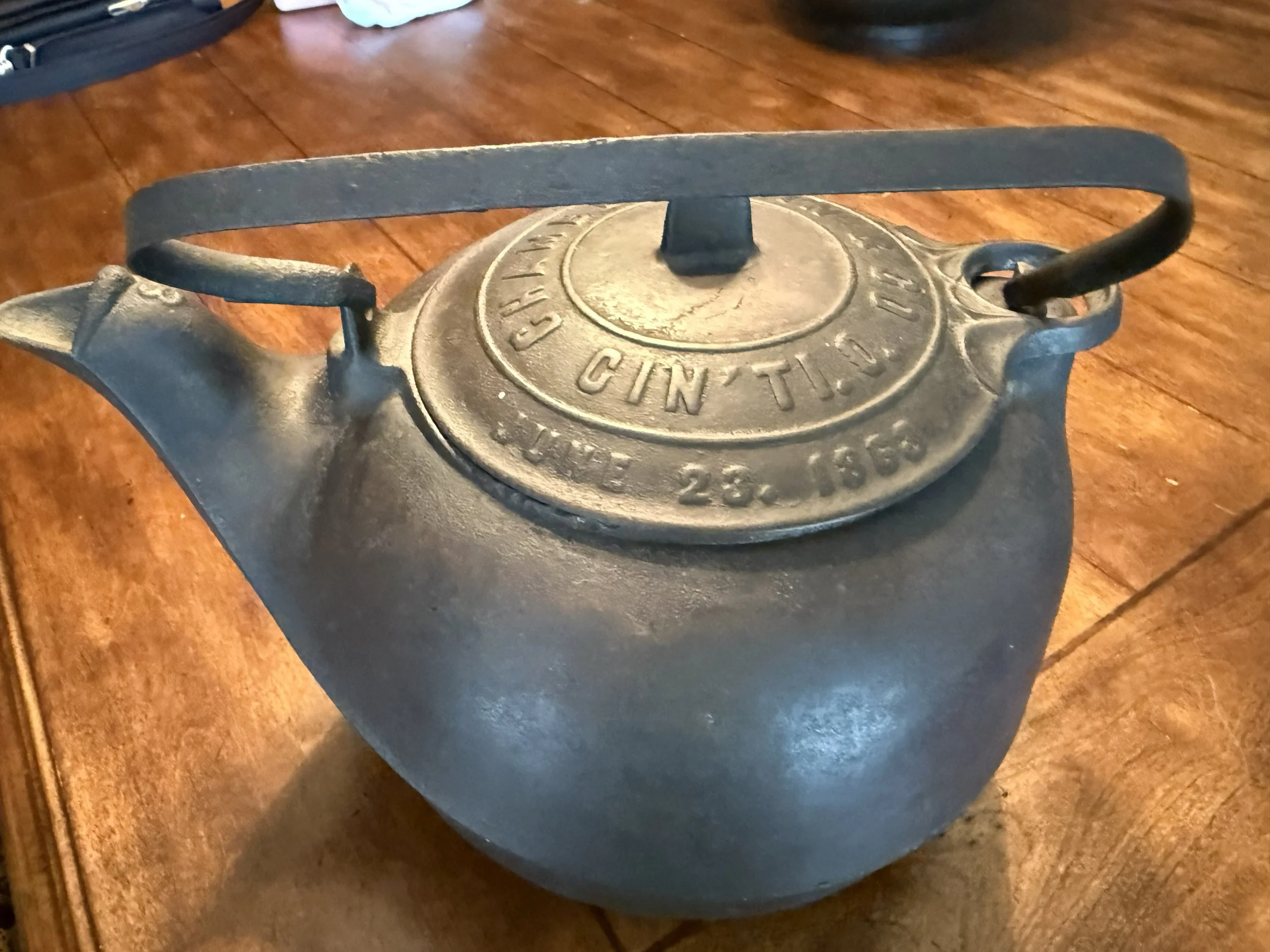
The Cornerstone: Chamberlain & Co. No. 8 Cast Iron Tea Kettle
The Cornerstone of the SSC collection: a Chamberlain & Co. No. 8 tea kettle bearing the June 23, 1863 date of U.S. Patent No. 38,972 by Barney H. Menke. This piece revealed a patent licensing network spanning five manufacturers across three states — an SSC original research discovery.
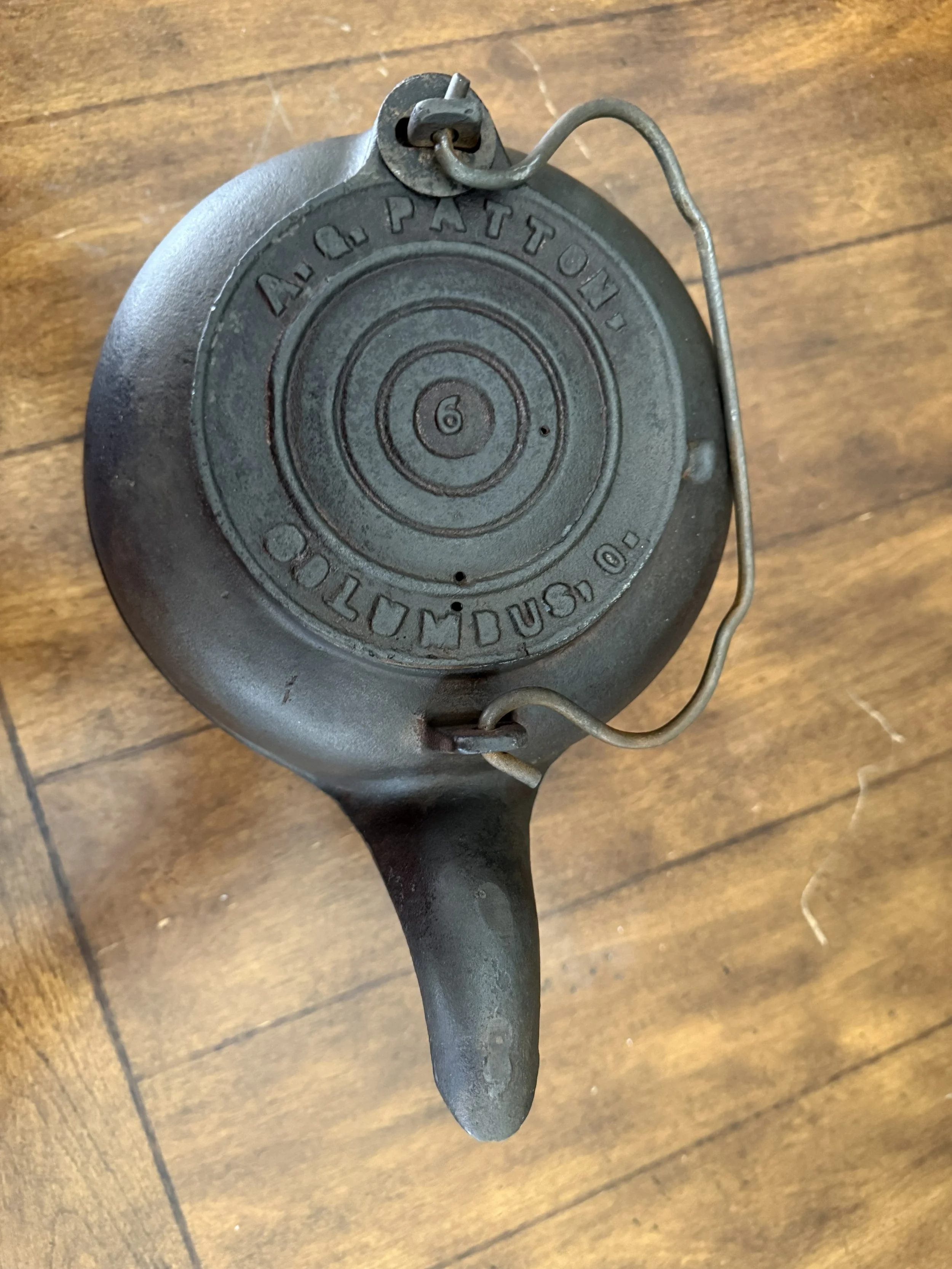
The A.G. Patton Cast Iron Tea Kettle
A Columbus foundryman who didn't just cast iron — he engineered it. Three steam vents cast directly into the lid pattern, a gate mark dating it to the 1870s or 1880s, and a name that connects Columbus to the Favorite dynasty.

The Adams & Britt Cincinnati Cast Iron Stove Kettle Griddle
Dated 1872 and carrying every letter of its maker's name as clearly as the day it was cast — a Cincinnati kettle griddle from a partnership so obscure that this piece may be the primary evidence it existed.

The Sidney Hollow Ware Co. No. 9 Skillet
From a foundry that lasted barely more than a decade — a thin, smooth, beautifully cast No. 9 skillet from Wagner's one-time competitor in Sidney, Ohio, the town that became the epicenter of American cast iron production.

The H.S. Pease Enameled Three-Leg Safety Kettle
A one-of-a-kind survival — an enameled three-leg safety kettle from a Cincinnati inventor-manufacturer whose patents spanned three decades, with its porcelain interior intact after more than 130 years. Preserved exactly as found.

The W. Resor & Co. Cincinnati Cast Iron Waffle Iron
From Cincinnati's first stove factory to the SSC collection — a museum-quality waffle iron from the Resor family foundry, whose patriarch arrived by flatboat in 1811 and whose stoves, mansions, and philanthropy helped build the Queen City.
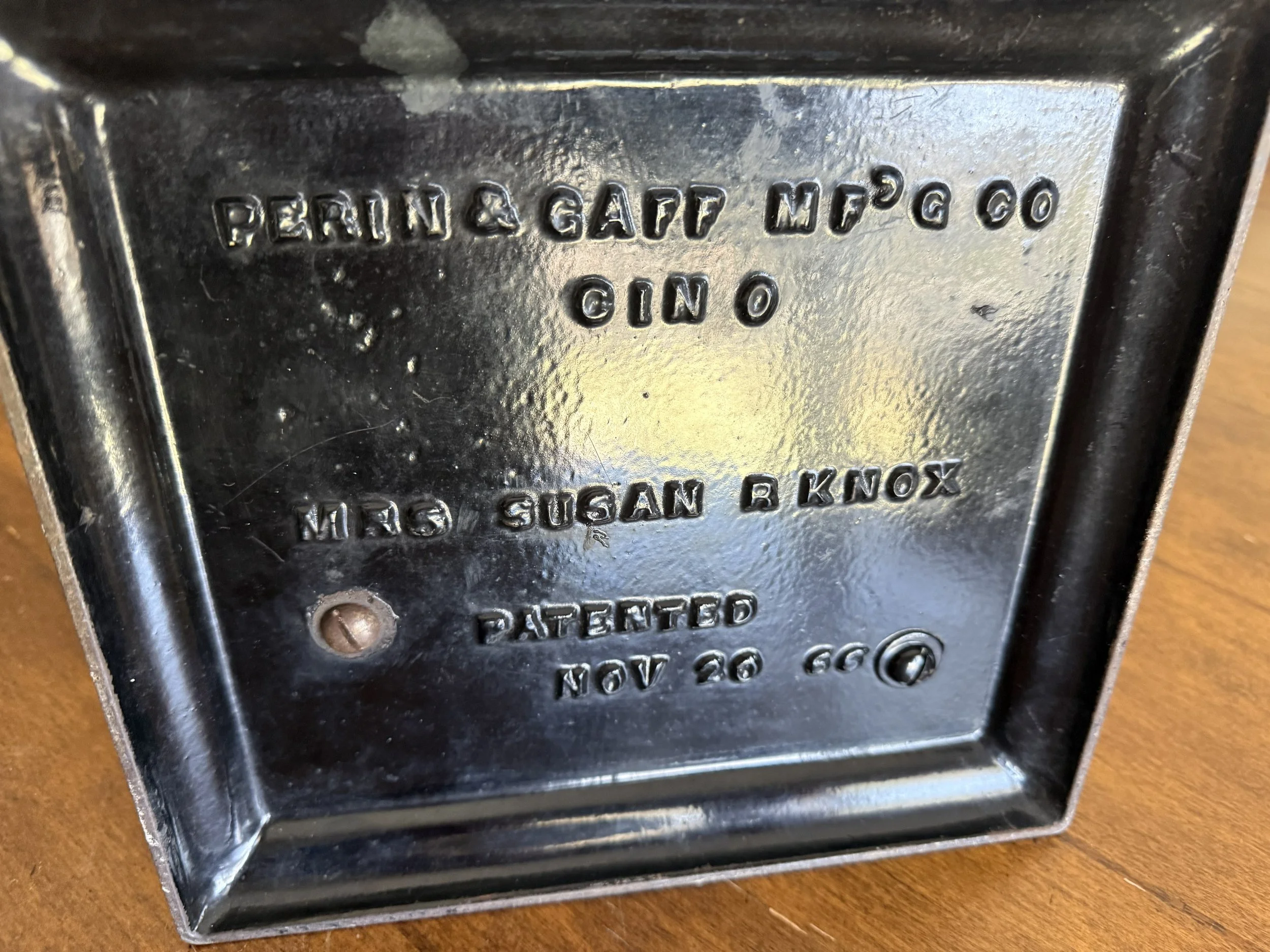
The Perin & Gaff Mfg. Co. Susan R. Knox Patent Crank Fluting Iron
A Victorian laundry machine that connects a woman inventor in New York to a Cincinnati foundry — manufactured under the 1866 patent of Susan R. Knox by Perin & Gaff of Cincinnati, with comparable examples in the Smithsonian's permanent collection.

Browne’s Patent Cast Iron Broom Head
A Cincinnati inventor's patented broom head from the first autumn after the Civil War — carrying his name and the exact date of his patent grant cast into the iron, five months after Appomattox.