Wapak Hollow Ware Company — No. 9 Cast Iron Flat-Bottom Kettle
SSC MUSEUM COLLECTION
Catalog No. SSC-WAPK-KTL-9-001
Wapak | No. 9 Flat-Bottom Kettle | Wapakoneta, Ohio
Wapak Hollow Ware Company • Wapakoneta, Auglaize County • Founded 1903 • Bankrupt 1926
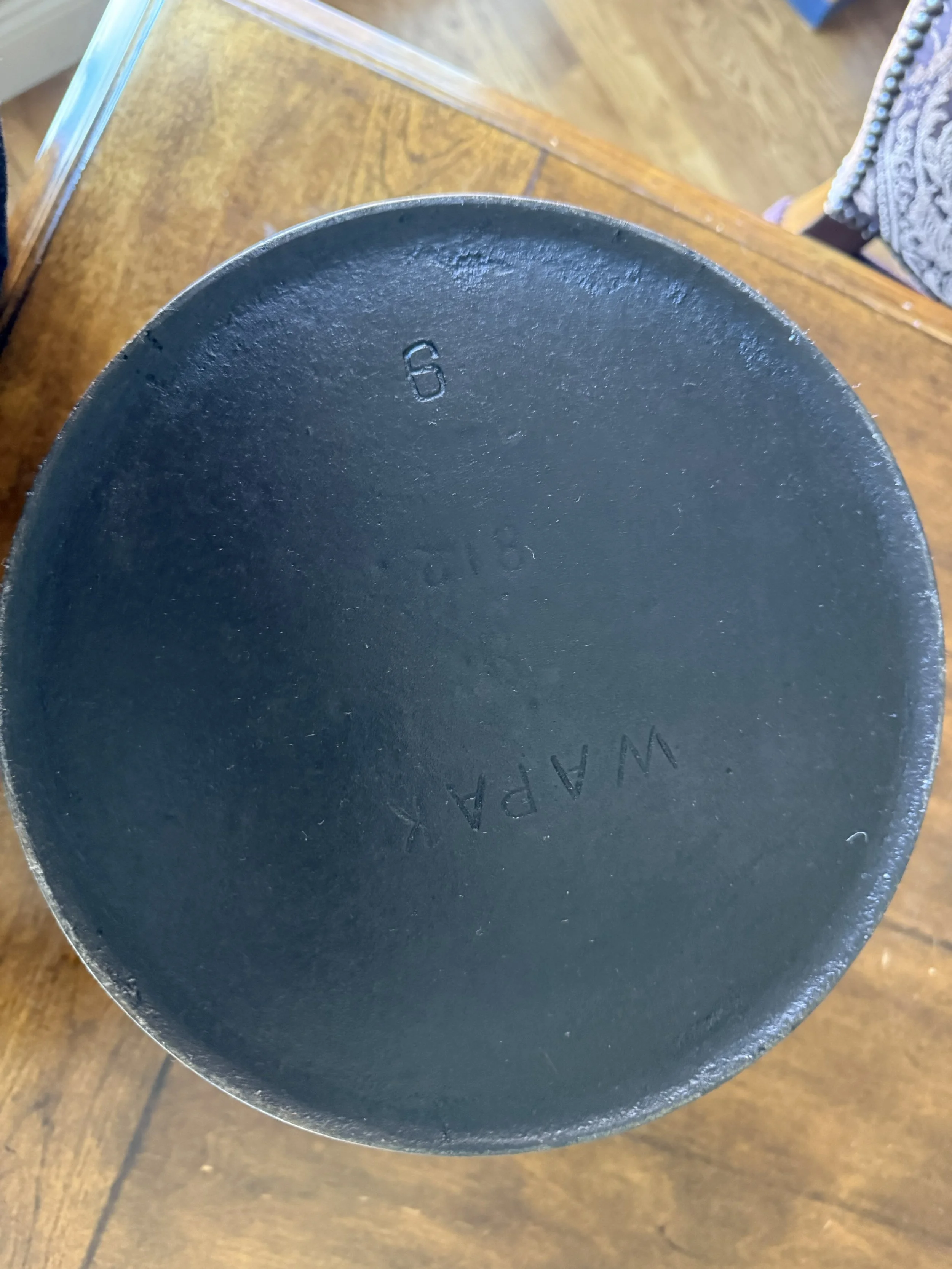
Bottom view showing the “WAPAK” maker’s mark in raised letters near the bottom edge, with size “9” at top and catalog/pattern markings visible at center. The flat bottom indicates this kettle was designed for stovetop use rather than hearth or crane cooking. The block letter WAPAK mark is the company’s most commonly encountered logo style.
In the small Auglaize County city of Wapakoneta, Ohio—about 60 miles north of Dayton in the western Ohio flatlands—the Wapak Hollow Ware Company operated for just 23 years, from 1903 to 1926. In that short span, the company produced some of the finest lightweight cast iron cookware ever made in America. Wapak’s thin-wall casting technique rivaled Griswold’s in quality and exceeded many competitors in lightness. The company’s premature end—bankruptcy in 1926—cut short what could have been a much longer story, but it also made every surviving Wapak piece a collector’s item. This No. 9 flat-bottom kettle, marked “WAPAK” in block letters on its base, is one of those survivors.
The flat-bottom kettle was a staple of the early 20th-century Ohio kitchen. Unlike three-legged kettles designed for hearth cooking or bailed kettles meant to hang from a crane, a flat-bottom kettle sat directly on a stove top—whether a wood-burning, coal, or gas range. The No. 9 is a generous size, deep enough for soups, stews, boiling water, and general-purpose cooking. The wire bail handle allowed the kettle to be lifted on and off the stove and hung for storage. It is a utilitarian piece—no ornamental casting, no decorative lid—designed to do heavy daily work in a working kitchen.
The block letter “WAPAK” mark on this kettle is the company’s most commonly encountered logo. Wapak used several different marks during its production years, including the block letter mark, an Indian Head or Native American medallion design, and a tapered logo. The block letter mark does not carry a specific date range within the company’s 1903–1926 production period, but the overall window is narrow enough that any Wapak piece can be confidently dated to the first quarter of the 20th century.
Piece Details
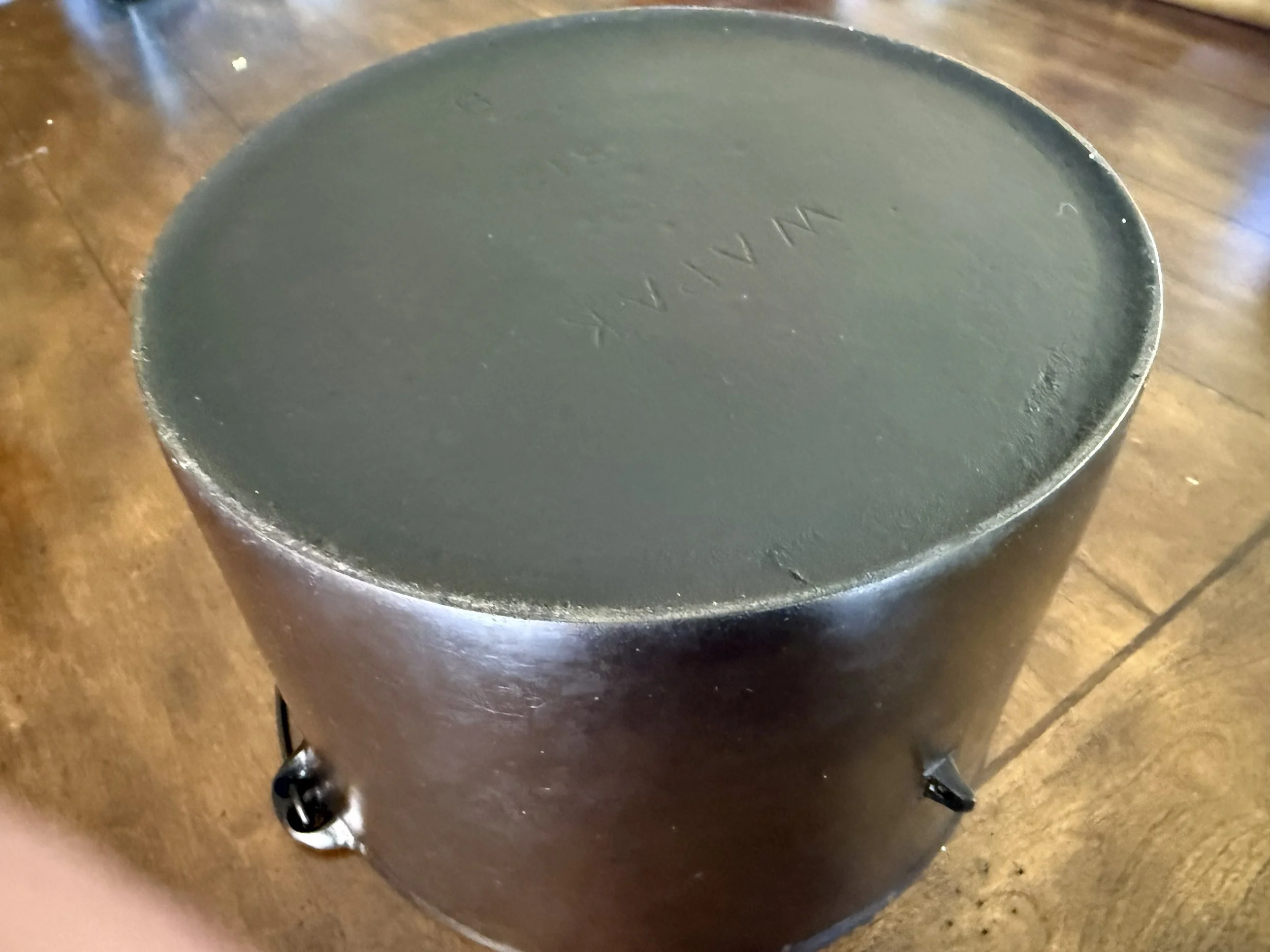
Profile view showing the deep straight-sided form of the No. 9 kettle with flat bottom and wire bail handle. The bail pivot ears are cast into the rim. The straight sides and substantial depth made this kettle suitable for boiling, stewing, and large-batch cooking on a stovetop. The piece has been professionally restored and re-seasoned.
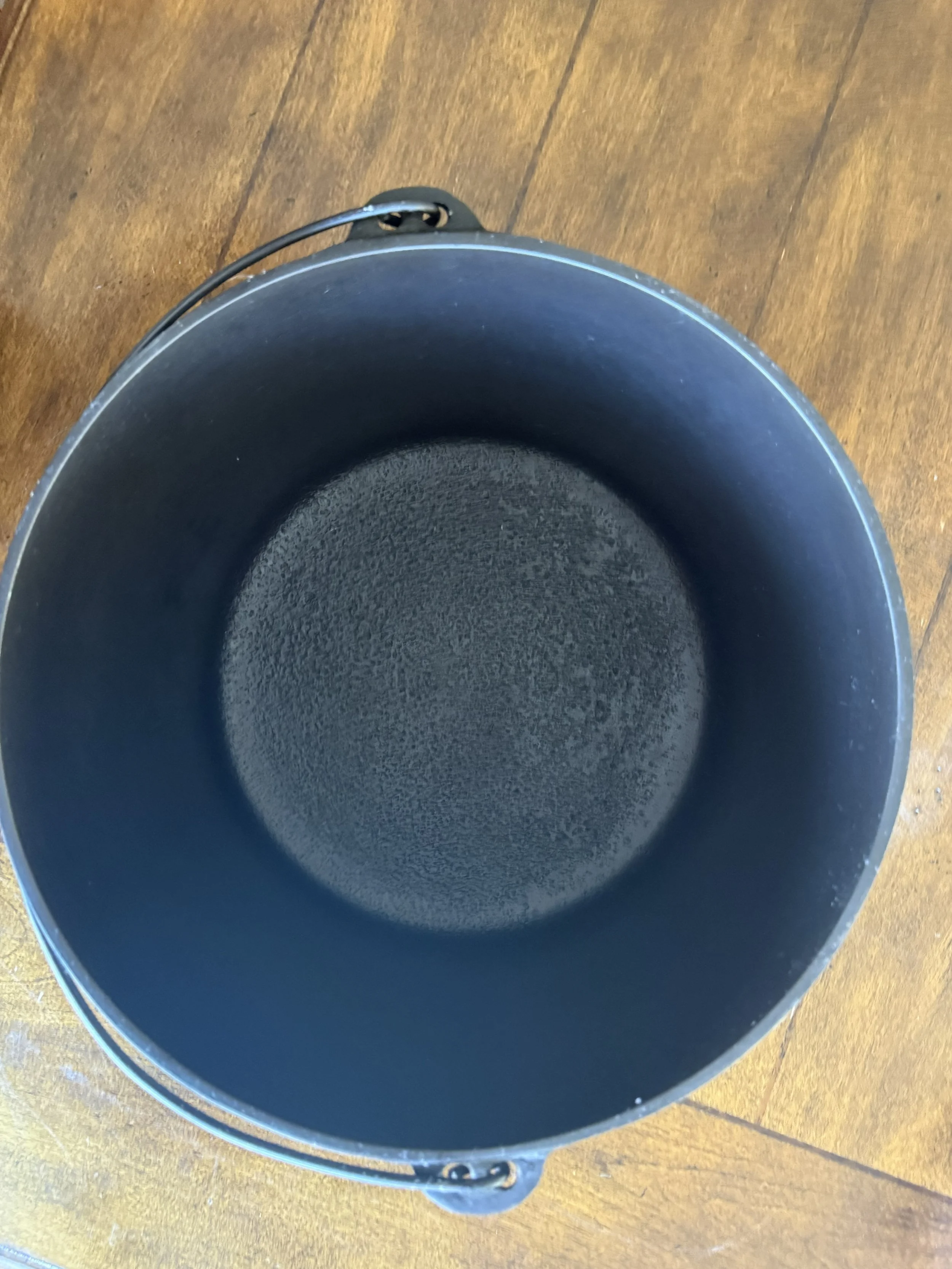
Interior top-down view showing the clean restored cooking surface and the wire bail handle across the opening. The interior has been cleaned and re-seasoned to a smooth black finish. The generous diameter of the No. 9 is evident from this angle.
Manufacturer
Wapak Hollow Ware Company (Wapakoneta, Ohio)
Piece Type
Cast iron flat-bottom kettle
Size
No. 9
Catalog Number
812
Material
Cast iron with wire bail handle
Construction
Deep straight-sided round kettle with flat bottom; wire bail handle with pivot ears; no pour spout; designed for stovetop use for boiling, stewing, and general cooking
Bottom Marking
“WAPAK” in raised letters near bottom edge; size “9” raised near top of bottom; additional pattern/catalog markings visible
Date of Manufacture
c. 1903–1926 (Wapak Hollow Ware Company production period)
Place of Manufacture
Wapakoneta, Auglaize County, Ohio
Condition
Restored — piece has been professionally cleaned and re-seasoned; WAPAK marking legible; wire bail handle intact; flat bottom sits level; no cracks or structural damage
Acquisition Date
January 29, 2026
Acquisition Source
eBay — Seller: golden_treats
eBay Item Number
168103563759
Order Number
22-14150-79781
SSC Catalog Number
SSC-WAPK-KTL-9-001
Historical Background
Wapak: Twenty-Three Years of Excellence
The Wapak Hollow Ware Company was founded in 1903 in Wapakoneta, a small city in Auglaize County in western Ohio. The company took its name from the common local abbreviation of the city’s name—itself derived from the Shawnee chief Wapakoneta, who had a settlement in the area. From its founding, Wapak positioned itself as a premium manufacturer of lightweight cast iron hollow ware, competing directly with the two dominant Ohio foundries: Wagner Manufacturing Company of Sidney (Shelby County, about 30 miles south) and Griswold Manufacturing Company of Erie, Pennsylvania.
Wapak’s signature was its thin-wall casting technique. The company’s skillets, kettles, and other products were notably lighter than those of many competitors, a quality that required precision in the foundry—thinner walls mean less margin for error in the casting process, and any flaw in a thin-wall piece is more likely to result in a crack or a failed casting. The fact that Wapak’s surviving pieces are consistently well-cast and free of major defects speaks to the skill of the foundry workers in Wapakoneta.
Wapak Logos and Dating
Collectors identify Wapak pieces by three main logo types. The block letter “WAPAK” mark—as on this kettle—is the most common and consists simply of the company name in raised capital letters. The Indian Head logo features a Native American profile medallion, a nod to the Shawnee heritage of the company’s namesake city. The Tapered Logo uses a distinctive narrowing letterform. Because the company operated for only 23 years, the dating window for any Wapak piece is tight: 1903 to 1926. There is limited documentation to assign specific logo types to specific years within that window, so most Wapak pieces are simply dated to the company’s full production period.
The End of Wapak
The Wapak Hollow Ware Company went bankrupt in 1926. Information about the company is scarce—Auglaize County records confirm the bankruptcy, but the specific causes have not been thoroughly documented. The broader economic pressures facing small foundries in the 1920s—competition from larger manufacturers, rising materials costs, and the beginning of the shift from cast iron to aluminum and enameled steel cookware—likely contributed. Whatever the cause, the result was the end of one of Ohio’s finest cast iron producers after barely two decades of operation.
The brevity of Wapak’s production run is a significant factor in its collectibility today. Every Wapak piece dates from a 23-year window. The company produced fewer total pieces than Wagner or Griswold, making survivors proportionally rarer. And the quality of the casting—light, thin, and precise—gives Wapak pieces a distinctive feel that experienced collectors can identify by weight alone.
SSC Collection Context
This No. 9 flat-bottom kettle adds Wapakoneta and Auglaize County to the SSC’s geographic coverage. Wapak is one of the three most sought-after Ohio cast iron makers alongside Wagner (Sidney, Shelby County) and Favorite Piqua Ware (Piqua, Miami County). All three operated within a 60-mile corridor in western Ohio during overlapping time periods—a concentration of cast iron manufacturing talent that has no parallel anywhere else in the United States.
The kettle form itself expands the SSC’s documentation of Wapak’s product range beyond skillets. A No. 9 flat-bottom kettle was a workhorse piece—not a specialty item or a novelty, but a daily-use vessel that sat on the stove of an Ohio household and earned its keep. That it survives, marked and identifiable, more than a century after it was cast in Wapakoneta, is a testament to both the iron and the foundry that poured it.
The iron is light. The walls are thin. The name is Wapak. And twenty-three years was enough to make it permanent.
Wapak Hollow Ware Company — Company Timeline
1903
The Wapak Hollow Ware Company is founded in Wapakoneta, Auglaize County, Ohio. The company specializes in lightweight “thin wall” cast iron cookware, competing directly with Griswold of Erie, Pennsylvania and Wagner of Sidney, Ohio. The company is named for its hometown—“Wapak” being a common abbreviation of Wapakoneta.
1903–1926
Wapak produces a full line of cast iron hollow ware including skillets, kettles, dutch ovens, and specialty items. The company uses multiple logo designs including the “WAPAK” block letter mark (as on this kettle), the Indian Head / Native American medallion logo, and the Tapered Logo. Wapak’s thin-wall casting technique produces lightweight, high-quality iron that is prized by collectors.
1910s
Wapak’s production peaks. The company’s lightweight castings rival Griswold in quality and thinness. Products are distributed regionally and nationally from the Wapakoneta facility.
1926
The Wapak Hollow Ware Company goes bankrupt. Auglaize County records document the closure. The short production period (approximately 23 years) and the quality of the castings make Wapak one of the most collectible names in American cast iron today.
2026
Steve’s Seasoned Classics acquires this Wapak No. 9 flat-bottom kettle from eBay seller golden_treats. The piece is documented as SSC-WAPK-KTL-9-001.
Why This Piece Matters
A Wapak No. 9 flat-bottom kettle is a piece of Auglaize County industrial history from a company that existed for barely a generation. In those 23 years, the Wapak Hollow Ware Company built a reputation for lightweight, precision-cast iron that placed it in the same conversation as Griswold and Wagner—companies that operated for decades longer and produced far more product. Wapak’s short life means fewer pieces survive. The ones that do carry the name of a small Ohio city and a small Ohio company that punched well above its weight.
For the SSC, this kettle puts Wapakoneta on the collection map. The western Ohio cast iron corridor—Sidney, Piqua, Wapakoneta—is now represented by all three of its anchor foundries. The iron tells the story: light, thin, strong, and marked with the name of the city that made it.
Sources & Further Reading
Cast Iron Collector — Wapak Hollow Ware Co. (castironcollector.com): company profile, logo identification, and production period documentation.
Wikipedia — List of American Cast-Iron Cookware Manufacturers (en.wikipedia.org): Wapak Hollow Ware Company entry with founding date, location, and bankruptcy.
Wagner and Griswold Society — Foundry Database (wag-society.org): Wapak listings and collector reference material.
eBay listing and invoice documentation — Item 168103563759, Order 22-14150-79781.
About Steve’s Seasoned Classics
Steve’s Seasoned Classics is an online museum dedicated to preserving and documenting the heritage of American cast iron, with a focus on Ohio foundry pieces from the 19th and early 20th centuries. The SSC collection features over 130 pieces with detailed provenance, historical research, and photography for each item.
