
Economy Stove Company of Cleveland Stove Tool
A cast iron combination stove wrench marked with two Economy Stove Co. Cleveland, Ohio brand names, traced to a documented 1906-1918 gas-range manufacturer.

Standard Churn Company of Wapakoneta, Ohio
A cast iron honey extractor drive unit from the Standard Churn Company of Wapakoneta, Ohio — a firm whose business records are held in the Smithsonian's Warshaw Collection — carries a rack-and-pinion gear mechanism, two iron frame-holder arms, and the marks THE STANDARD CHURN CO. / WAPAKONETA, OHIO. / PATENTED, plus the numbers 12 and 14 above the patent mark. This post explains what the piece actually is (most people won't recognize it on sight), documents what can be confirmed about the company, and lays out the open questions — including a still-unlocated patent number — for further research.

Champion Hardware Gothic Cathedral Cast Iron Bookends
Most cast iron cathedral bookends carry no maker's mark at all. This matched pair turns over to a name, a date, and a model number — Copyright 1931, Champion Hardware Co., No. 326 — cast in Geneva, Ohio. A documented Ohio foundry, a Gothic cathedral in bronzed iron, and its original finish preserved intact.

Hercules Anchor Co. Patented Sad Iron
The Hercules Anchor Co. of Toledo, Ohio manufactured pressing irons in the early twentieth century. This size 2 patented sad iron — bearing the patent date August 4, 1903 and the full maker cartouche "Hercules Anchor Co. / Toledo / Ohio" — is a product of the same Ohio manufacturing tradition that produced the hollow ware in the SSC collection, expressed in a different form: not a skillet, but a tool for domestic labor, cast from the same gray iron, by an Ohio foundry whose history has not yet been fully written. The Hercules Anchor Co. does not appear in standard cast iron references. This piece is one of the primary physical records of its existence.
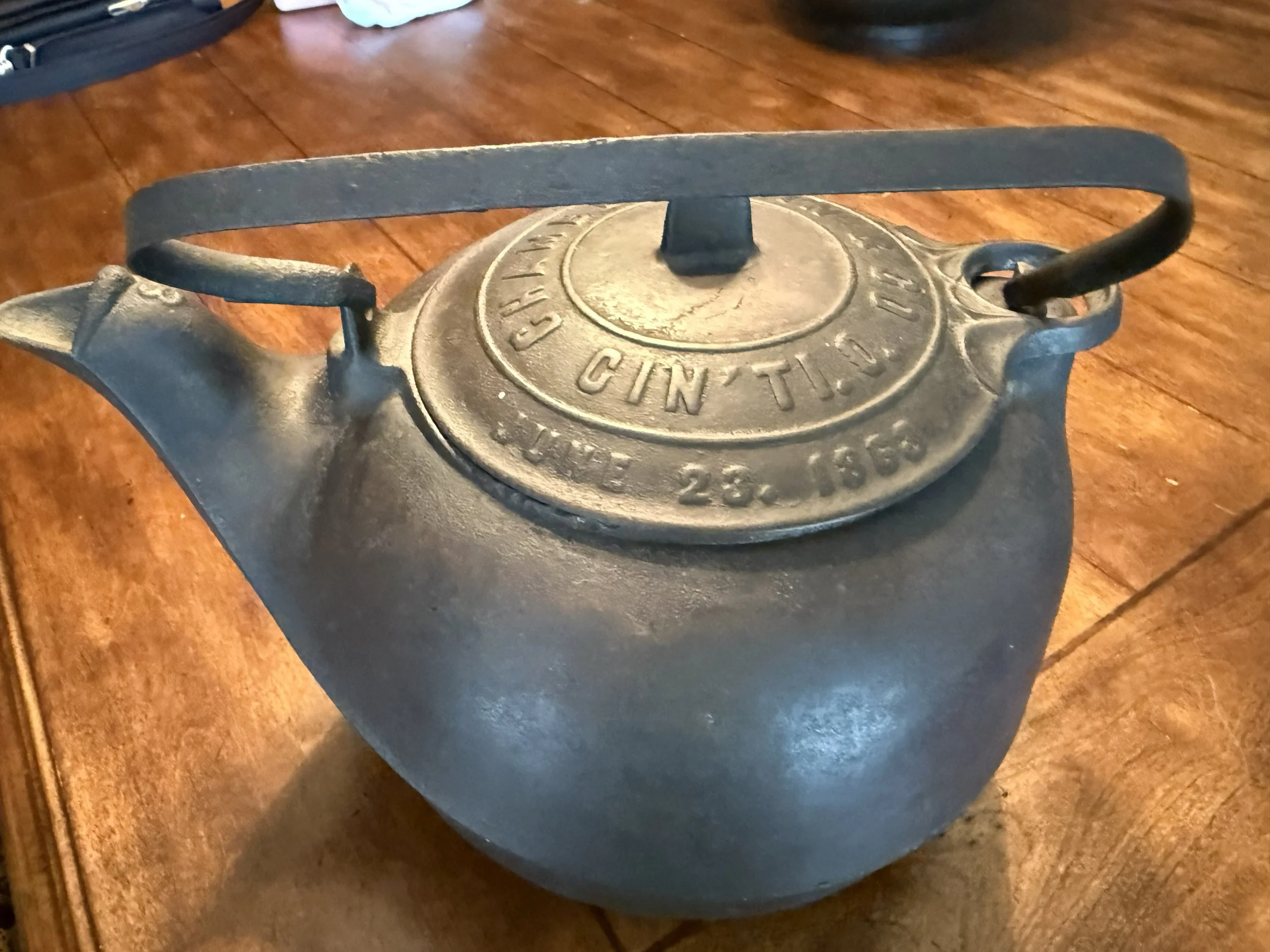
The Cornerstone: Chamberlain & Co. No. 8 Cast Iron Tea Kettle
The Cornerstone of the SSC collection: a Chamberlain & Co. No. 8 tea kettle bearing the June 23, 1863 date of U.S. Patent No. 38,972 by Barney H. Menke. This piece revealed a patent licensing network spanning five manufacturers across three states — an SSC original research discovery.

The Kenton Brand Cast Iron Combination Safe Bank
In 1893, a struggling lock company in Kenton, Ohio cast its first toy: a bank. That decision launched the Kenton Hardware Company on a path to becoming one of the world's largest cast iron toy factories — makers of horse-drawn fire trucks, toy automobiles, and the Gene Autry cap pistol that sold two million units in eighteen months. This combination safe still bank, marked "KENTON BRAND" on the base, is the product category that started it all. Ornate Victorian scrollwork, combination knob, coin slot, and hinged rear panel. Pieces held by the Smithsonian. Ohio Historical Society marker at the factory site. Acquired from eBay seller jpnkoi, March 2026

The Century Machine Co. Cast Iron Maker’s Plaque
Not every piece in the SSC collection comes from a kitchen. This ornate cast iron maker's plaque was bolted onto commercial bakery equipment manufactured by The Century Machine Company of Cincinnati, Ohio. Century built ovens and bread-making machines for wholesale bakers, developed portable field bakeries that fed American soldiers in every theater of World War II, earned the Army-Navy "E" Award for wartime production excellence — and was liquidated in 1955 when its market disappeared. This plaque may be among the last tangible artifacts of the company's existence. Acquired from eBay seller gerardg55, March 2026.
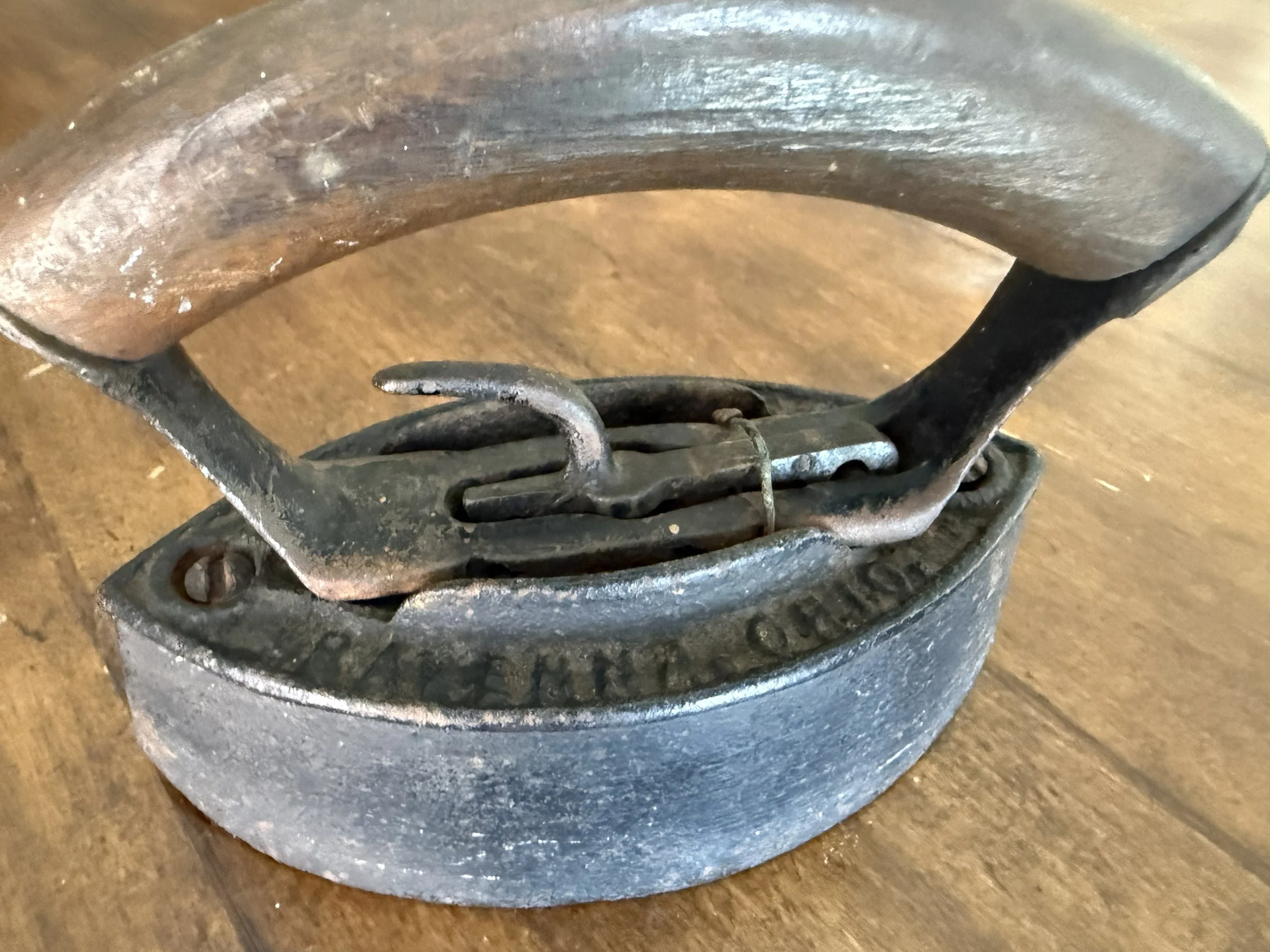
The A.C. Williams Co. Sad Iron
Before the cast iron banks. Before the toy automobiles and airplanes sold through Woolworth's and Kresge's. Before A.C. Williams became the largest manufacturer of cast iron toys in the world — there was a heavy, solid sad iron with a detachable wooden handle. This one is marked "WILLIAMS CO." and "RAVENNA, OHIO" and dates to the transitional period when miniature models of this very product, made for traveling salesmen, caught a buyer's eye and launched one of Ohio's most celebrated foundries into the toy business. Acquired from Etsy seller stoneridgeattic, March 2026.

The Ney Mfg. Co. No. 403 Barn Hay Pulley
Before the hay baler. Before the tractor. There was a rope, a pulley, and a man with a pitchfork. The Ney Manufacturing Company of Canton, Ohio built its business on the hardware that moved hay from wagon to loft — and this No. 403 barn pulley carries Jacob Ney's original 1879 patent date, the invention that launched the company.
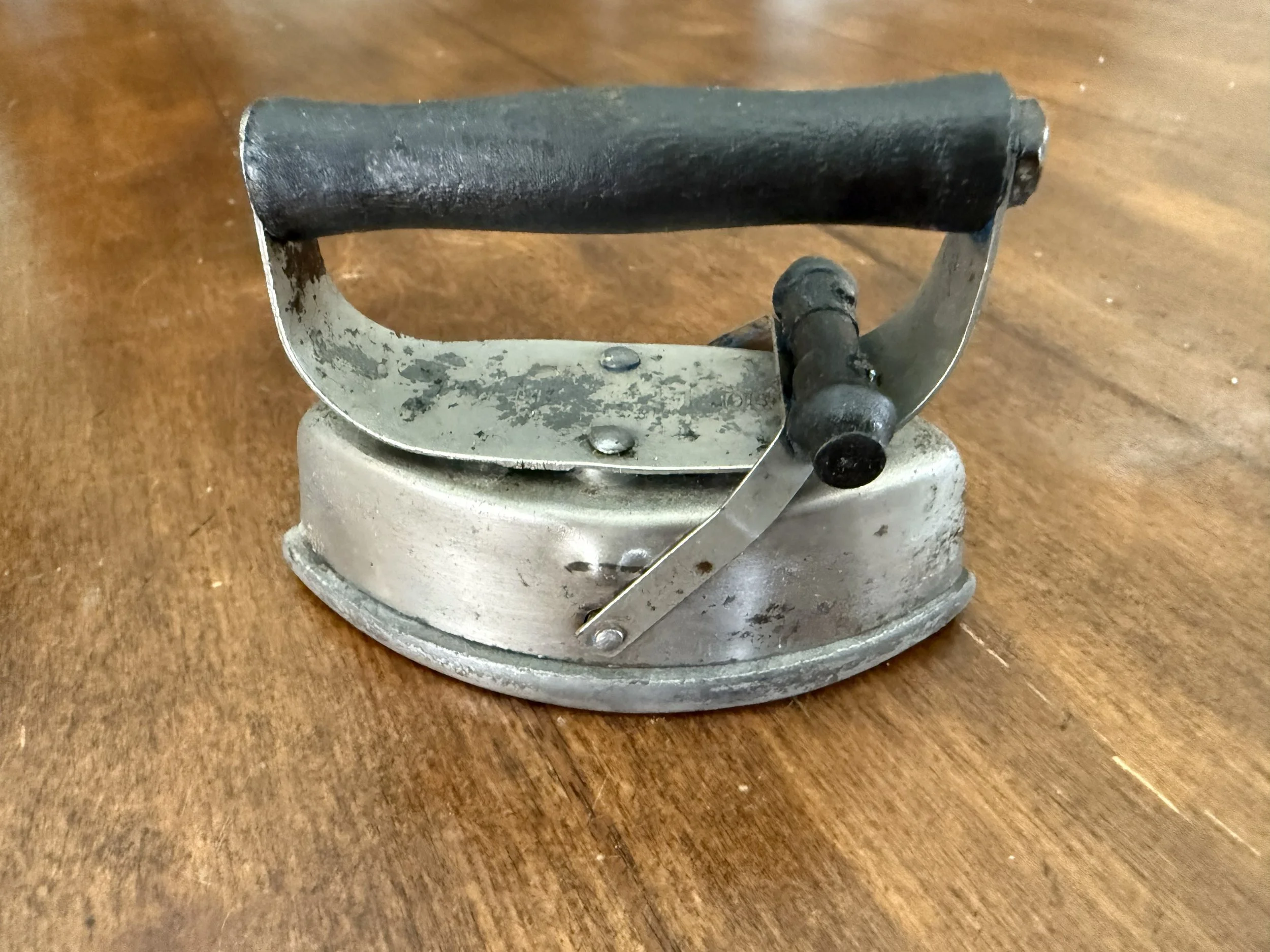
Dover Manufacturing Co. No. 4 Asbestos Sad Iron
Every woman in America ironed clothes. Dover Manufacturing Company of Canal Dover, Ohio built its entire business on solving one part of that problem: the hot handle. This No. 4 asbestos sad iron — with its patented detachable hood, asbestos lining, and cool wooden handle — represents the SSC collection's first piece from Tuscarawas County.

Unknown Wapakoneta Foundry No. 258 Camp Waffle Iron
Before Wapak Hollow Ware. Before Ahrens and Arnold. Before the Indian Head logo. In 1858, an unnamed foundry in Wapakoneta, Ohio cast this diamond-pattern camp waffle iron — pushing the town's documented cast iron heritage back forty-five years before the foundry that put "Wapak" on the collecting map.
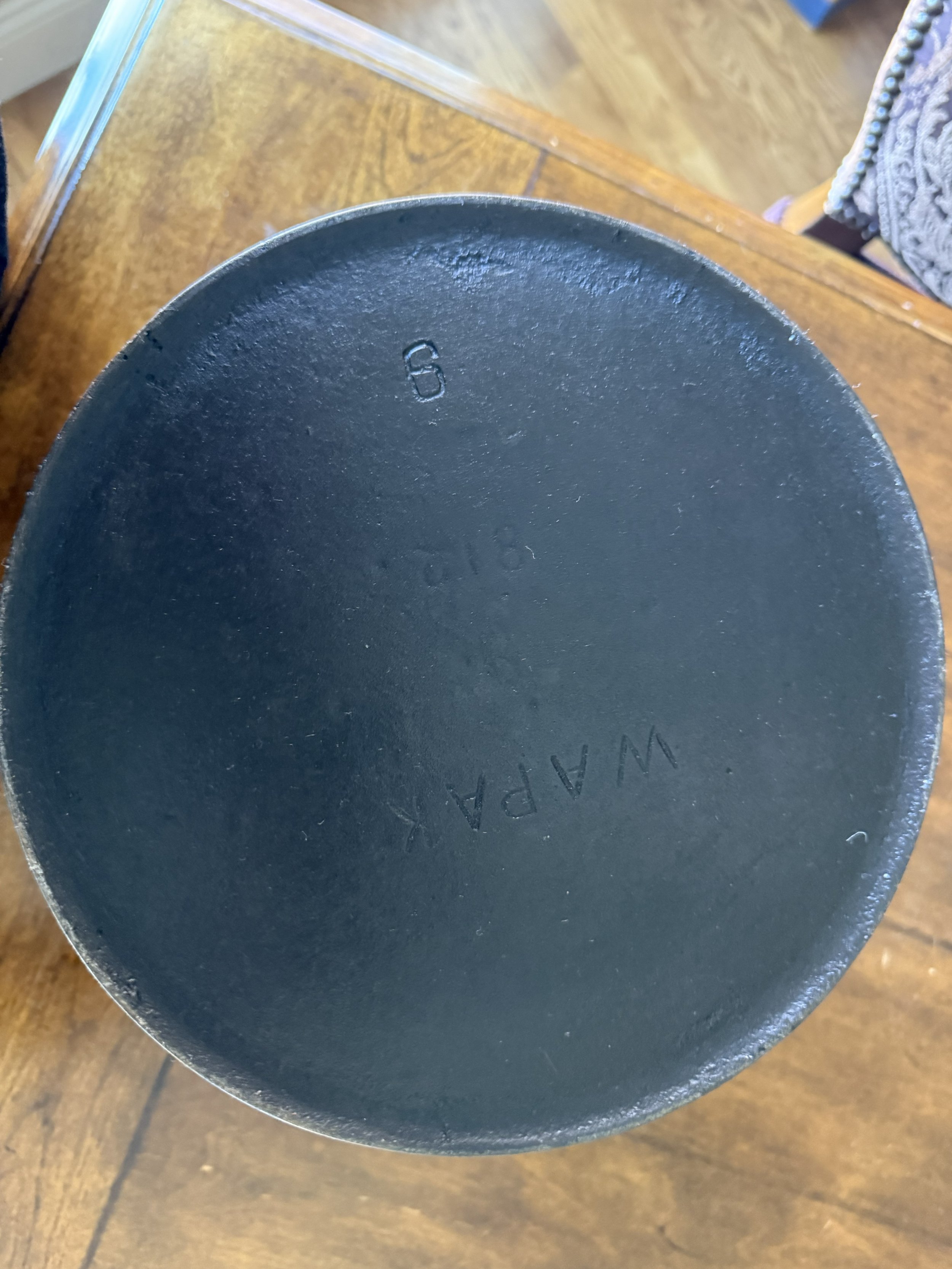
Wapak Hollow Ware Company — No. 9 Cast Iron Flat-Bottom Kettle
The Wapak Hollow Ware Company of Wapakoneta, Ohio existed for just 23 years — from 1903 to 1926 — but in that span produced some of the finest lightweight cast iron in American manufacturing history. This No. 9 flat-bottom kettle, marked "WAPAK" in block letters, represents the company's workhorse product line: deep, straight-sided, flat-bottomed vessels built for daily stovetop use in early 20th-century Ohio kitchens. Professionally restored. Acquired from eBay seller golden_treats, January 2026.

Vitantonio Manufacturing Company — No. 5 Cast Iron Pizzelle Iron
Angelo Vitantonio founded his manufacturing company in 1906, bringing centuries of Italian baking tradition to Ohio. This No. 5 stovetop pizzelle iron — marked "VITANTONIO MFG CO / WILLOUGHBY, OHIO" — features a traditional four-quadrant Italian scroll pattern on one plate and a sunburst design on the other, with a field of tiny cast stars covering both exterior faces. Three generations of the Vitantonio family operated the company from Lake County, Ohio. Acquired from eBay seller ctryf26, November 2025.

Adamson Manufacturing Company — Cast Iron Tire Tube Vulcanizer
In the first decades of the automobile age, a flat tire was not an inconvenience — it was a certainty. This cast iron vulcanizer by the Adamson Manufacturing Company of East Palestine, Ohio, patented April 1913, allowed motorists and mechanics to permanently repair punctured inner tubes by heat-bonding raw rubber patches at the molecular level. Marked "ADAMSON MFG. CO. / PATENTED / APR 1913 / E. PALESTINE, O." Original patina preserved. Acquired from eBay seller funmoneyfromselling, March 2026.
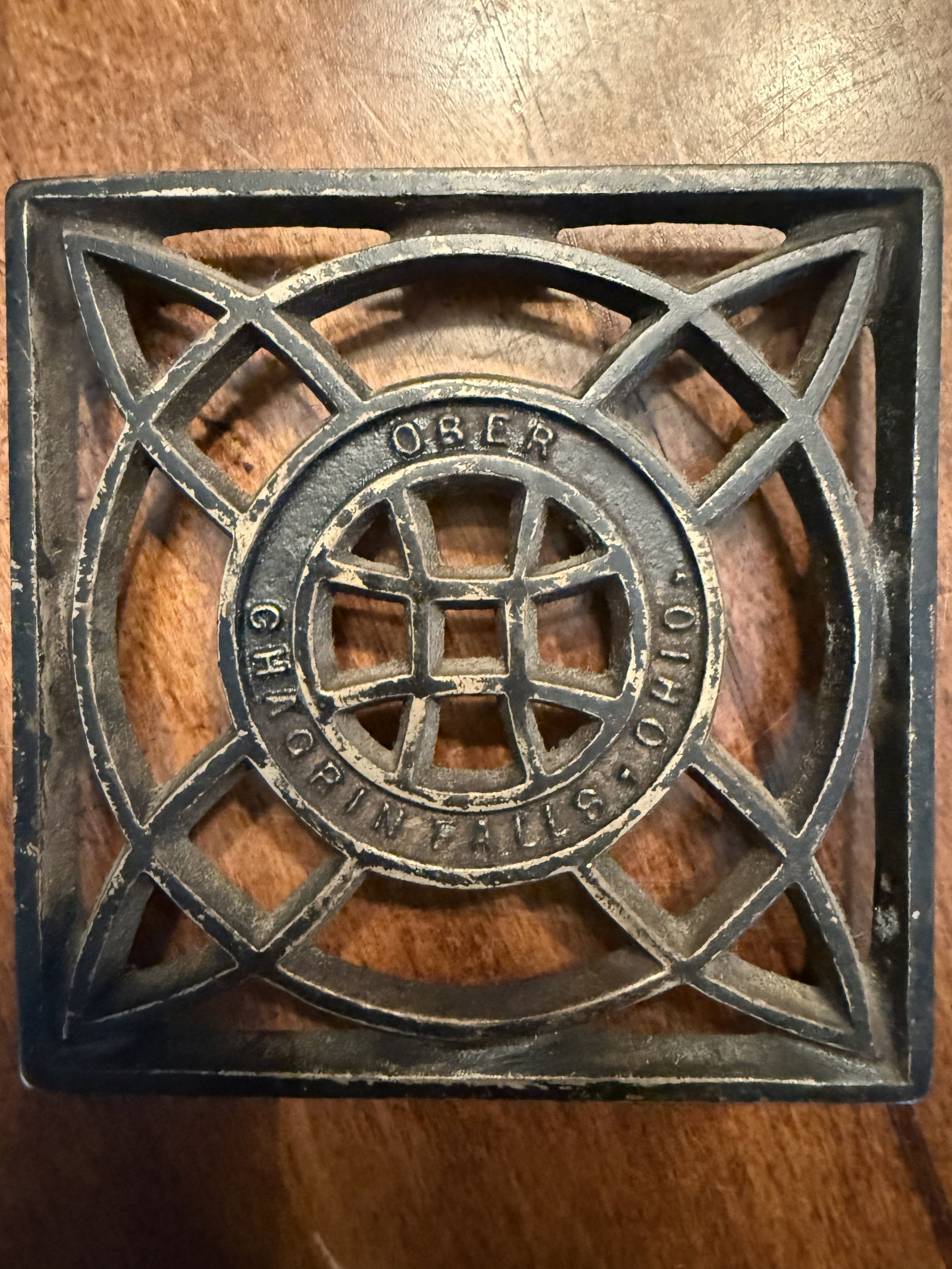
Ober Manufacturing Company — Cast Iron Trivet / Sadiron Stand
A cast iron trivet from an 80-year Ohio village foundry. Ober Manufacturing Company of Chagrin Falls produced sadirons, trivets, and woodworking machinery from the 1870s onward. Marked "OBER / CHAGRIN FALLS • OHIO" — the founder's home now houses the local historical society.

The Taylor & Boggis Foundry Co. — No. 0 Hand Torch
A cast iron hand torch from Cleveland's oldest foundry. The Taylor & Boggis Foundry Co., founded 1864, produced this No. 0 Hand Torch with original cap and wick intact. Full maker's mark identifies Cleveland, Ohio — a signature piece for the Cleveland's Forgotten Foundries collection.

Newman Brothers Inc. — The Last Supper Cast Iron Relief Plaque
A cast iron Last Supper relief plaque from one of Ohio's oldest foundries. Newman Brothers Inc. of Cincinnati has been casting metal since 1882. This high-relief devotional plaque carries the "NEWMAN BROS INC" maker's mark and extends the SSC's documentation into Cincinnati's decorative metalwork tradition.
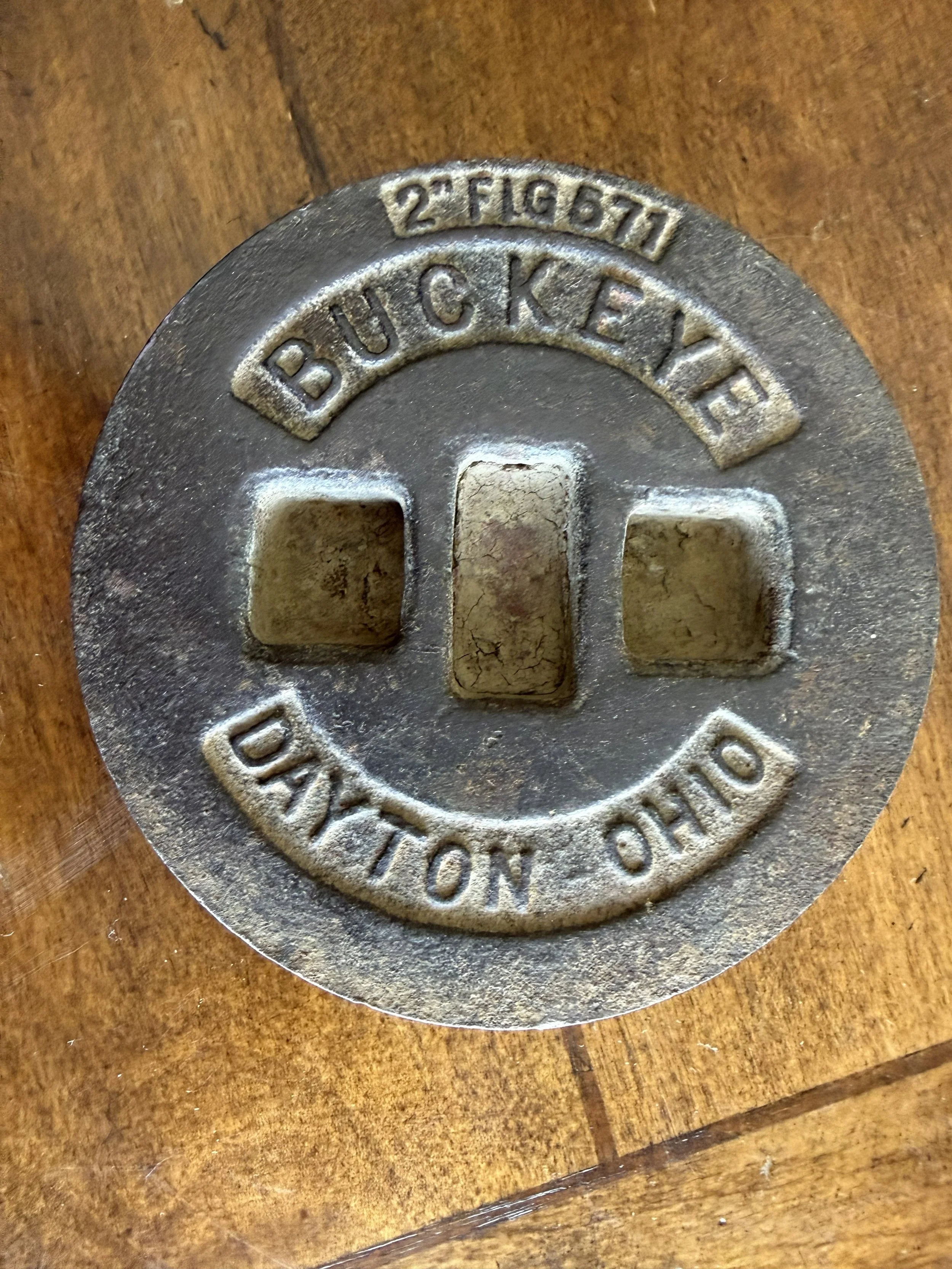
Buckeye Iron & Brass Works 2” Fig. 671 Cleanout Cap
This cast iron cleanout cap was produced by Buckeye Iron & Brass Works of Dayton — the foundry the Wright Brothers walked into when they needed an aluminum crankcase for the engine that would fly at Kitty Hawk. Some of the best stories in American cast iron are not on skillets. They are on the workpieces that built the infrastructure.

Superior Foundry Inc. Miniature Cast Iron Melting Bowl
Superior Foundry of Cleveland was no minor operation — two of its executives served as president of the American Foundry Society. Yet today its products are described as "very difficult to find." This miniature melting bowl keeps the record.
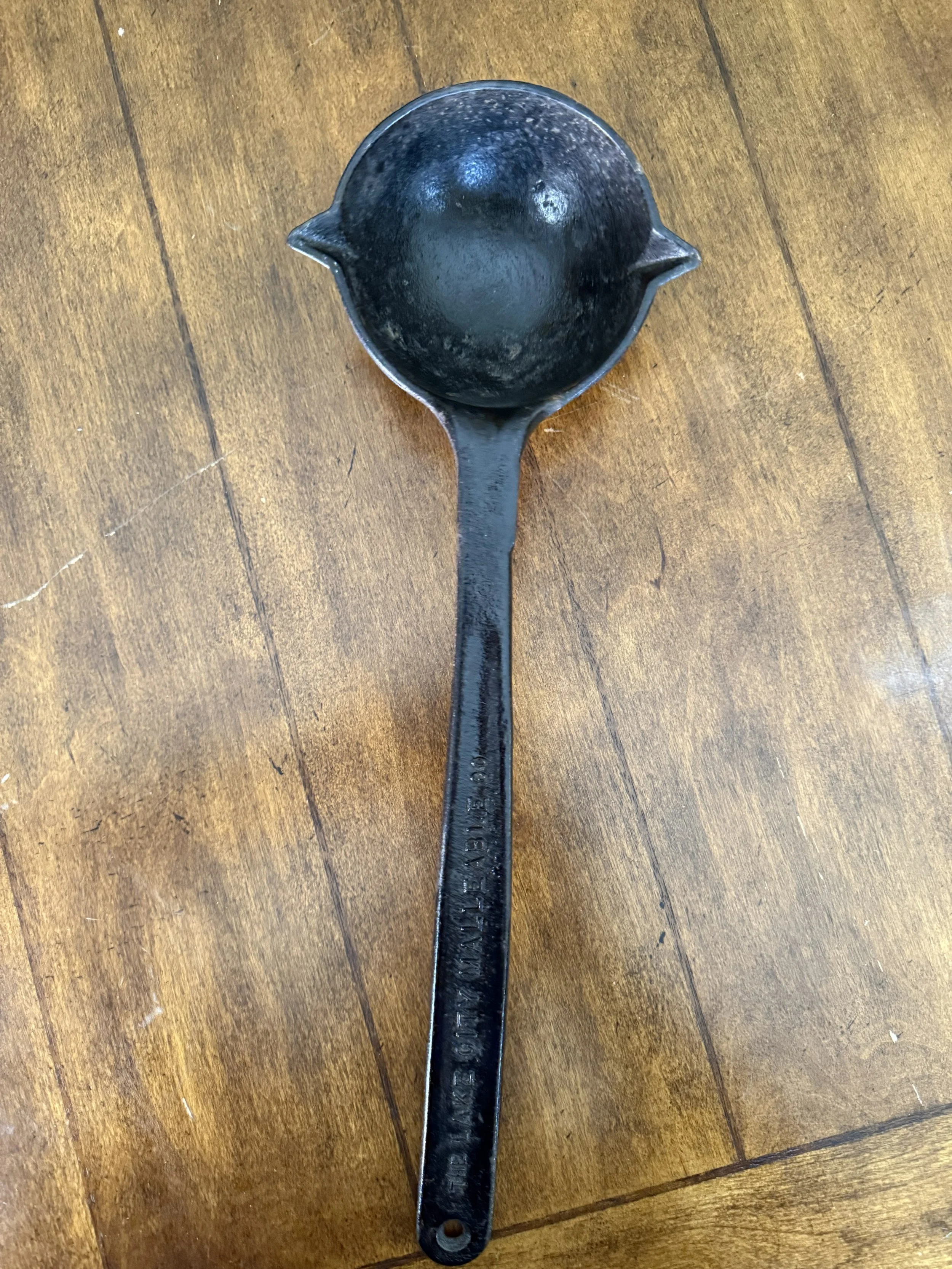
Lake City Malleable Co. No. 5 Lead Casting Ladle
This No. 5 casting ladle carries Cleveland's name on its handle — made by The Lake City Malleable Co., a Cuyahoga County foundry known for industrial ladles, kitchen utensils, and elegantly cast advertising figurines.