Marion Stove Co. Cast Iron Stove Lid Lifter
SSC MUSEUM COLLECTION
Catalog No. SSC-MARION-LFT-1890-001
“MARION STOVE CO.” | Stove Lid Lifter | Sidney, Ohio Origins
Circa 1888–1910 • Marion Stove Company (est. 1855, Sidney, Ohio)
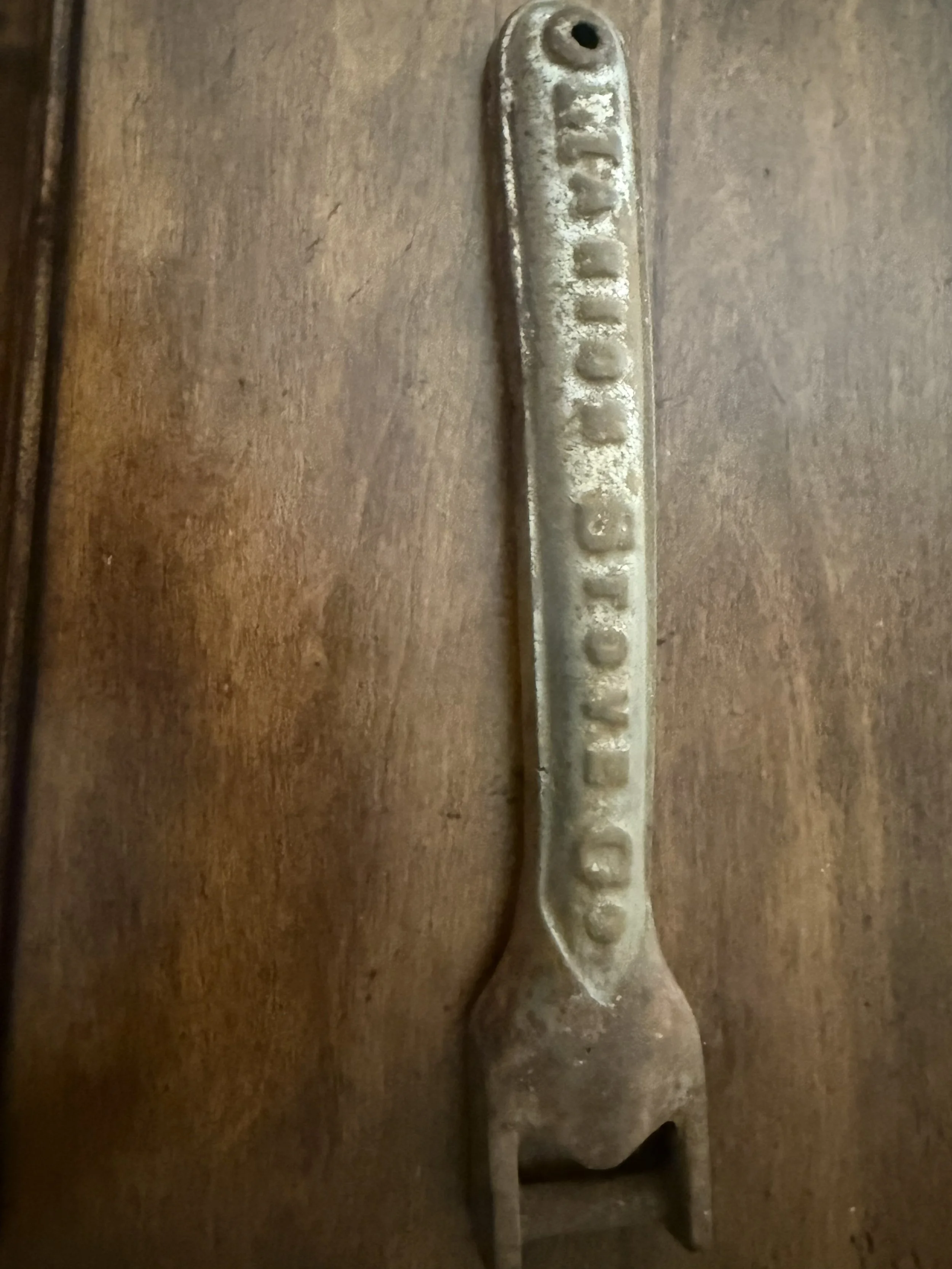
Marked side: “MARION STOVE CO.” cast in raised letters along the handle. The piece retains its original nickel plating—the silvery-gray surface visible across the handle and lifter head is factory-applied finish, not bare iron. This original patina is irreplaceable and represents the piece exactly as it left the foundry over a century ago.
Every wood-burning and coal-burning stove came with a lid lifter. It was the most fundamental tool in the stove kit—a simple cast iron lever with a forked or slotted head that engaged the recessed handle on a stove’s cooking lid, allowing the cook to lift a lid that might be several hundred degrees hot without burning her hand. The lid lifter sat on a hook beside the stove or leaned against the wall within arm’s reach, and it was used dozens of times a day: lifting lids to add fuel, to check the fire, to move pots from one opening to another, to adjust draft. It was the first tool you grabbed in the morning when you opened the stove to start the fire and the last tool you used at night when you banked the coals.
This lid lifter carries the name “MARION STOVE CO.” cast into its handle—advertising the company every time the cook picked it up. Marion Stove Company’s story begins not in Marion, Indiana, where the company is usually located by collectors, but in Sidney, Shelby County, Ohio—the same town that would become the home of Wagner Manufacturing Company three years after Marion’s foundry left for Indiana. The connection between Marion Stove Works and Wagner is not merely geographic: when the Wagner brothers established their company in Sidney in 1891, they hired R.O. Bingham—previously superintendent at Marion Stove Works—to run their operation. A Marion man helped build Wagner Ware.
For the SSC collection, this lid lifter is a bridge piece: it connects the Sidney, Ohio manufacturing ecosystem to the broader Indiana stove industry, and it does so through a tool that retains its original factory finish—a nickel plating that has survived more than a century of handling and storage without being stripped, polished, or refinished. That original surface is the piece’s most important characteristic, and its preservation is central to the SSC philosophy.
Why Original Patina Must Never Be Disturbed
This lid lifter retains its original nickel plating—the factory-applied finish that Marion Stove Co. put on the piece before it was shipped to a customer over a century ago. The silvery-gray surface, with its subtle variations in tone and its areas of gentle wear where hands gripped the handle over decades of daily use, is not corrosion. It is not damage. It is the piece’s authentic surface history, and it is irreplaceable.
The impulse to “clean up” an old piece of iron—to wire-brush it, sandblast it, grind it smooth, or strip it to bare metal—is one of the most destructive things a collector or well-meaning owner can do to a piece of historic cast iron. Original patina is not dirt. It is evidence. Every layer of that surface tells a story: the factory finish records the manufacturer’s original presentation; the wear patterns record how the tool was held and used; the oxidation layers record the environment in which it was stored; the handling marks record the hands that picked it up. Remove any of these layers and the evidence is gone permanently. You cannot put original patina back.
The SSC Archival Black™ protocol exists precisely for this reason. SSC’s preservation philosophy is non-destructive only: lye degreasing to remove organic buildup and electrolysis to address active rust are the only acceptable interventions. Grinding, sanding, wire-brushing, sandblasting, and chemical stripping are never permitted on collection pieces. A piece that arrives with its original surface intact—like this Marion lid lifter with its nickel plating—receives the gentlest possible treatment: careful cleaning of loose debris, stabilization of any active corrosion, and nothing more. The goal is not to make the piece look new. The goal is to preserve the piece as a document of its own history.
Nickel plating on cast iron stove accessories was standard practice in the late nineteenth and early twentieth centuries. Stove manufacturers plated their lid lifters, trivets, and trim pieces to prevent rust, improve appearance, and signal quality. The survival of original nickel plating on a piece this old is genuinely uncommon—most plated stove tools have been stripped, over-cleaned, or lost their plating to corrosion over the decades. This Marion lid lifter’s plating has survived because someone, somewhere in its 130-year history, stored it properly. The SSC collection’s job is to make sure that care continues.
Piece Details
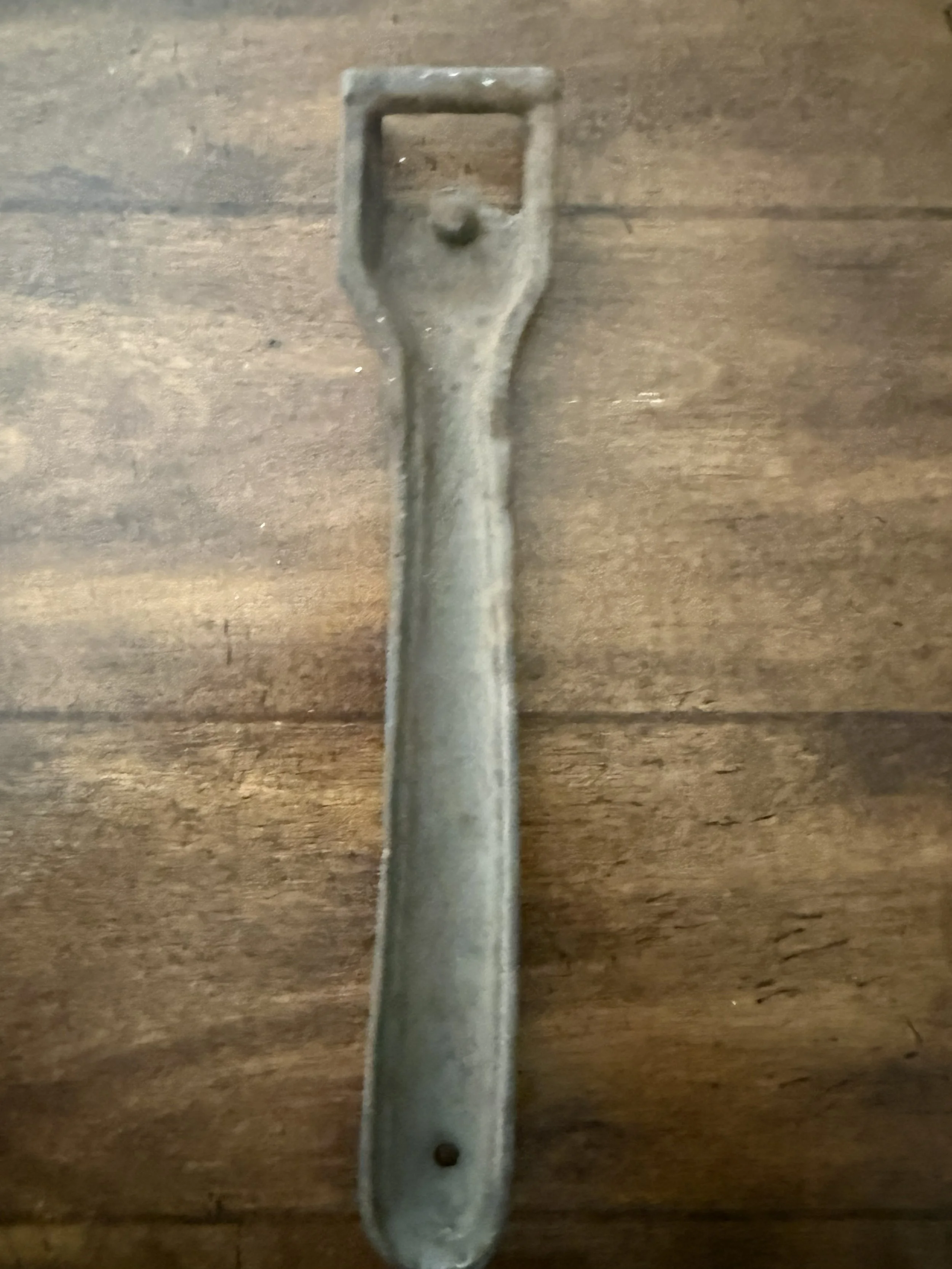
Reverse (unmarked) side showing the full length of the lid lifter and the slotted head that engaged stove lid handles. The original nickel plating is visible across the entire surface. Handle terminates in a hanging hole for storage beside the stove.
Manufacturer
Marion Stove Co. (est. 1855 in Sidney, Ohio; relocated to Marion, Indiana 1888)
Piece Type
Stove Lid Lifter
Material
Cast Iron with original nickel plating
Marking
“MARION STOVE CO.” cast in raised letters on handle
Surface Finish
Original factory nickel plating; undisturbed; not stripped or refinished
Handle Terminus
Hanging hole for stove-side storage
Head Configuration
Slotted/forked lifter head for engaging recessed stove lid handles
Date of Manufacture
Circa 1888–1910 (estimated)
Origin
Founded 1855, Sidney, Shelby County, Ohio; relocated 1888 to Marion, Indiana
Wagner Connection
R.O. Bingham, formerly of Marion Stove Works, became superintendent of Wagner Mfg. Co. at its 1891 founding in Sidney
Condition
Excellent — original nickel plating intact; legible marking; no cracks or damage; hanging hole intact
Acquisition Date
February 9, 2026
Acquisition Source
eBay — Seller: lane390
eBay Item Number
256782544320
Order Number
24-14212-38241
SSC Catalog Number
SSC-MARION-LFT-1890-001
The Sidney Connection: Marion Stove Works and the Birth of Wagner
Sidney, Ohio in the 1880s was a small Shelby County town that was about to become one of the most important cast iron manufacturing centers in America. Marion Stove Works was already there—a stove foundry that had been operating since 1855, decades before the Wagner brothers arrived. When the discovery of natural gas in Marion, Indiana drew the company eastward in 1888, it left behind a void in Sidney’s manufacturing base and a workforce with foundry experience.
Three years later, in 1891, Milton M. and Bernard P. Wagner established their manufacturing company in Sidney. Their choice of location was not random—Sidney already had foundry infrastructure, skilled workers, and a supply chain built up over decades of stove manufacturing. And when the Wagners needed a superintendent to run their new operation, they hired R.O. Bingham, a man who had worked at Marion Stove Works before it left Sidney. Bingham brought Marion’s foundry knowledge directly into Wagner’s founding operation.
The collector literature has also documented Erie ghost marks on Marion skillets—impressions from Griswold’s Erie-marked pieces that were apparently used as templates or patterns for Marion’s own cookware production. The same ghost marks appear on Sidney Hollow Ware and Columbus Hollow Ware pieces, suggesting a network of pattern-sharing or imitation among Ohio’s smaller foundries. Marion Stove Works sits at the center of this web of connections, linking Sidney’s foundry ecosystem to both Griswold’s Erie production and Wagner’s founding.
Corporate Timeline: Marion Stove Company
1855
Stove foundry established in Sidney, Shelby County, Ohio. This is more than three decades before the Wagner brothers arrive in Sidney.
1880s
Discovery of natural gas in Marion, Grant County, Indiana draws industrial investment. Marion Stove Works prepares to relocate from Sidney to take advantage of cheap fuel.
1888
The stove foundry moves from Sidney, Ohio to Marion, Indiana. Hollow ware production begins in 1890. The company becomes known as Marion Stove Company.
1891
R.O. Bingham, formerly of Marion Stove Works and the Sidney Manufacturing Co., joins the newly established Wagner Manufacturing Co. in Sidney as superintendent. Marion’s foundry expertise enters Wagner’s DNA.
1891
Fire destroys the Marion stove works in Indiana. Arson is suspected. The company rebuilds.
c.1888–1910
Marion produces cast iron cookware including skillets, kettles, and stove accessories like this lid lifter. Erie ghost marks appear on Marion skillets, suggesting pattern-sharing with Griswold.
1916
Company reorganized following the death of F.J. (details of reorganization limited in surviving records).
1929
Marion Stove Works trademarks re-registered on October 12, 1929—less than two weeks before the stock market crash that begins the Great Depression.
Why This Piece Matters
The Marion Stove Co. lid lifter matters for three reasons. First, it documents a company whose origins are in Sidney, Ohio—the same town that produced Wagner Ware—and whose personnel directly contributed to Wagner’s founding. Second, it is a stove accessory with its original nickel plating intact, making it a rare surviving example of factory-finished cast iron from the late nineteenth century. Third, it represents the most humble category of cast iron object in the SSC collection: not a skillet, not a specialty piece, not a decorative object, but a simple tool that was used every day, dozens of times a day, to do the most basic task in a wood-burning kitchen. Lift the lid. Check the fire. Add the fuel. Put the lid back.
The preservation of this piece’s original surface is a statement of the SSC collection’s values. The nickel plating on this lid lifter is not a cosmetic feature—it is a historical document. It records the manufacturing standard of a Sidney-born stove company in the late nineteenth century. It records the care with which someone stored this tool for over a century. And it records the SSC commitment to preserving what survives rather than remaking what was lost. The Archival Black™ protocol protects this surface. No grinding. No sanding. No stripping. The original patina stays.
The iron endures. The markings tell the truth. The story deserves to be told.
Sources & Further Reading
CastIronCollector.com — Marion Stove Company reference page: “1888 — Stove foundry moved from Sidney, OH.” Operational dates, arson fire of 1891, 1916 reorganization.
CastIronCollector.com — Wagner Manufacturing Co. reference page: “1891 — R.O. Bingham, previously of the Marion Stove Works and the Sidney Manufacturing Co. joins as superintendent.”
BoonieHicks.com — “Marion Cast Iron: Learn About Your Antique Ironware”: company history, logo placement analysis, Erie ghost marks on Marion skillets, dating guidance (c. 1888–1910).
SSC Internal Collection Records — Previous Marion Stove Co. geographic correction (Marion, Indiana, not Marion, Ohio); Sidney, Ohio origin confirmed through CastIronCollector.com timeline.
About Steve’s Seasoned Classics
Steve’s Seasoned Classics is an online museum dedicated to preserving and documenting the heritage of American cast iron, with a singular focus on the obscure, defunct foundries of Ohio from the 19th and early 20th centuries. The SSC collection spans 130+ pieces from 50+ confirmed Ohio makers — the majority absent from standard collector references. Makers were identified through physical artifacts exhibiting gate marks, patent dates, foundry traits, and documented regional provenance, cross-checked against surviving trade directories, census records, and existing collector guides. Makers lacking representation in published guides but supported by physical evidence were flagged for first-time documentation — a core function of the SSC research mission.
