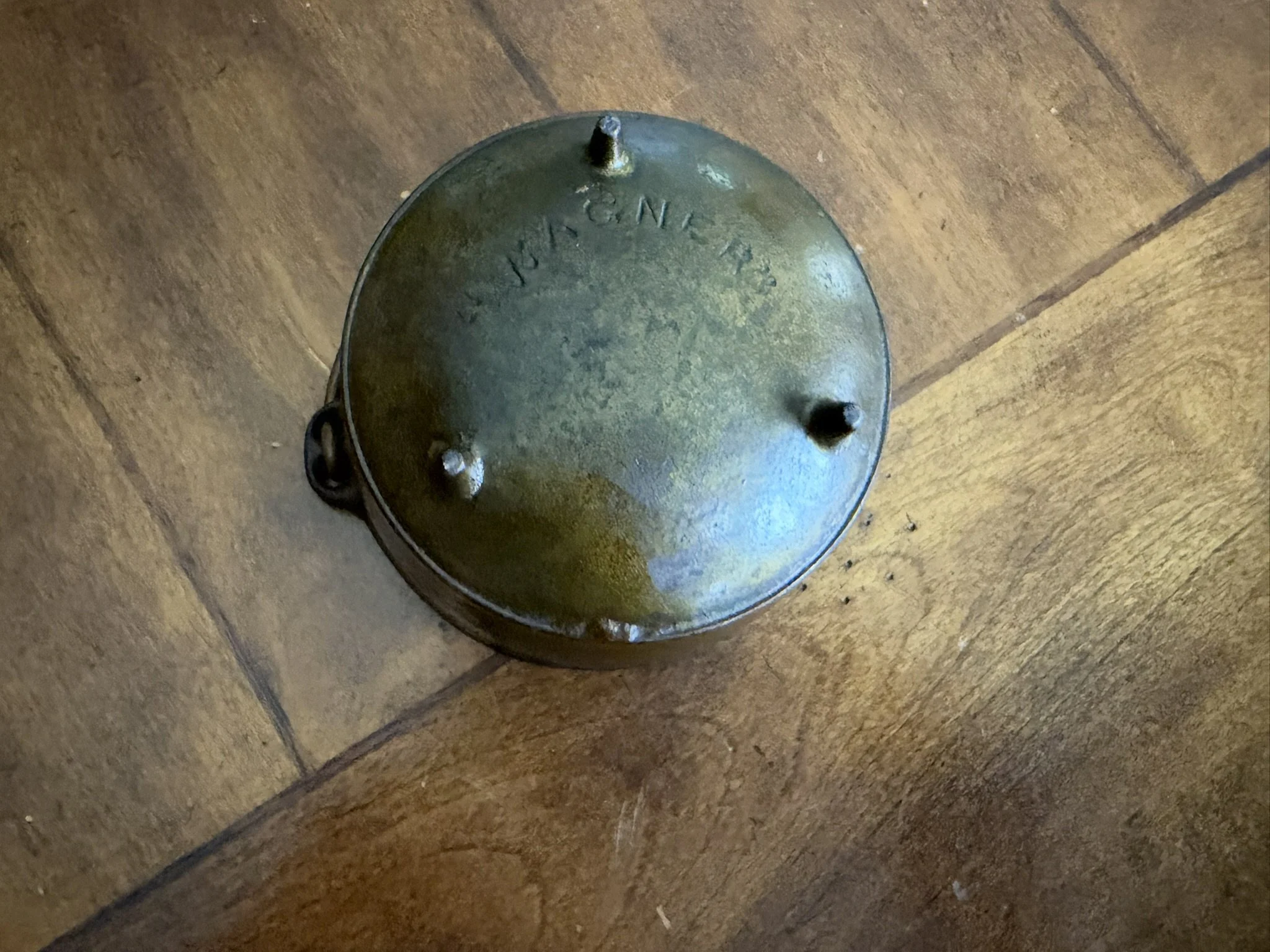
A Miniature Three-Legged Covered Kettle Marked “Wagner”
A miniature three-legged covered cast-iron kettle marked only “WAGNER” is documented here with its attribution, place of manufacture, date, and “salesman sample” label left open pending primary evidence.
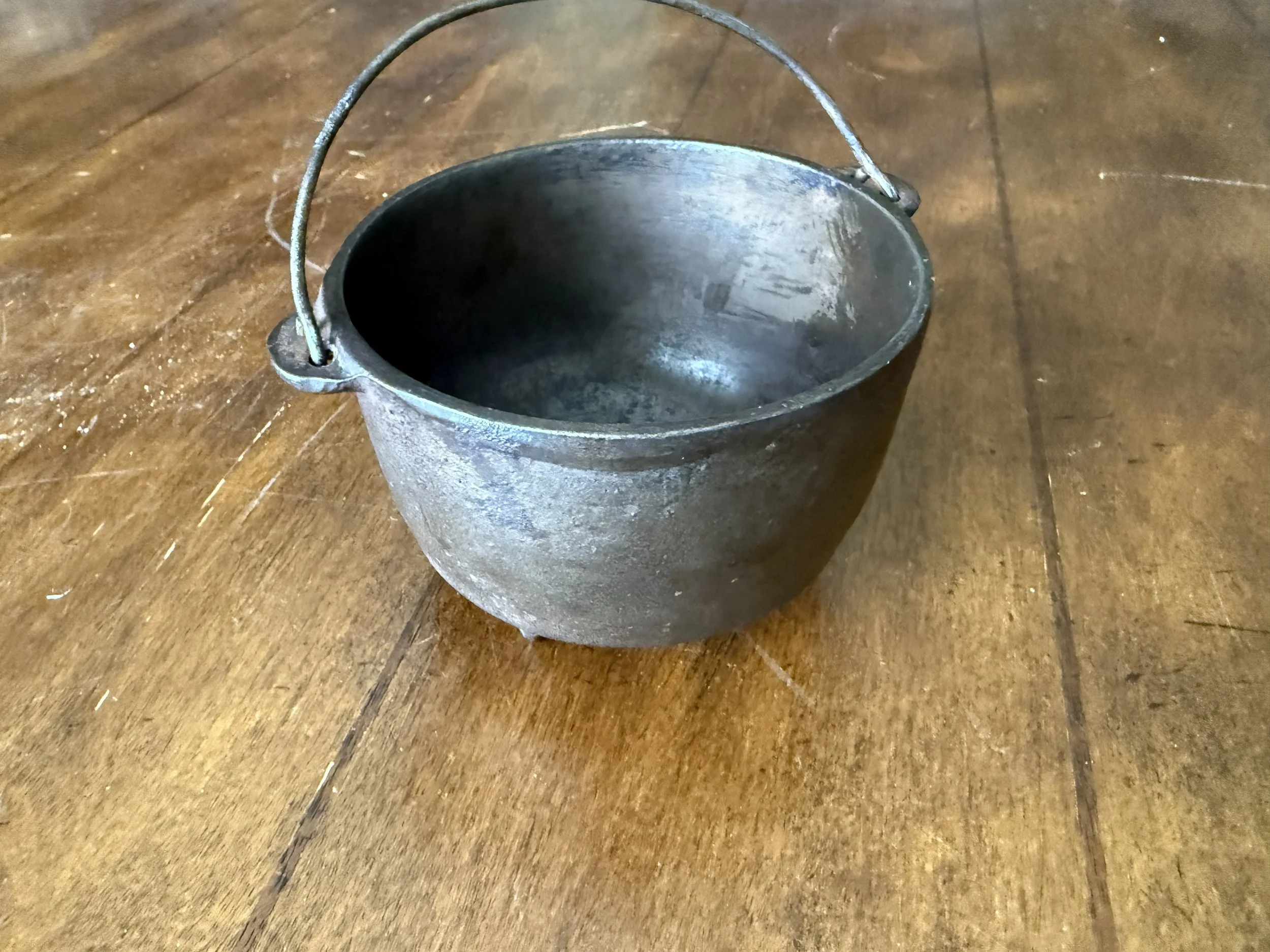
Miniature Wagner Ware Cauldron
A small three-footed Wagner Ware cauldron, marked WAGNER WARE / SIDNEY / -O- on the underside, ties this miniature cast iron pot to the Wagner Manufacturing Company of Sidney, Ohio (founded 1891). The stylized “SIDNEY -O-” logo dates it to roughly 1922–1959. This deep dive confirms the maker, city, and date range from the piece itself and published trademark history — while treating the common “salesman sample / toy” label as an unverified description that no period catalog in this research pass confirms.
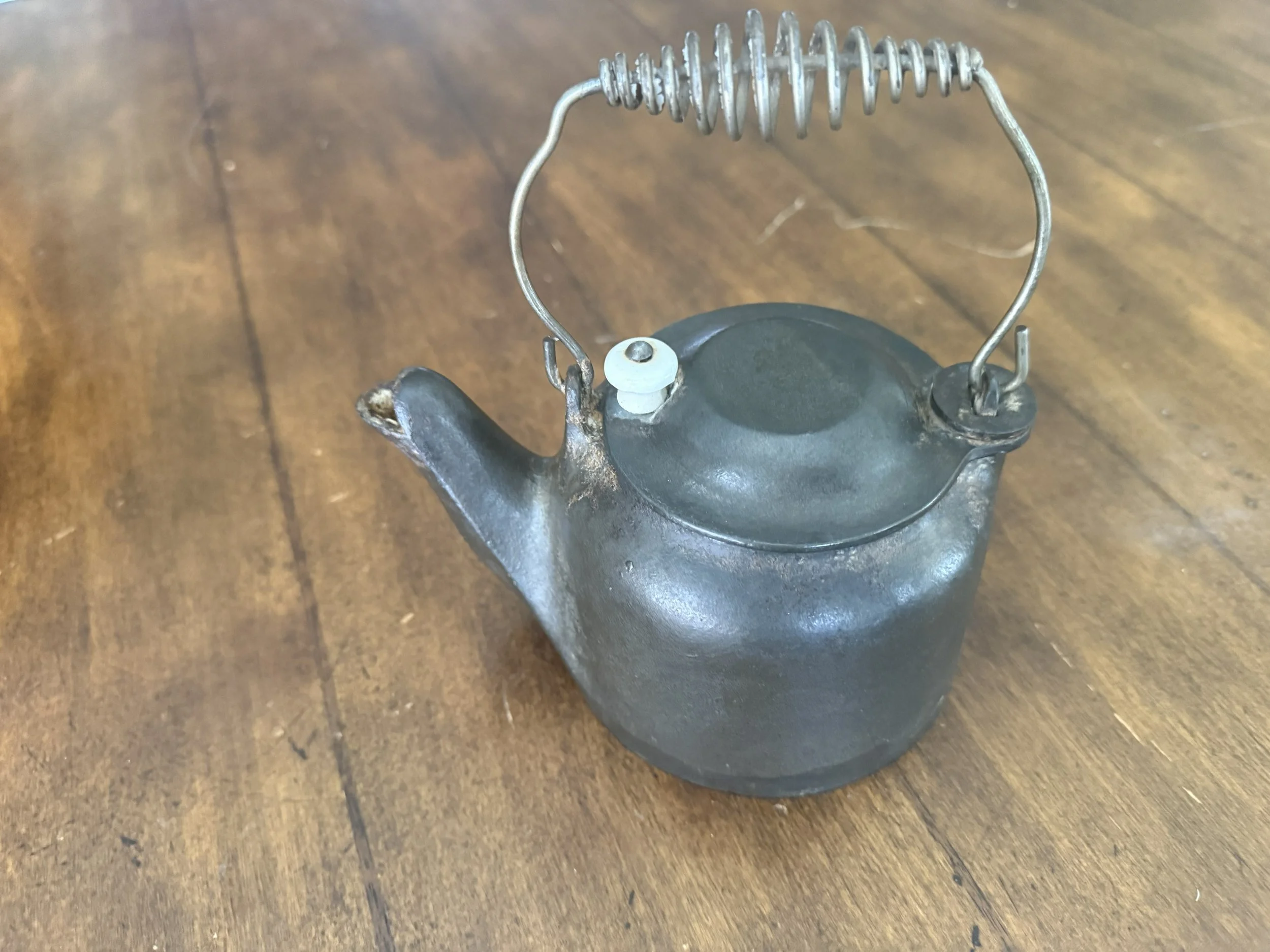
Wagner Ware Cast Iron Teapot
A small cast iron teapot incised on the bottom with the Wagner Ware stylized logo — WAGNER WARE / SIDNEY / -O- — and the pattern letter B came into the SSC collection via eBay in June 2026. The body is cast iron in a round, bulbous form with a short upturned spout, a separately cast domed lid fitted with a white porcelain knob secured by a rivet, and a wire bail handle whose center section is formed into a tight coil spring — a design intended to dissipate heat and allow the kettle to be safely lifted when hot. The stylized logo places this piece in the approximate window of 1922 to 1959, the years Wagner Manufacturing Co. used that trademark on its cast iron goods from Sidney, Shelby County, Ohio. This post traces what the markings directly document about maker and period, explains the functional engineering behind the coil-spring bail handle, examines what the reference literature says about authentication, and sets out clearly what remains unresolved — including whether pieces like this were produced as traveling salesman samples, standard production small-size items, or toy and novelty pieces.

The Little Bail-Handle Pot Marked Only "Wagner"
A small cast iron bail-handle pot from Steve's Seasoned Classics carries a single clue on its underside: the word "Wagner" in flowing cursive script, with a script "2" — and no "Ware," no "Sidney, O.," and no stylized single-"W" logo. That absence is the whole story. Under the trademark-dating framework maintained by The Cast Iron Collector, Wagner's mark "consisted solely of the word 'WAGNER'" for roughly its first thirty years, and only became "Wagner Ware" about 1914, with the iconic logo arriving around 1922 — so a "WAGNER"-only script mark points to the Sidney, Ohio foundry's earlier lettering period. This deep dive separates what the mark can establish (Wagner Manufacturing Company, founded 1891 in Sidney, Ohio) from what it can't (a precise year for a bail-handle pot of this exact form), and flags the open questions honestly for the next collector who spots the same script on the bottom of their own piece.
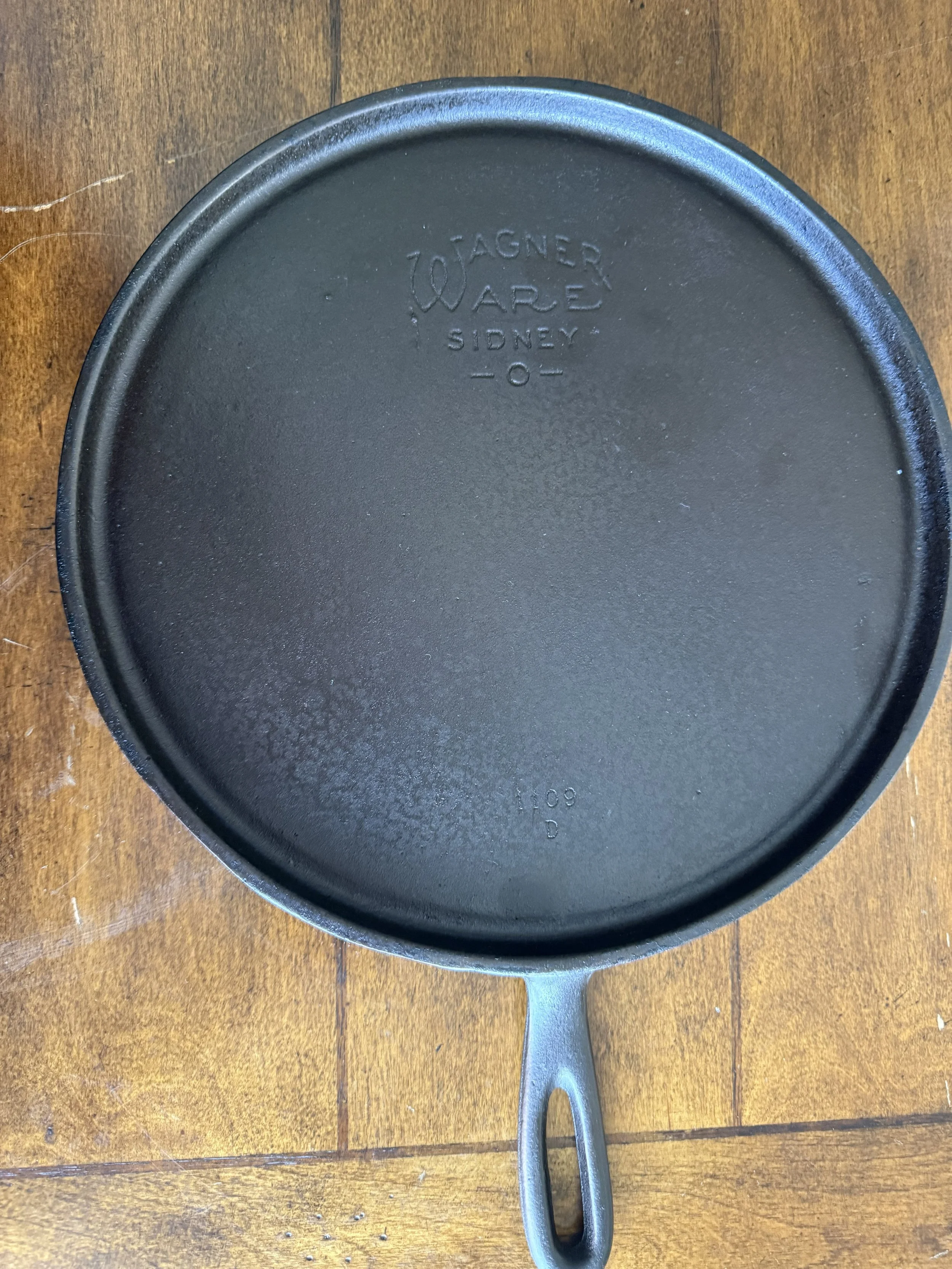
Wagner Ware Sidney -O- Round Griddle No. 1109 D
The round griddle is cast iron at its most fundamental — a flat surface over fire. Wagner's 1109 D carries the stylized logo from the company's peak era, and pairs with an early-mark No. 8 to show that the best designs don't change. Only the trademark evolves. The iron stays the same.

“WAGNER” Sidney, O. No. 8 Round Griddle
The griddle is the most honest tool in the kitchen — all surface, no pretense. This one carries the early "WAGNER" mark with quotation marks, dating it to the era when the Wagner brothers ran the Sidney foundry themselves. A century later, the iron is still flat, still smooth, still ready.

Wagner Ware Sidney -O- Bacon and Egg Breakfast Skillet
Everyone has dealt with bacon grease flooding into eggs. Wagner's answer was to cast the solution into the iron — a square divided pan with separate compartments for bacon and eggs, one burner, one wash. The most immediately charming piece in the SSC collection.

Wagner Ware Sidney -O- No. 3 Nickel-Plated Skillet
Most nickel-plated Wagners survive with sixty or seventy percent of their plating. This No. 3 retains ninety percent or more. Nearly perfect nickel patina on a piece this old is genuinely unusual — and at $19.95, it slipped through the cracks because nobody was looking for a little No. 3

Wagner Ware Sidney -O- No. 7 Cast Iron Skillet
Everyone has a Wagner No. 8. The No. 7 is the size that a knowledgeable cook chose on purpose — a 9¼-inch sauté skillet that heats faster, concentrates fond better, and handles with one hand. It wasn't the best seller. It was the better skillet.

“WAGNER” Sidney, O. No. 9 Nickel-Plated Skillet
The quotation marks around "WAGNER" tell you this is early Sidney iron — before the stylized logo, before the Randall sale, from the era when the Wagner brothers ran the foundry themselves. The warm golden-silver nickel patina tells you every owner for a century knew to leave it alone.

Wagner Ware Sidney -O- No. 4 Nickel-Plated Skillet
Not every Wagner left Sidney looking the same. This No. 4 carried the premium option — factory nickel plating that turned a workhorse skillet into a showpiece. A century later, the plating survives because every owner had the wisdom to leave it alone. SSC will continue that tradition.
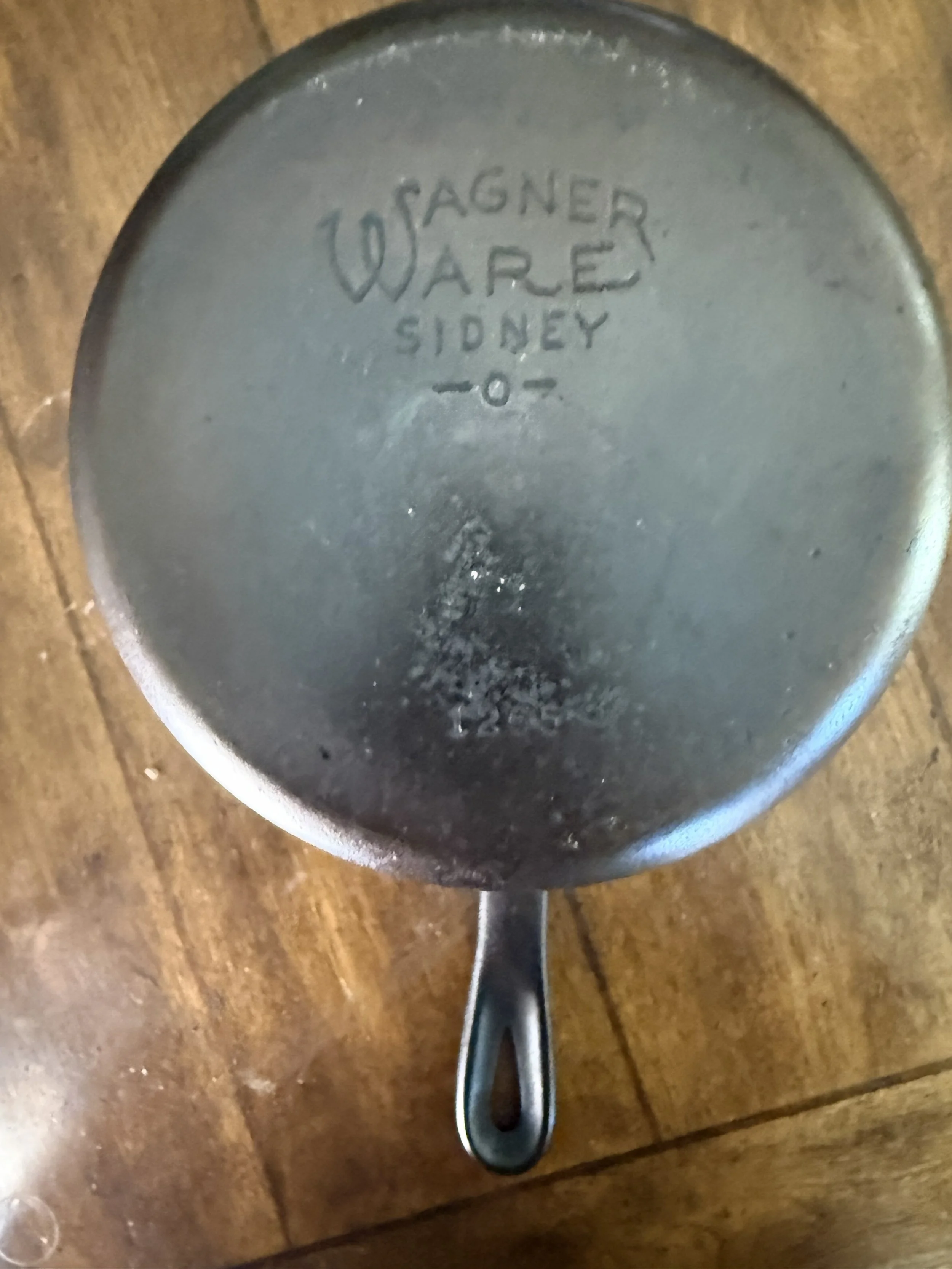
Wagner Ware Sidney -O- No. 7 Cast Iron Saucepan
The Archival Black protocol isn't "never touch." It's "know when to touch and when not to." This Wagner Ware No. 7 saucepan was restored by SSC because restoration served the piece — the same philosophy that keeps the 1863 Shinnick kettle untouched.