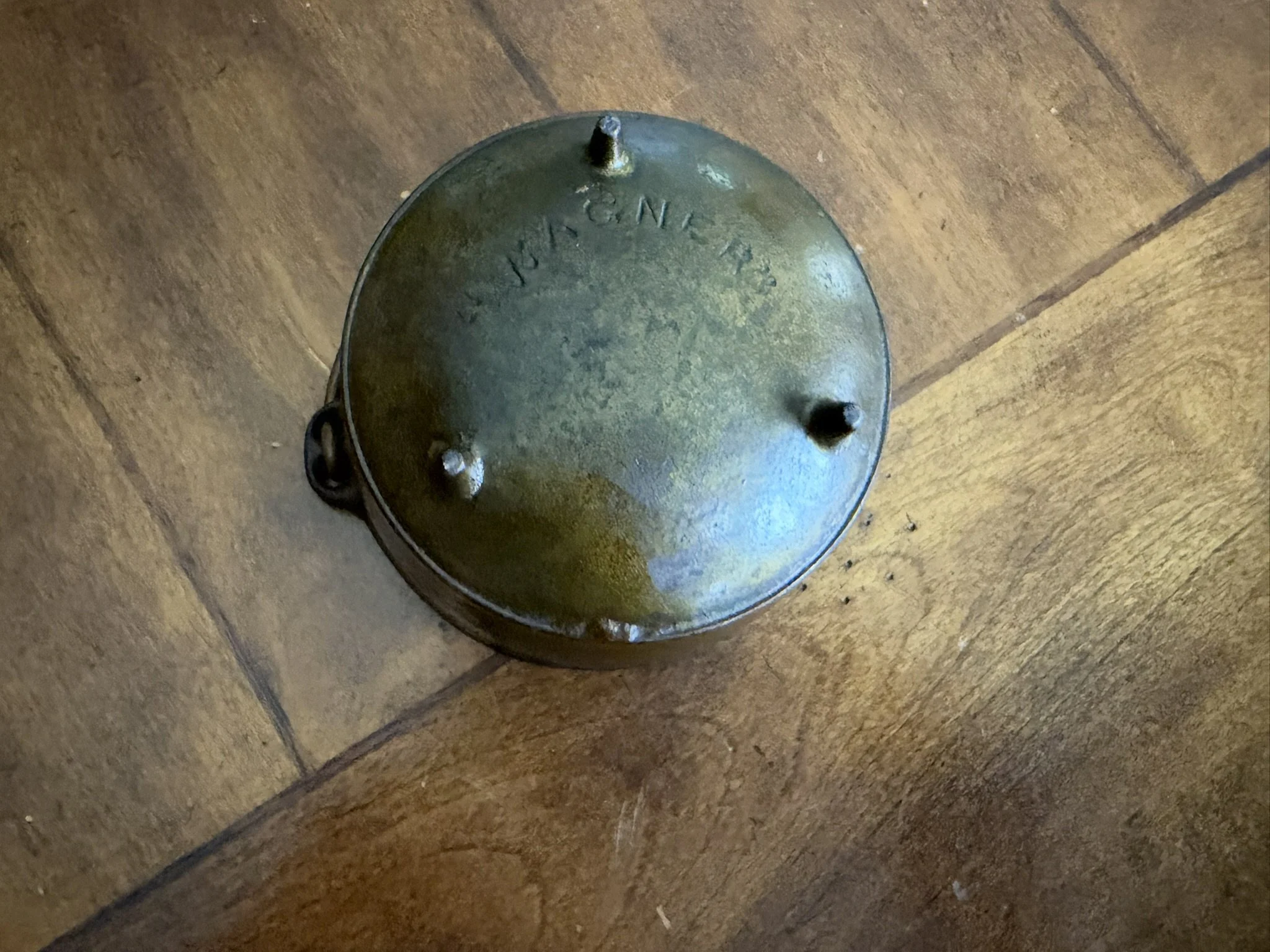
A Miniature Three-Legged Covered Kettle Marked “Wagner”
A miniature three-legged covered cast-iron kettle marked only “WAGNER” is documented here with its attribution, place of manufacture, date, and “salesman sample” label left open pending primary evidence.
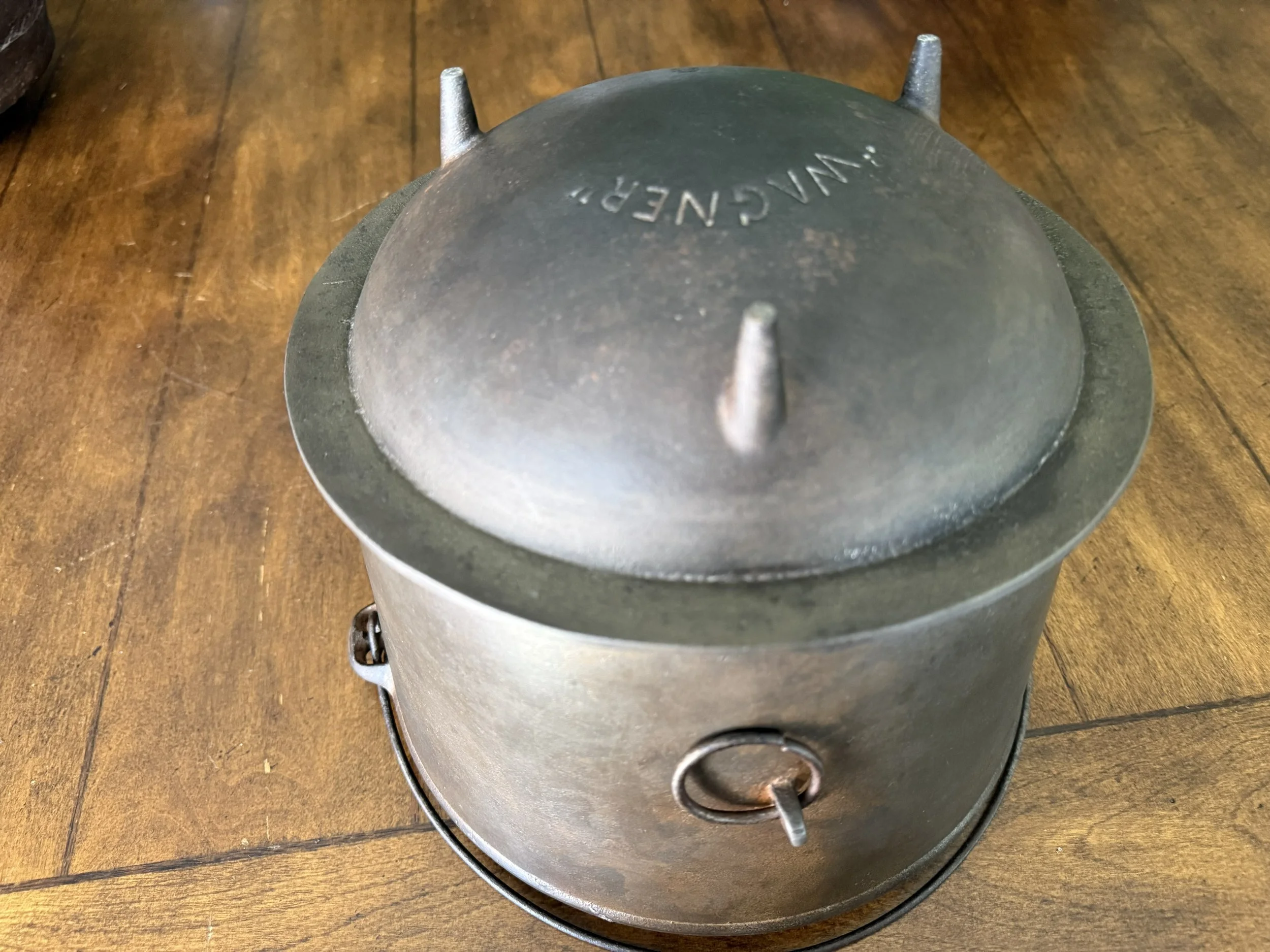
Wagner No. 8 Gypsy Bean Pot
A heavily rusted Wagner No. 8 bean pot, restored via electrolysis, carries a plain arched WAGNER mark with no Sidney -O- text at all. That earliest Wagner logo style dates the piece to roughly 1891-1910, decades before the stylized logo most collectors know. Includes sourced maker history and an honest look at the gypsy kettle label.
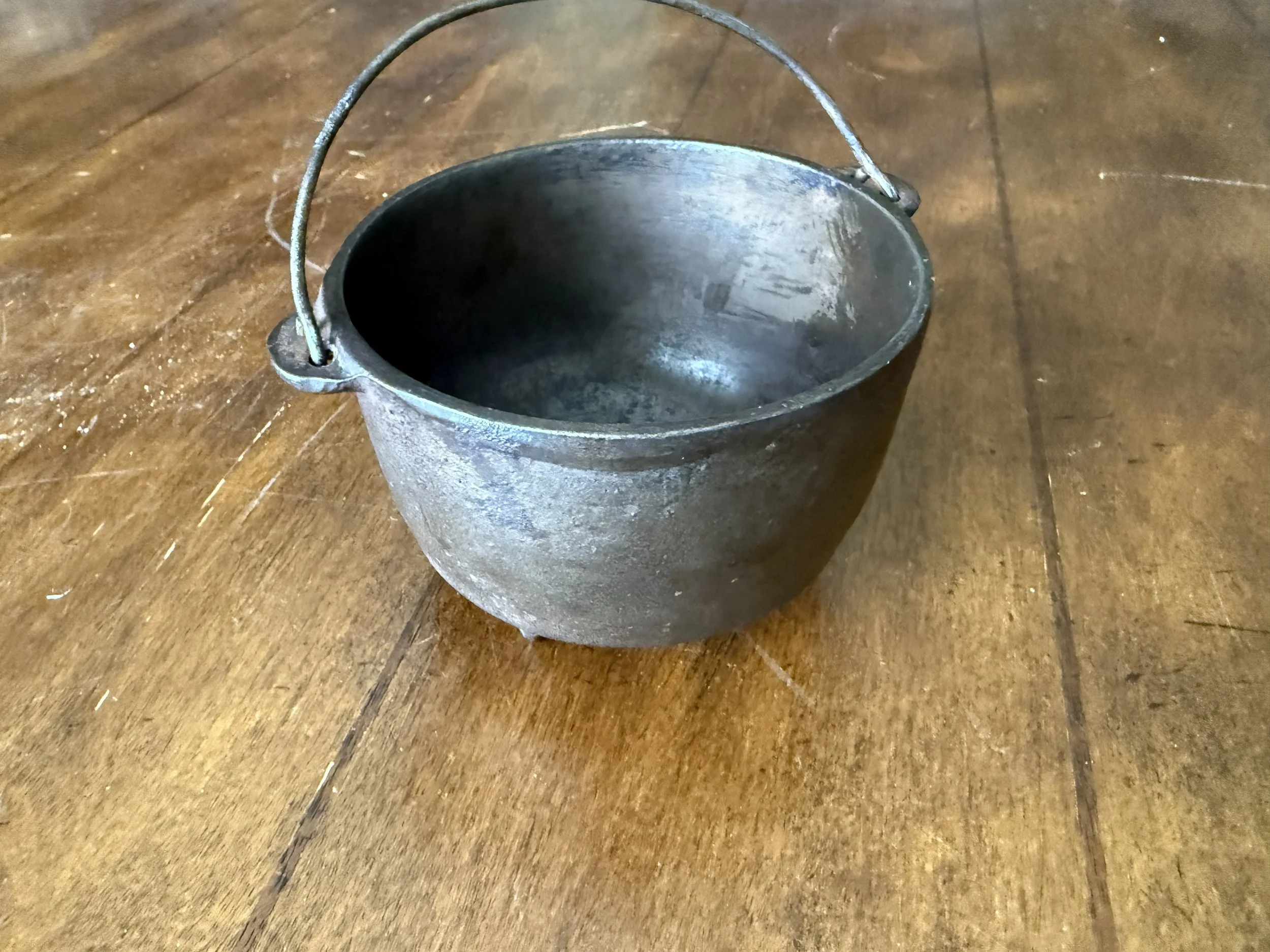
Miniature Wagner Ware Cauldron
A small three-footed Wagner Ware cauldron, marked WAGNER WARE / SIDNEY / -O- on the underside, ties this miniature cast iron pot to the Wagner Manufacturing Company of Sidney, Ohio (founded 1891). The stylized “SIDNEY -O-” logo dates it to roughly 1922–1959. This deep dive confirms the maker, city, and date range from the piece itself and published trademark history — while treating the common “salesman sample / toy” label as an unverified description that no period catalog in this research pass confirms.
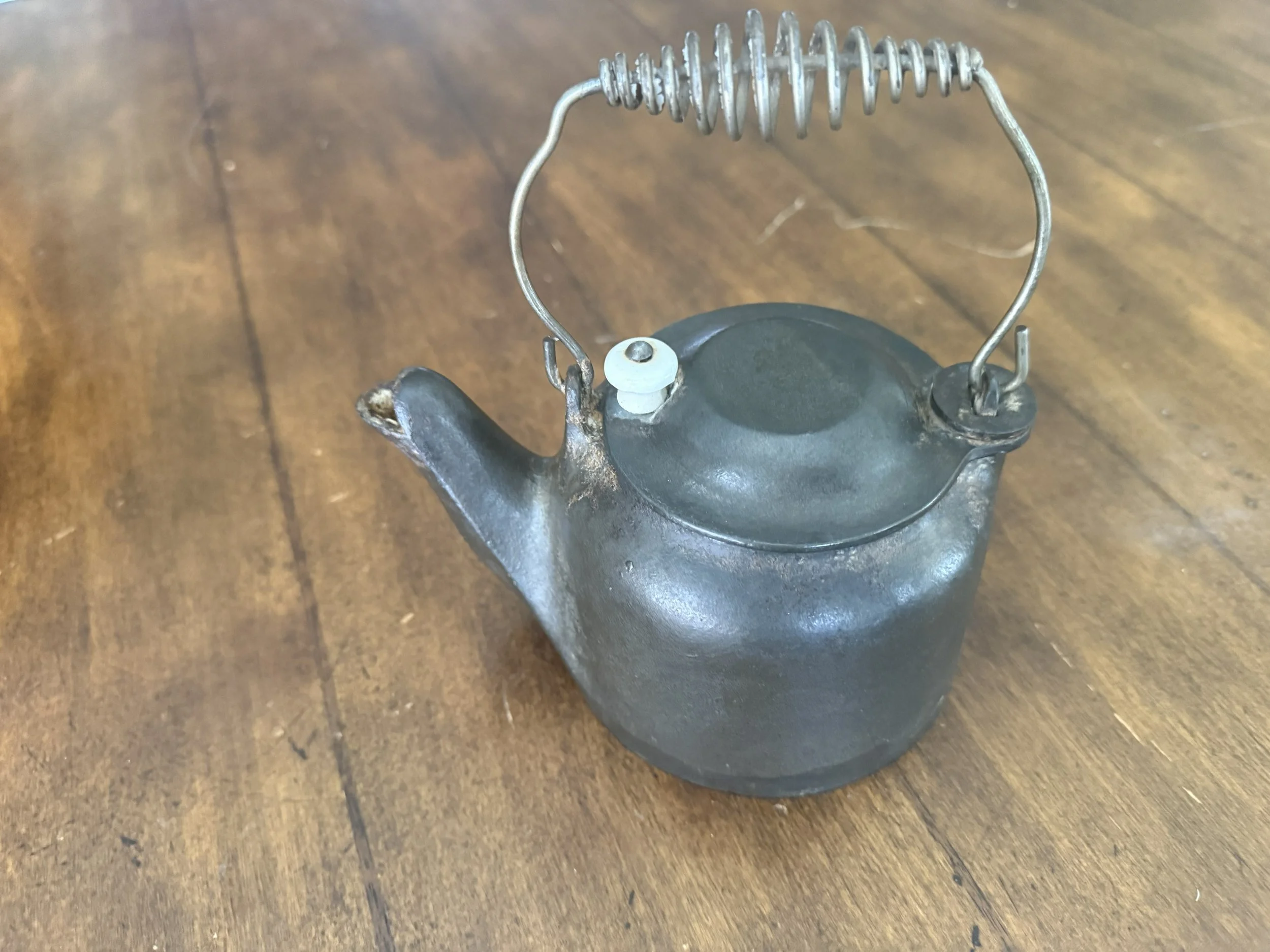
Wagner Ware Cast Iron Teapot
A small cast iron teapot incised on the bottom with the Wagner Ware stylized logo — WAGNER WARE / SIDNEY / -O- — and the pattern letter B came into the SSC collection via eBay in June 2026. The body is cast iron in a round, bulbous form with a short upturned spout, a separately cast domed lid fitted with a white porcelain knob secured by a rivet, and a wire bail handle whose center section is formed into a tight coil spring — a design intended to dissipate heat and allow the kettle to be safely lifted when hot. The stylized logo places this piece in the approximate window of 1922 to 1959, the years Wagner Manufacturing Co. used that trademark on its cast iron goods from Sidney, Shelby County, Ohio. This post traces what the markings directly document about maker and period, explains the functional engineering behind the coil-spring bail handle, examines what the reference literature says about authentication, and sets out clearly what remains unresolved — including whether pieces like this were produced as traveling salesman samples, standard production small-size items, or toy and novelty pieces.

The Little Bail-Handle Pot Marked Only "Wagner"
A small cast iron bail-handle pot from Steve's Seasoned Classics carries a single clue on its underside: the word "Wagner" in flowing cursive script, with a script "2" — and no "Ware," no "Sidney, O.," and no stylized single-"W" logo. That absence is the whole story. Under the trademark-dating framework maintained by The Cast Iron Collector, Wagner's mark "consisted solely of the word 'WAGNER'" for roughly its first thirty years, and only became "Wagner Ware" about 1914, with the iconic logo arriving around 1922 — so a "WAGNER"-only script mark points to the Sidney, Ohio foundry's earlier lettering period. This deep dive separates what the mark can establish (Wagner Manufacturing Company, founded 1891 in Sidney, Ohio) from what it can't (a precise year for a bail-handle pot of this exact form), and flags the open questions honestly for the next collector who spots the same script on the bottom of their own piece.

Wagner Ware Sidney ‑O‑ Nickel-Plated Double Skillet
Two words stop collectors in their tracks: PATENT PENDING. Most Wagner 1401-C double skillets carry issued patent numbers. This one doesn't — it was made while the application was still in Washington. Add a pristine original nickel cooking surface that has never been stripped, and the small round handle hole that confirms the early date independently. This is what the earliest Wagner double skillet looked like. Very few survived to tell that story in this condition.

Wagner Ware Krusty Korn Kobs Junior Cornbread Pan — Pattern 1319
Seven corn cob cavities. A patent date of July 6, 1920. The full Wagner Ware Sidney-O mark, the registered Krusty Korn Kobs trade name, and pattern 1319 — all cast into the base of a single pan. Wagner's signature corn stick design in the Junior configuration, with every kernel row sharp and the seasoning intact. Acquired from a Goodwill auction for $7.99. The iron remembers what it's worth even when the market doesn't.
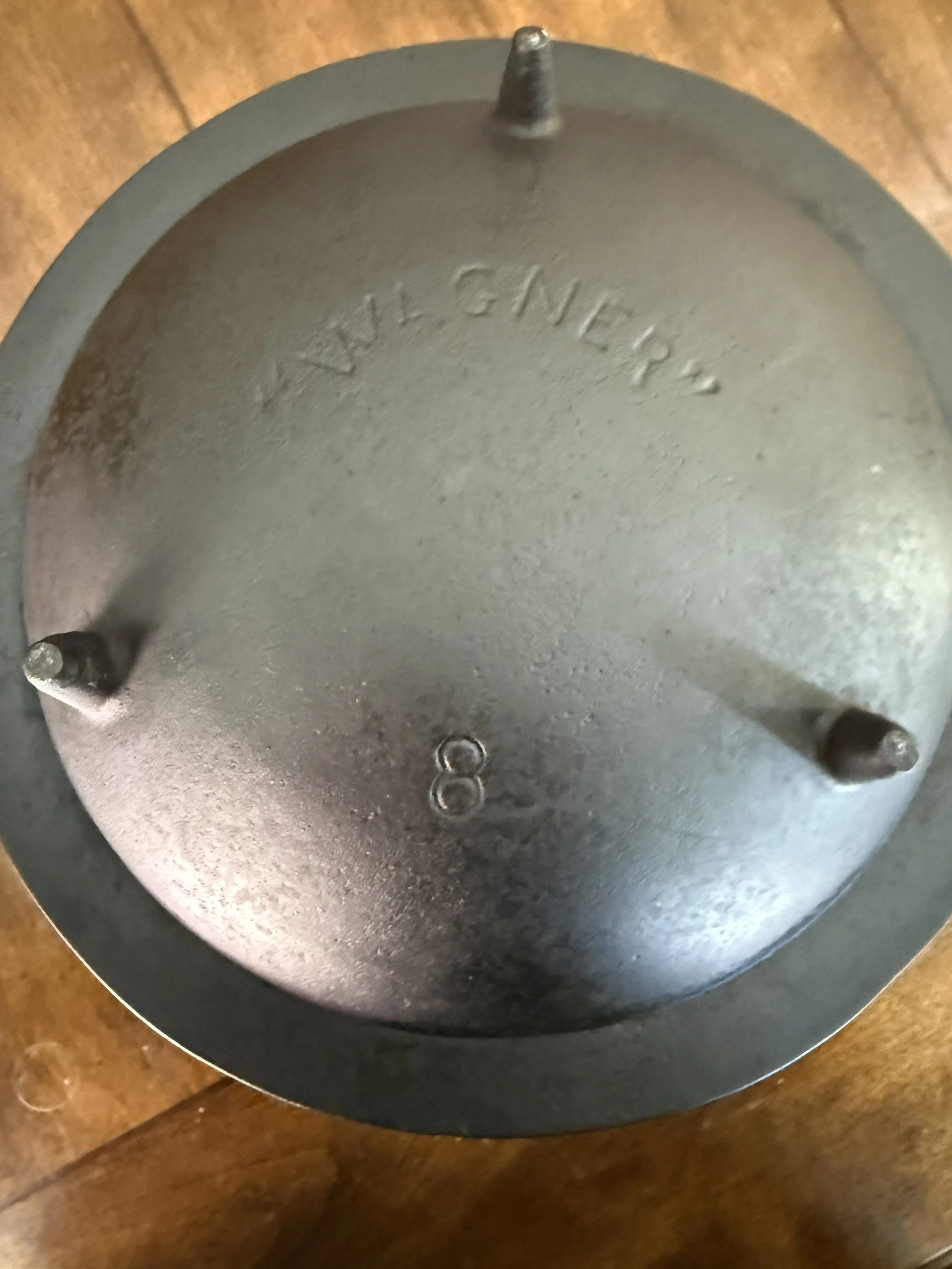
Wagner Cast Iron Bean PotStove Ring Kettle — Size 8
A Wagner No. 8 cast iron bean pot from the early arc mark period — before WAGNER WARE, before Sidney-O, before catalog numbers. The arc WAGNER mark with decorative flourishes, three cast leg feet, original wire bail handle, and the stove ring flange that locked it into a wood or coal stove eye for the long slow cook that fed American families in the foundry's earliest years. The oldest Wagner mark configuration in the SSC collection.