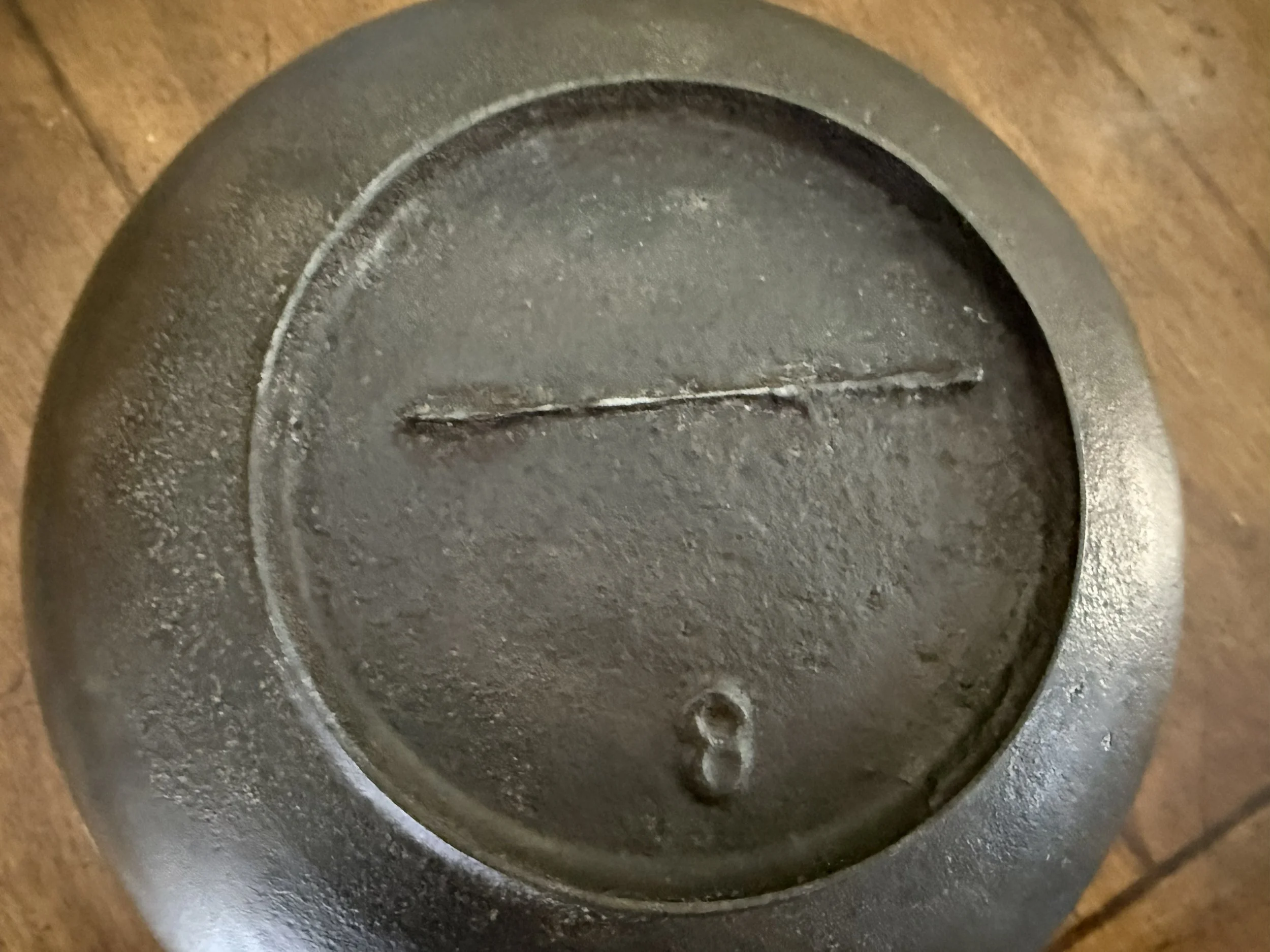
No. 8 Gate-Marked Bean Pot
This piece carries no foundry name, no city, and no patent date — and in early American cast iron, that absence is its own kind of story. SSC-UNK-KTL-8-001 is an unmarked No. 8 cast iron bean pot / kettle with a wire bail handle, a recessed base, and a clear bottom gate mark. Rather than invent an attribution, this deep-dive reads the iron itself: what the gate mark reveals about early sand-mold casting, what the cast size “8” meant on a period stove, and why bottom-gated hollow ware generally points to a 19th to early 20th century date. It also explains why unmarked kettles like this are so difficult to assign to a specific foundry and keeps the maker honestly unconfirmed pending primary-source verification — preserving a sourced record ready to meet a marked twin or catalog match if one ever surfaces.

Ohio Stove Co. “Pearl” No. 7 Sad Iron Long Pan
Before the electric iron, there was the sad iron — and this Pearl No. 7 long pan from Ohio Stove Co. of Portsmouth was where you heated them. Gate marked, dating to the company's founding years around 1872, from a foundry still pouring iron 150 years later.

H. Wells & Bro. Extra Large Cast Iron Tea Kettle
1867. Two years after the Civil War. In Ohio's oldest settlement — a town that sheltered freedom seekers on the Underground Railroad — the Wells brothers cast this tea kettle and stamped it with the date. No other record of their foundry survives. The iron is the testimony.

Shinnick Hattan & Co. No. 9 Cast Iron Kettle
June 23, 1863. Ten days before Gettysburg. Confederate cavalry threatening eastern Ohio. And in a Zanesville foundry, Shinnick Hattan & Co. cast this kettle and stamped it with the date. The oldest piece in the SSC collection — and its crown jewel.

Brooks & Patton No. 9 Tea Kettle
A rare No. 9 tea kettle from Brooks & Patton of Columbus, Ohio — the foundry whose principal, Alexander G. Patton, later acquired the Columbus Hollow Ware Company. SSC documents the piece that bridges two chapters of Columbus cast iron history.

Pre-Logo Era No. 8 Flat Skillet — Gate Scar, Unattributed
The gate scar is the oldest mark in the SSC collection. Not a logo, not a brand — the physical remnant of the casting process itself: the raised diagonal ridge left when the iron that filled the gate was broken away after the pour. American foundries of the mid-to-late 19th century tolerated visible gate scars in a way the branded era did not. By the time Favorite Piqua Ware was stamping Smiley cartouches into its bases, the gate scar was already a relic. This No. 8 flat skillet, with its fancy twist handle and figure-8 loop, predates every other piece in the SSC collection — and it belongs here.