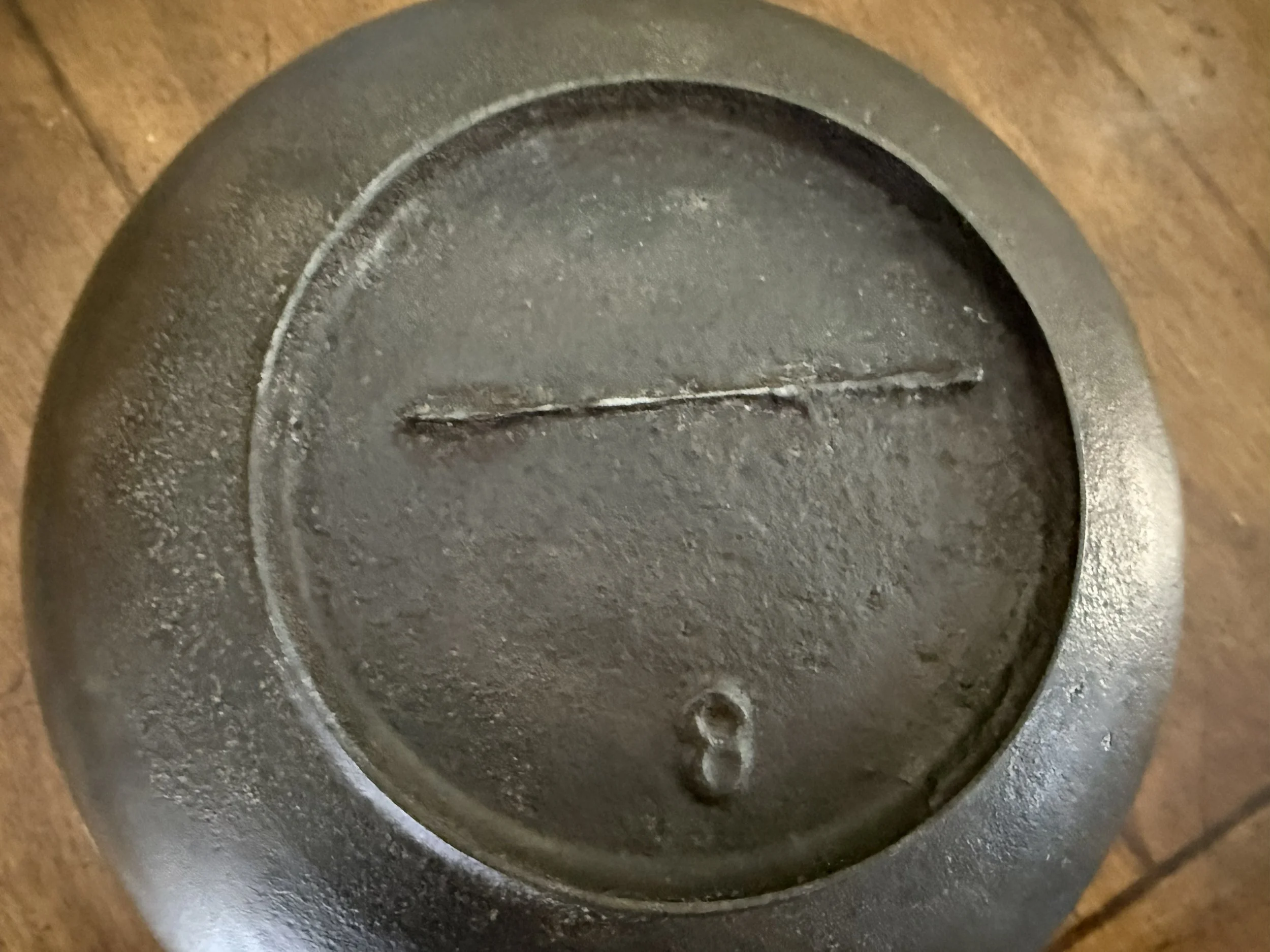
No. 8 Gate-Marked Bean Pot
This piece carries no foundry name, no city, and no patent date — and in early American cast iron, that absence is its own kind of story. SSC-UNK-KTL-8-001 is an unmarked No. 8 cast iron bean pot / kettle with a wire bail handle, a recessed base, and a clear bottom gate mark. Rather than invent an attribution, this deep-dive reads the iron itself: what the gate mark reveals about early sand-mold casting, what the cast size “8” meant on a period stove, and why bottom-gated hollow ware generally points to a 19th to early 20th century date. It also explains why unmarked kettles like this are so difficult to assign to a specific foundry and keeps the maker honestly unconfirmed pending primary-source verification — preserving a sourced record ready to meet a marked twin or catalog match if one ever surfaces.
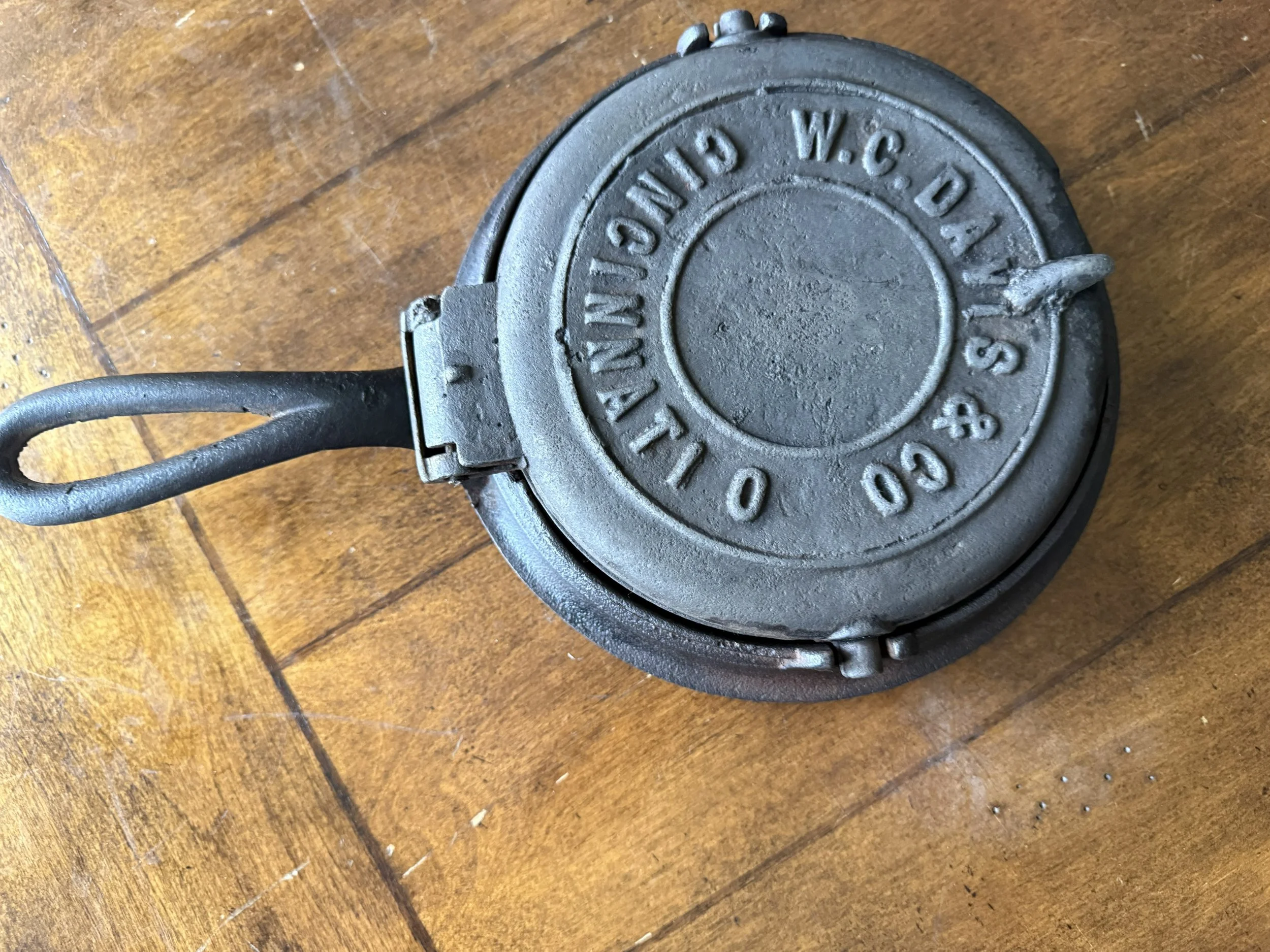
W.C. Davis & Co. Cast Iron Waffle Iron with Low Base
A complete W.C. Davis & Co. cast iron waffle iron with original low base — both paddles, both handles, functioning hinge, original base — marked W.C. DAVIS & CO / CINCINNATI O and dating to the firm's active name period, c. 1842–1880. W.C. Davis & Co. is the Cincinnati foundry from which the Favorite stove and hollow-ware line descended. This iron predates the Favorite era

The Shinnick, Woodside & Gibbons No. 3 Cast Iron Kettle
The SSC Crown Jewel is a Shinnick, Hattan & Co. No. 9 kettle dated June 23, 1863 — a Civil War-era piece from Zanesville, Ohio. This No. 3 kettle, marked "SHINNICK, WOODSIDE & GIBBONS" and "ZANESVILLE, O." on the lid, documents a later partnership at the same foundry. Same city. Same family name. Different partners. Different decade. Two kettles that together span the arc of a Zanesville foundry dynasty whose family also founded the Mosaic Tile Company and established the largest benefaction in Muskingum County history. Acquired from eBay seller buyandselltechworld, March 2026.