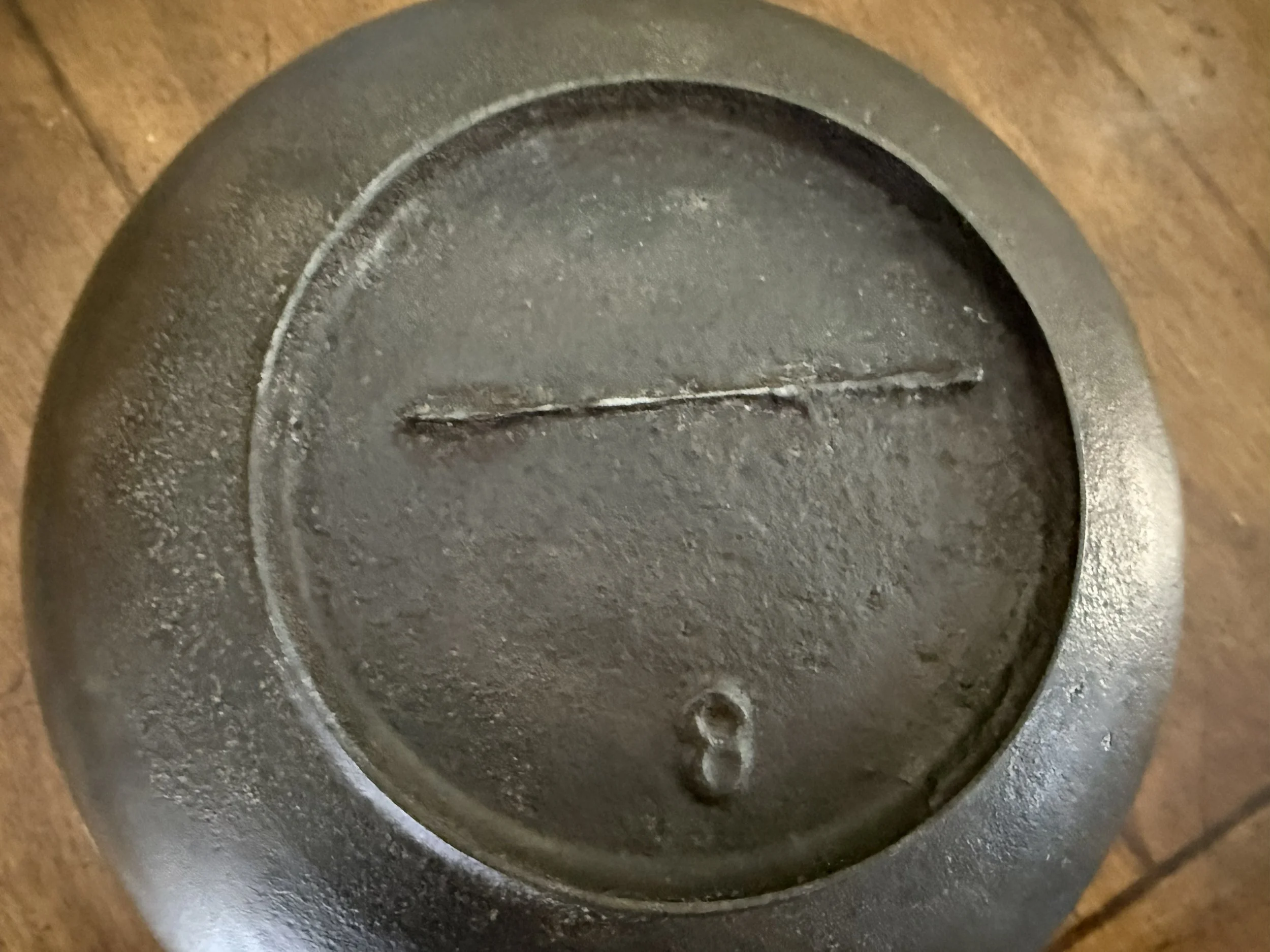
No. 8 Gate-Marked Bean Pot
This piece carries no foundry name, no city, and no patent date — and in early American cast iron, that absence is its own kind of story. SSC-UNK-KTL-8-001 is an unmarked No. 8 cast iron bean pot / kettle with a wire bail handle, a recessed base, and a clear bottom gate mark. Rather than invent an attribution, this deep-dive reads the iron itself: what the gate mark reveals about early sand-mold casting, what the cast size “8” meant on a period stove, and why bottom-gated hollow ware generally points to a 19th to early 20th century date. It also explains why unmarked kettles like this are so difficult to assign to a specific foundry and keeps the maker honestly unconfirmed pending primary-source verification — preserving a sourced record ready to meet a marked twin or catalog match if one ever surfaces.

Greer & King Mfg. Co. No. 8 Three-Legged Bail Bean Pot Kettle
The Greer & King Mfg. Co. of Dayton, Ohio received their patent on November 3, 1868 — three years after the Civil War ended, when Reconstruction was still unfinished and the western frontier had not yet closed. The bean pot sitting on these three iron legs predates Wagner by two decades and Griswold Erie by more than twenty years. This is the oldest patent-dated piece in the SSC Museum Collection, and one of the primary surviving physical records of a Dayton foundry that the standard reference databases have never documented.