A Miniature Three-Legged Covered Kettle Marked “Wagner”
A Miniature Three-Legged Covered Kettle Marked “Wagner”
Catalog No. SSC-WAG-KTL-MINI-001 | Miniature Three-Legged Covered Kettle | Maker and Place Unconfirmed

Figure 1. Miniature covered cast-iron kettle with a cylindrical body, three integral feet, a fitted domed lid, and a wire bail retained by opposed side lugs.
This compact cast-iron vessel has a cylindrical body, three integral feet, opposed side lugs carrying a wire bail, and a domed fitted lid with three small upright lugs. The only legible casting mark in the supplied underside image is “WAGNER.” The seller described it as a “salesman sample bean pot, Dutch oven”; that sales description is recorded as acquisition context, not as a verified function. No dimensions were supplied with this research packet.
The visible mark provides a focused starting point rather than a settled manufacturer identification. No city, state, logo, pattern number, patent date, or other foundry identifier is visible in the supplied photographs. This post documents the object’s observable construction and separates what is confirmed from the questions still awaiting primary-source evidence.
Finding the Maker and Origin
The identification begins with the cast lettering itself. In the close underside view, “WAGNER” appears in raised letters along the lower curve of the base, between the feet. The photographs do not show “Wagner Ware,” “Sidney,” an “-O-” device, a patent date, or a pattern number. A surname alone is not enough to establish a specific manufacturer, factory, or place of manufacture.
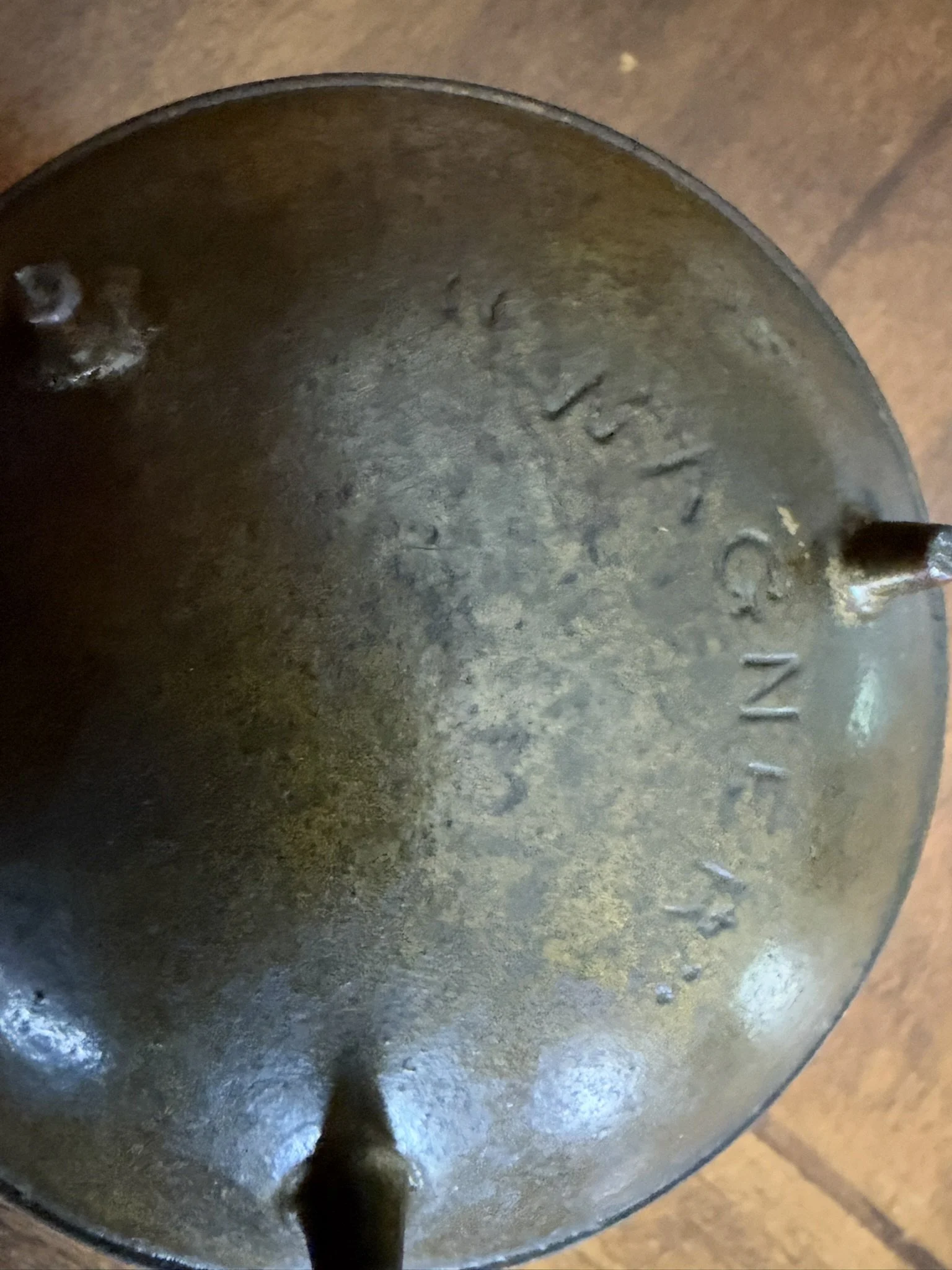
Figure 2. Close underside view of the raised “WAGNER” lettering. No additional maker, city, logo, patent, or pattern mark is legible in the supplied image.
Wagner Manufacturing Company of Sidney, Ohio is a relevant lead because it used the Wagner name in cast-iron cookware. Its published history states that Milton M. and Bernard P. Wagner established the company in Sidney in 1891. That company history does not identify this miniature kettle or prove that the bare “WAGNER” mark on this particular object belongs to the company. (The Story Behind Wagner)
Who Were the Makers?
The maker of this individual kettle remains unconfirmed. One possible research direction is Wagner Manufacturing Company. The company’s published historical chronology says that brothers Milton M. and Bernard P. Wagner established the Wagner Manufacturing Company in Sidney, Ohio, and that the business opened in June 1891 with 20 employees. (The Story Behind Wagner)
“Brothers Milton M. and Bernard P. Wagner of Sidney, Ohio established The Wagner Manufacturing Company. It opened for business in June 1891 with 20 employees on its payroll.”
Source: Wagner Cast Iron, “The Story Behind Wagner.” wagnercastiron.com
This source documents the company as a historical entity. A catalog illustration, dated advertisement, factory pattern record, or a securely documented matching example would be needed before connecting it to this kettle as maker.
· Documented company lead: Wagner Manufacturing Company was established in Sidney, Ohio, in 1891 by Milton M. and Bernard P. Wagner.
· Connection to this object: Unverified.
Historical Context
The published Wagner company chronology records expansion in Sidney, including acquisition of Sidney Hollowware Company in 1897, construction of a larger foundry in 1906, a 1912 plant addition, and introduction of the stylized Wagner Ware logo in 1915. (The Story Behind Wagner)
Those details explain why the “WAGNER” surname merits further investigation. They do not establish the date, place, product name, or maker of the miniature kettle shown here.
Why This Piece Does Not Appear in Standard References
No period catalog, trade advertisement, pattern ledger, or other primary record was located in this research pass that pictures this exact three-legged covered miniature and identifies its manufacturer or intended use. That is an absence from the sources reviewed, not evidence of rarity, scale of production, or a particular function.
Updated Piece Details
· Manufacturer: Unconfirmed. “WAGNER” is the only legible casting mark in the supplied photographs.
· Company founded: Not verified for this object.
· Company closed: Not verified for this object.
· Peak size / scale: Not documented.
· Piece type: Miniature three-legged covered cast-iron kettle or cauldron form with wire bail.
· Size/model: No size or pattern number visible in supplied photographs.
· Casting/maker’s marks: “WAGNER” (transcribed exactly from the supplied underside photograph).
· Associated patent (if any): Not verified.
· Patent subject (verified): Not verified.
· Relationship to maker: Unconfirmed. Wagner Manufacturing Company is a possible lead, not a confirmed attribution.
· Date of manufacture: Unknown.
· Place of manufacture: Unknown.
· SSC catalog no.: SSC-WAG-KTL-MINI-001.
· Acquisition: eBay, seller guysstuff21; September 26, 2026.
Figure 3. Overhead view of the open miniature kettle: the wire bail pivots in opposed cast lugs and the deep, unmarked interior is visible.

Figure 4. Lid-up underside view: three tapered integral feet surround the curved bottom; the visible “WAGNER” lettering follows the base contour.
Open Questions for Further Research
In keeping with SSC’s stated research standard—document what is verified and flag what is not—this is what the present pass can confirm and what still requires evidence.
· Confirmed: The supplied images show a miniature three-legged covered cast-iron kettle with a wire bail and a raised underside mark reading “WAGNER.”
· Unverified — needs primary confirmation: Attribution to Wagner Manufacturing Company of Sidney, Ohio, and the seller’s “salesman sample bean pot, Dutch oven” description. A dated catalog, trade advertisement, order sheet, factory pattern record, or documented matching example carrying fuller marks would be needed.
· Still open: Who made the kettle; where and when it was made; what the maker called its form; whether it had a catalog or pattern number; its capacity; and whether it was a sales sample, toy, or functional miniature. Additional photographs after careful cleaning, particularly of all exterior surfaces, lid underside, bail lugs, and interior, may reveal a secondary mark.
Why This Still Matters
This is a good example of why exact transcription matters in cast-iron research. A distinctive miniature form paired with a bare “WAGNER” mark creates a clear, reproducible comparison point for other collectors, while the unanswered questions remain visible instead of being replaced by an unsupported attribution.
Sources
· Source 1: Wagner Cast Iron, “The Story Behind Wagner.” Contextual company history; it does not attribute this individual kettle.
· SSC internal records: Supplied photographs and acquisition record for SSC-WAG-KTL-MINI-001; eBay order dated September 26, 2026. Purchase price omitted.
