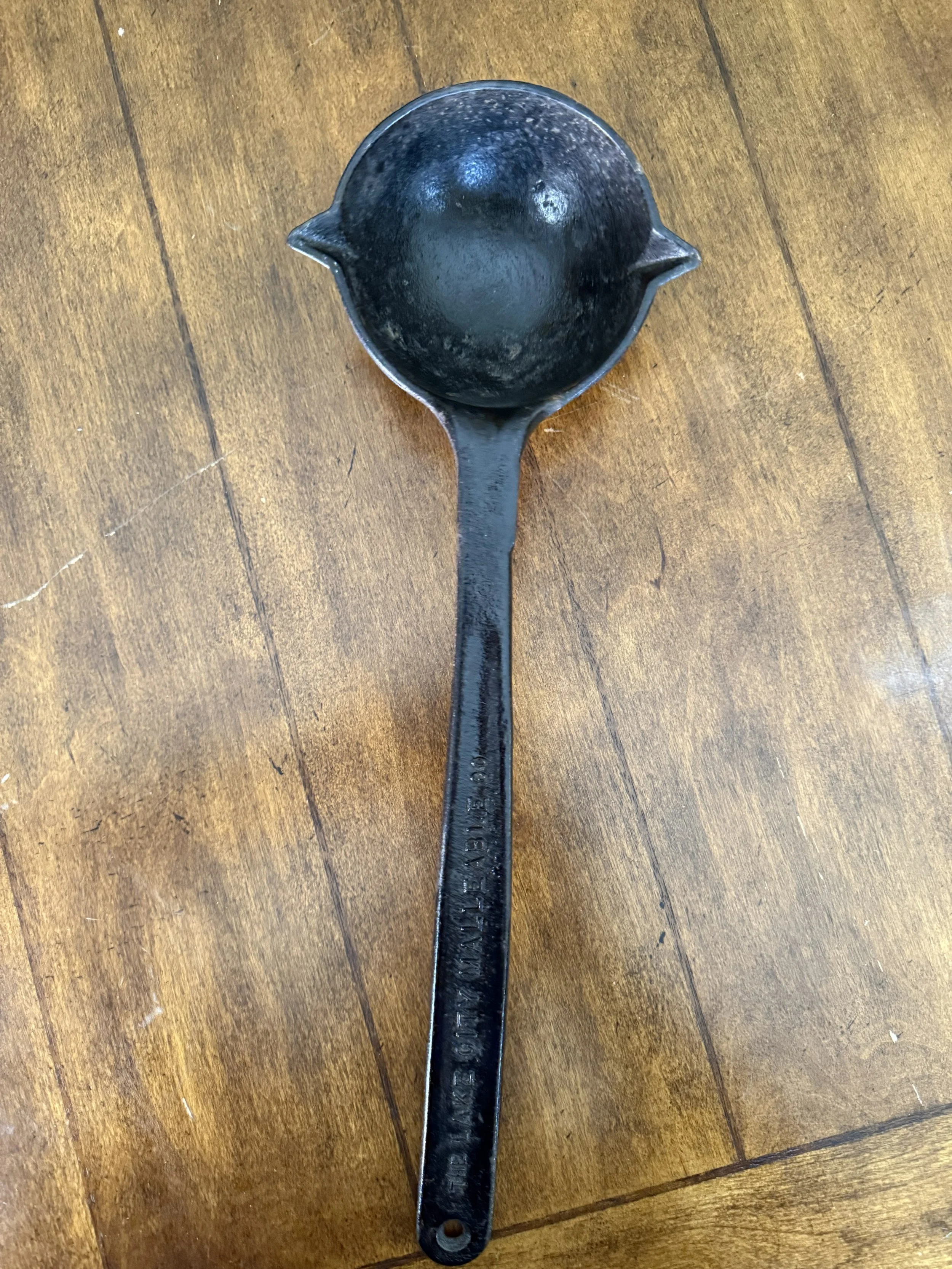
Lake City Malleable Co. No. 5 Lead Casting Ladle
This No. 5 casting ladle carries Cleveland's name on its handle — made by The Lake City Malleable Co., a Cuyahoga County foundry known for industrial ladles, kitchen utensils, and elegantly cast advertising figurines.

Foster Stove Company No. 8 Chicken Fryer
This deep-sided No. 8 chicken fryer from Foster Stove Company of Ironton, Ohio completes the Favorite corporate lineage in the SSC collection — from Columbus Hollow Ware through Favorite Piqua Ware, Miami, Puritan, and now Foster.
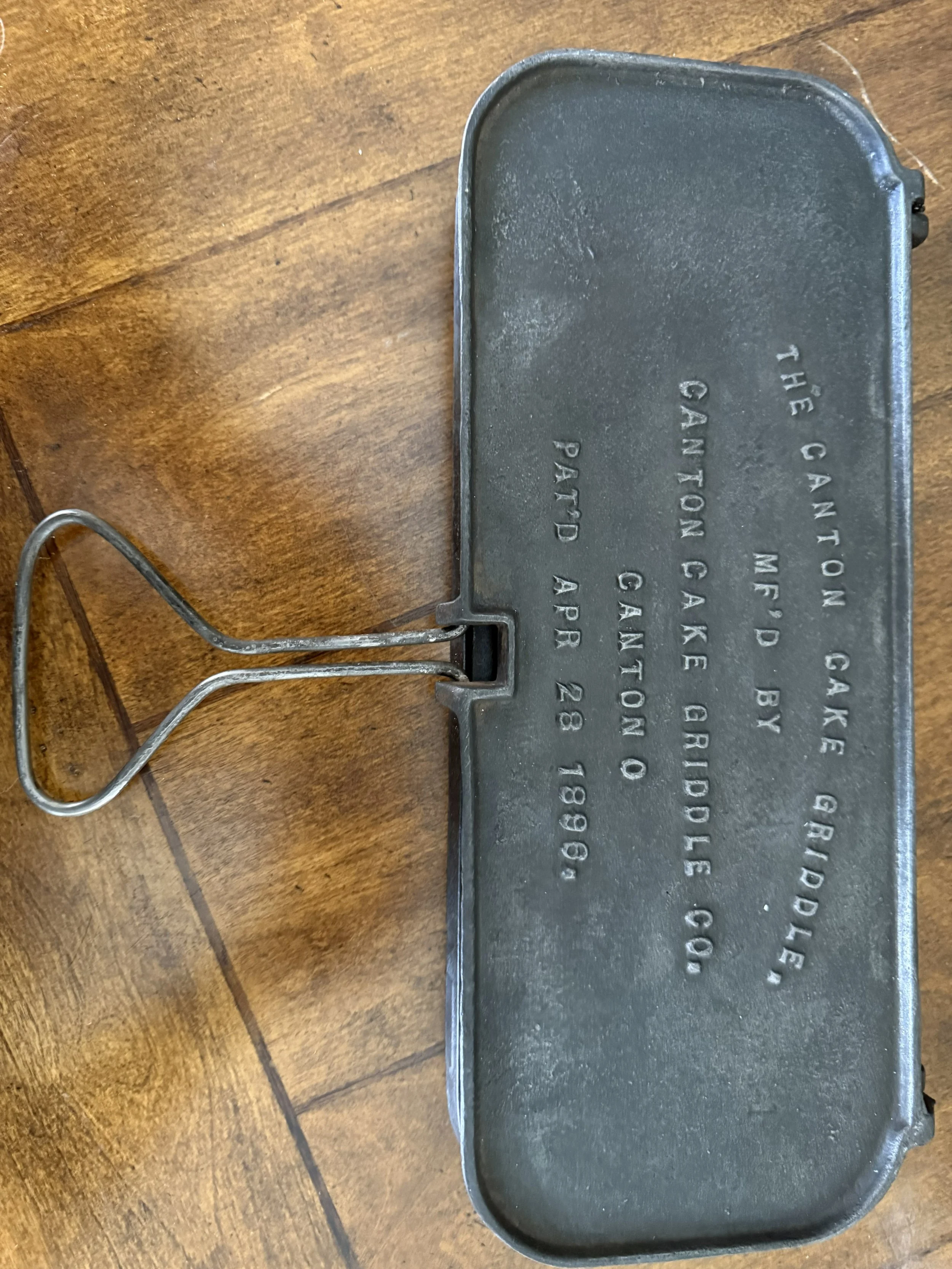
The Canton Cake Griddle — Three-Cake Flop Griddle
Before the electric griddle, there was the flop griddle — and Canton Cake Griddle Co. of Canton, Ohio built one of the best. Three wells, a hinged flat lid, one motion: perfect pancakes, no spatula required.

Forest City Foundries Co. — Niagara Furnaces Mini Spider Skillet
A miniature cast iron spider skillet from The Forest City Foundries Co. of Cleveland, Ohio — an advertising salesman sample for the company's Niagara Furnaces brand. Named after Cleveland's own "Forest City" nickname, this stove and furnace manufacturer left behind these small iron ambassadors as evidence of work that the historical record has otherwise forgotten.


The Schill Brothers Co. Cast Iron Stove Emblem
A cast iron stove and furnace identification emblem from The Schill Brothers Co. of Crestline, Ohio — a documented manufacturer founded in 1892, referenced in the trade press through the early 1920s. The elongated oval form bears raised lettering reading "THE SCHILL BROTHERS CO / CRESTLINE, OHIO" with a single central mounting hole. SSC Catalog No. SSC-SCHILL-EMBLEM-c1900-001. The SSC collection's first piece from Crawford County.
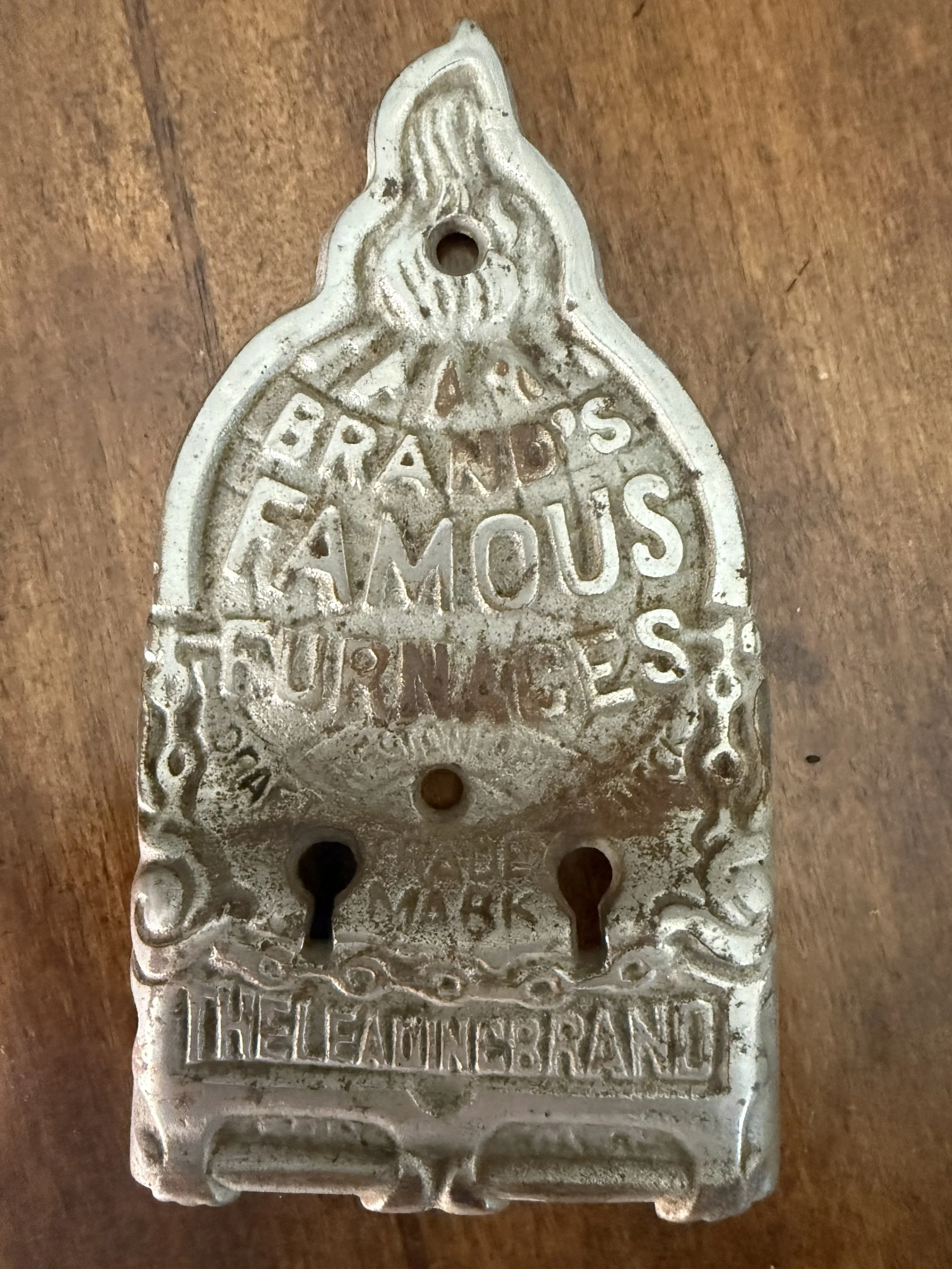
Brand’s Famous Furnaces Cast Iron Nameplate
A rare c. 1880–1905 cast iron furnace nameplate bearing the trade mark of Brand's Famous Furnaces — "The Leading Brand" — in Gothic arch form with flame finial, chain-link ornament, and keyhole mounting slots. The manufacturer is undocumented in standard reference sources, making this piece both a physical artifact and an open research question. SSC Catalog No. SSC-BRAND-PLATE-c1890-001.

M. Hose & Lyon Cast Iron LadlePatented Smelting & Pouring Ladle — PAT'D AUG. 15, 1871
Some cast iron pieces carry a cookware pedigree. This one carries a patent date.
The M. Hose & Lyon smelting ladle — cast in Dayton, Ohio and patented August 15, 1871 — is a primary-source document of Ohio's mid-19th century industrial iron trade. Embossed in raised block capitals along the full length of its handle: M HOSE & LYON / DAYTON O / PAT'D AUG 15 / 1871. The mark is crisp. The iron is sound. The piece is 154 years old.
The patented design solved a real problem. Standard smelting ladles of the era had a single pour spout — to redirect the flow, the operator had to rotate the ladle over open flame with liquid metal in the bowl. The Hose & Lyon solution was three equidistant spouts cast around the bowl rim, so any one could be oriented toward the target without shifting the grip. It was practical, elegant, and worth the trip to the Patent Office.
Dayton in 1871 was already one of the most inventive cities in America — the foundry and machine shop culture of the Miami Valley was two generations deep before NCR and the Wright brothers made it famous. M. Hose & Lyon worked in that world. This ladle is what that world made.
The trade it served is gone. The tool is here.
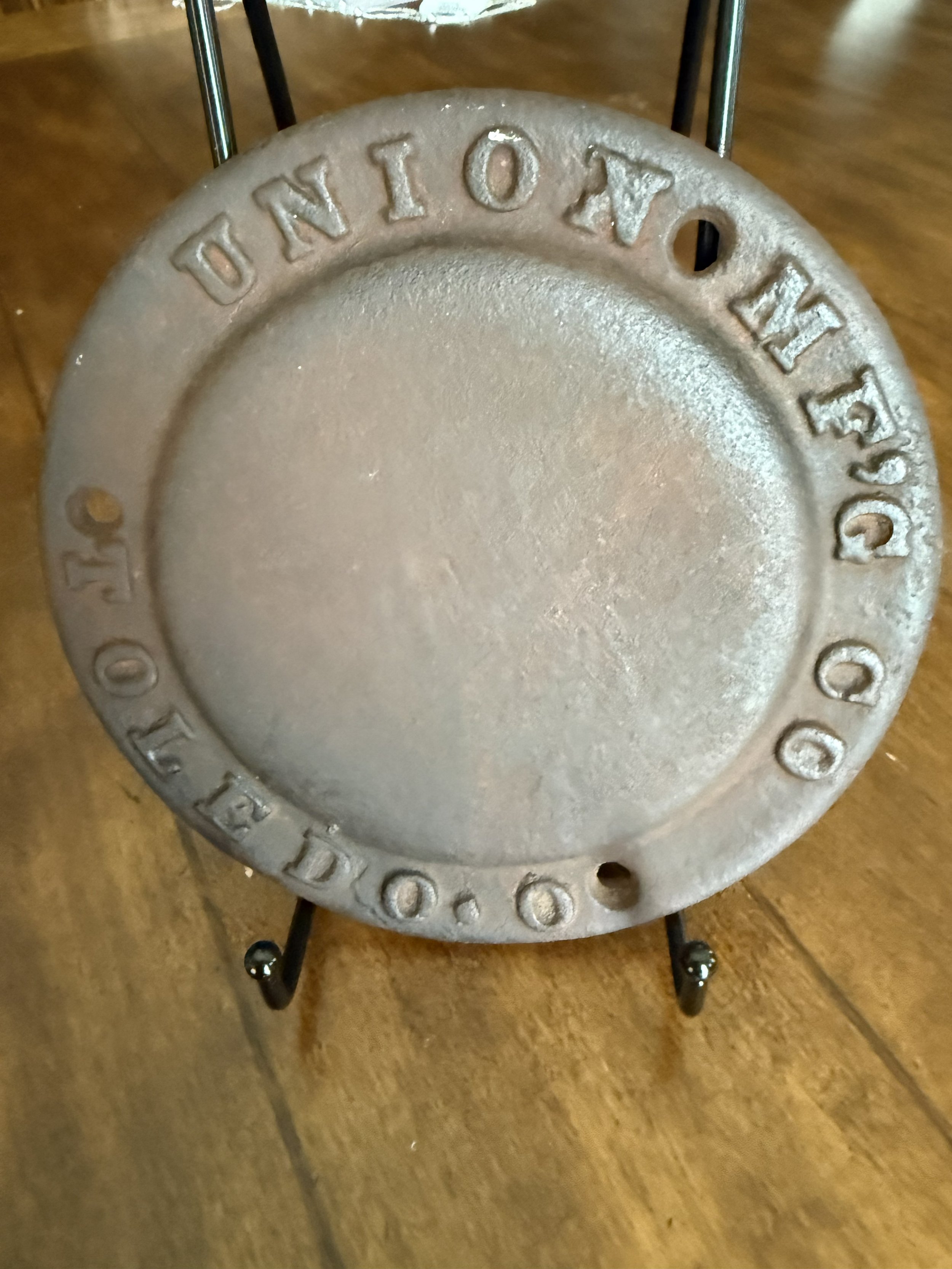
Union Mfg Co Cast Iron Cover / Face Plate
Toledo, Ohio cast its iron with industrial purpose. This Union Mfg Co circular cover plate — 7¾ inches of gray iron marked UNION MFG CO · TOLEDO O in crisp raised relief around the rim — is not cookware. It is the other side of the Ohio foundry record: the fittings, covers, and closures that sealed furnace ports, boiler inspection openings, and gas line flanges in the buildings of a city that grew from 31,000 people in 1880 to over 168,000 by 1910. Somebody cast this piece in Toledo, bolted it over an opening, and left it to do its work. The Union Mfg Co foundry that made it has left almost no trace in the historical record. This cover plate survives to say it was there.
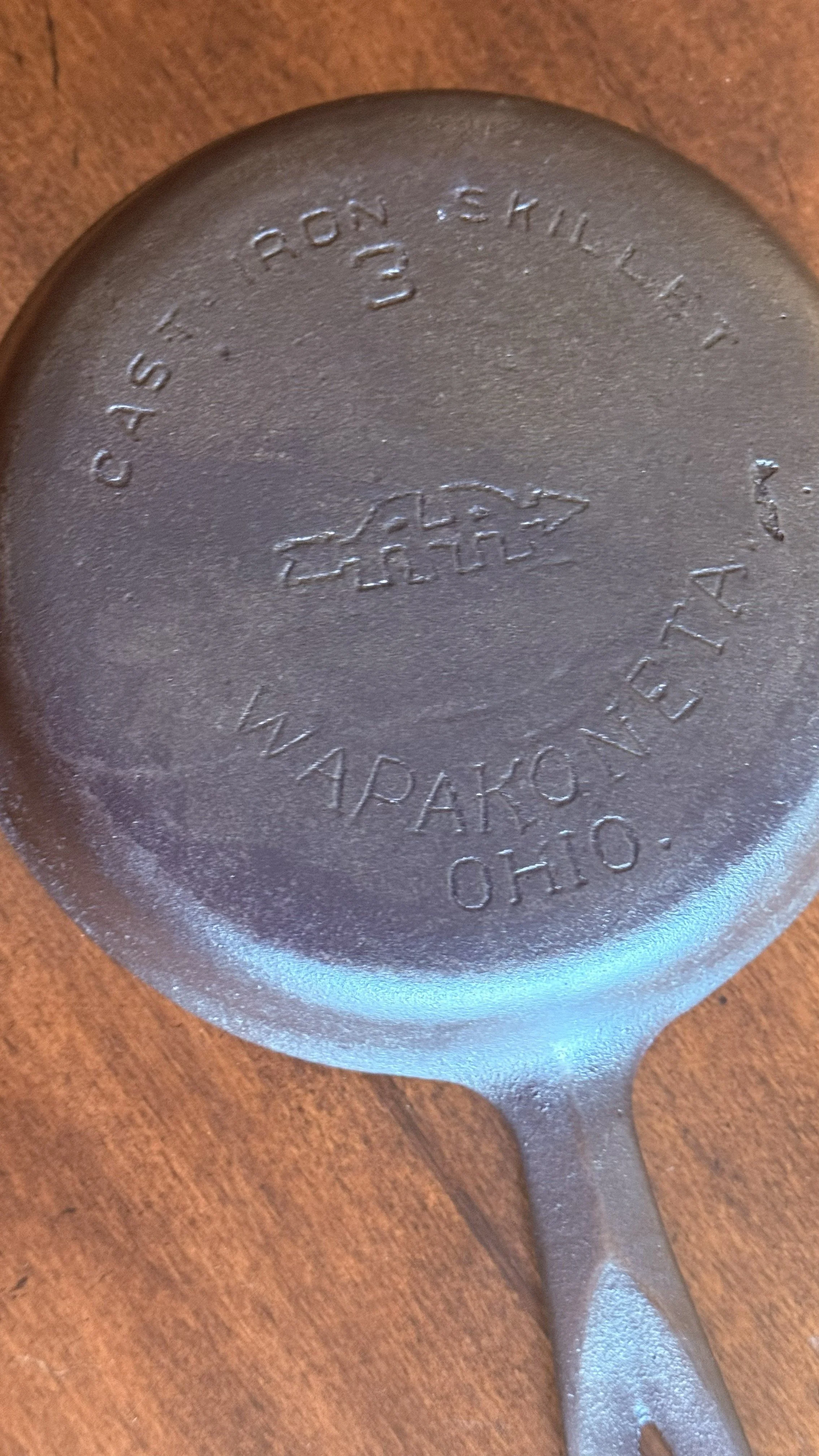
Ahrens & Arnold No. 3 Skillet — Wapakoneta Mark
Ahrens & Arnold operated in Wapakoneta, Ohio, for only a few years in the late 1920s — founded by former Wapak Hollow Ware employees after that foundry's closure, documented in almost no historical record, and known to collectors today through a handful of surviving pieces. This No. 3 cast iron skillet carries the full A&A marking layout in exceptional condition: the CAST · IRON · SKILLET arc with raised dot word separators, the AA arrow emblem, and the WAPAKONETA / OHIO. origin text with its characteristic terminal period — every authentication marker present and clearly legible. One of the rarest named makers in the American cast iron corpus, now documented in the SSC collection alongside its Wapak Indian Head No. 3 counterpart to tell the complete Wapakoneta story.
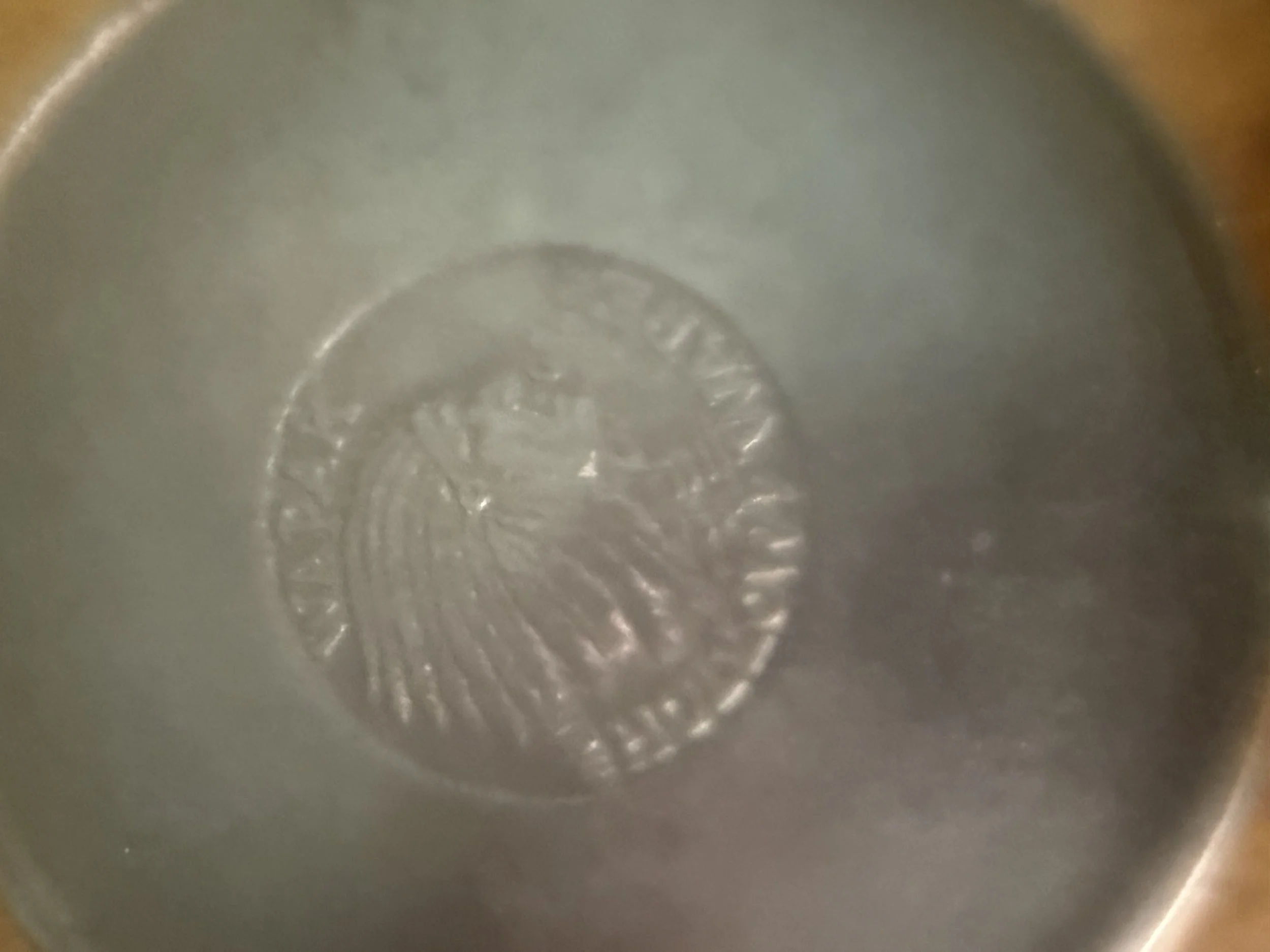
Wapak No. 3 Skillet — Indian Head Mark
Every Ohio foundry in the SSC collection marks its iron with text or geometry — an arc, a cartouche, a diamond. Wapak chose a face. The Indian Head medallion centered on this No. 3 base — a Native American figure in feathered headdress, cast in profile, surrounded by the company inscription — is the most visually distinctive mark in the Ohio foundry corpus. This No. 3 carries it in exceptional condition: headdress feather detail preserved, facial profile clear, inscription readable. It is the finest-condition marked piece in the SSC collection, the first Wapak entry, and the highest single-piece acquisition to date. Some iron earns its price